Large Red-Figure Ceramic Vessel for Liquids
Where
Museo Archeologico Nazionale della Sibaritide
Località Casabianca – Frazione Sibari
87011 – Cassano All’Ionio (CS)
Description
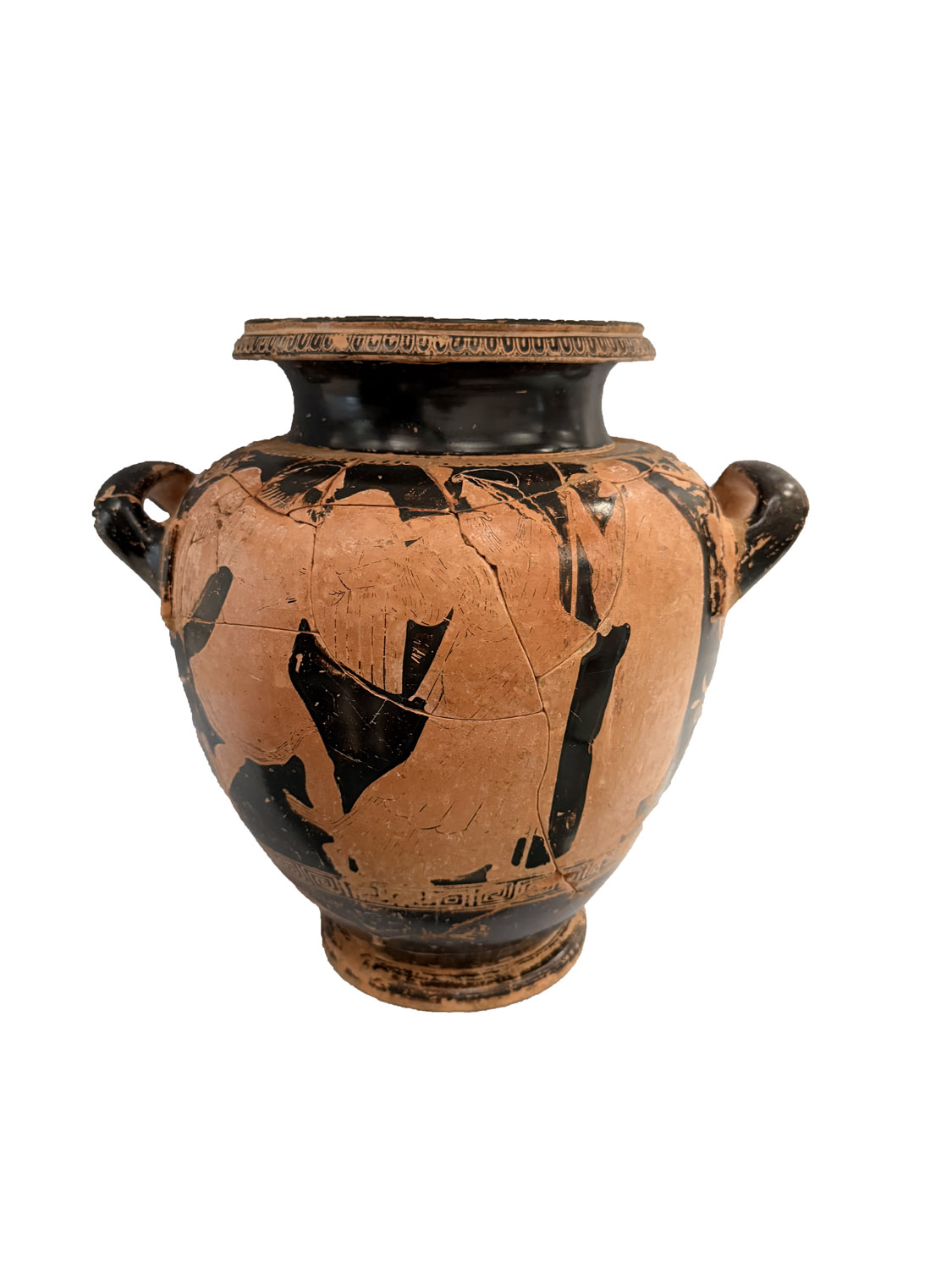
Large liquid container (stamnos) decorated in the red-figure technique. It features a rim ornamented with an egg-and-dart (ovoli) motif, a low cylindrical neck, and two handles attached to the body of
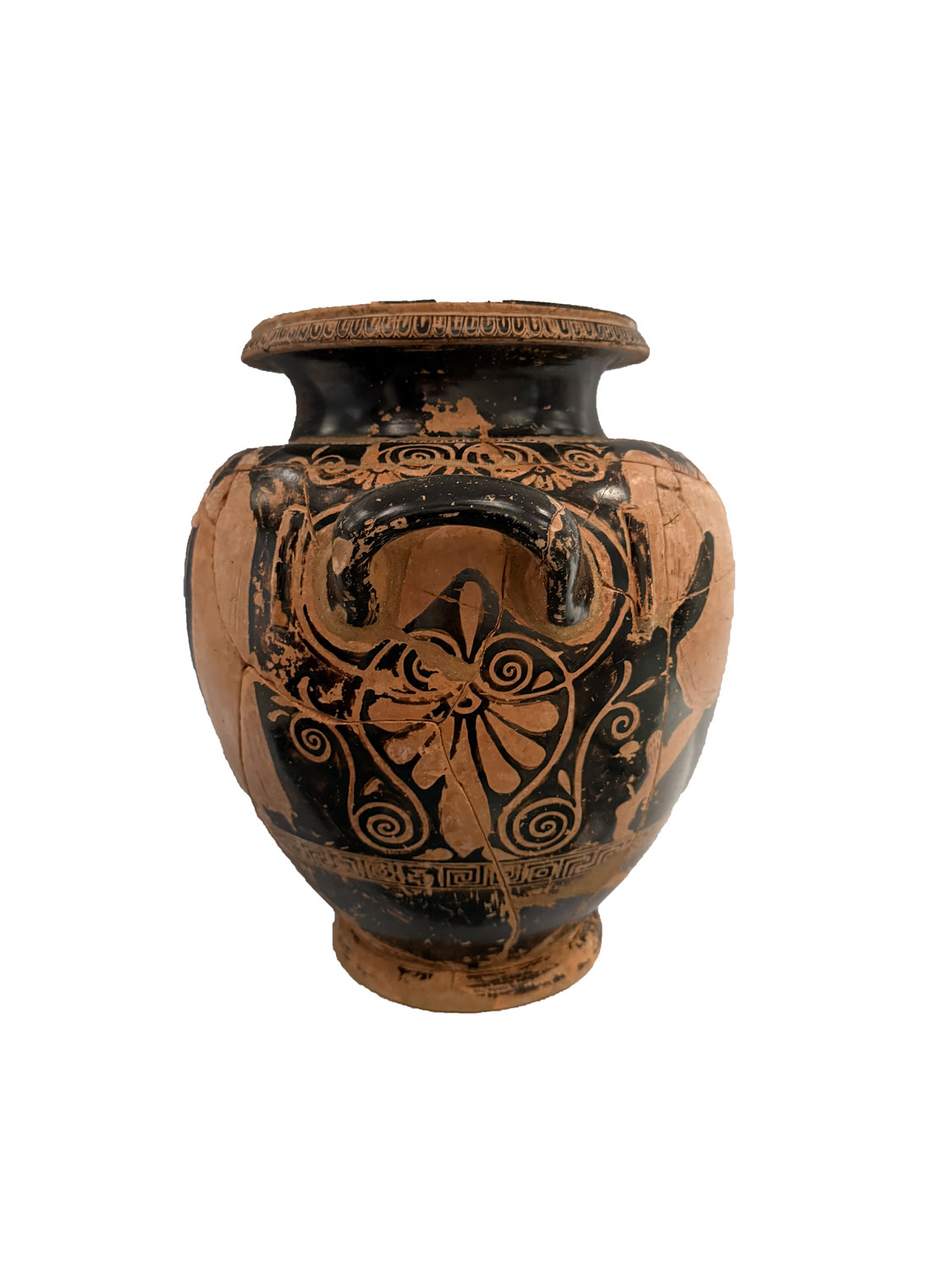
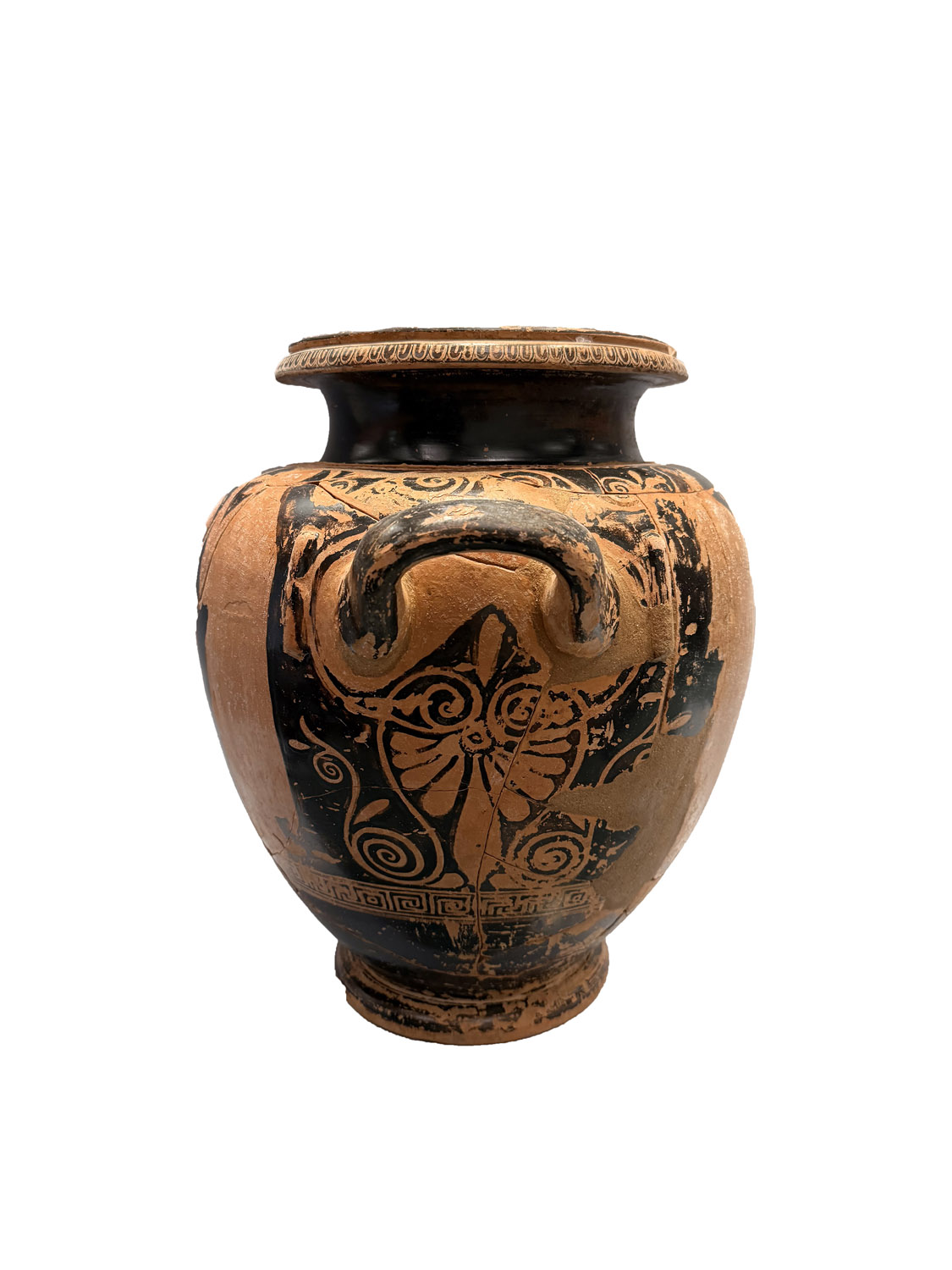
... read more >Large liquid container (stamnos) decorated in the red-figure technique. It features a rim ornamented with an egg-and-dart (ovoli) motif, a low cylindrical neck, and two handles attached to the body of the vessel. The ovoid body rests on a ring foot and is embellished with a rich figural decoration, bordered at the bottom by a meander pattern.
On one side, the decoration depicts the myth of Oreithyia, daughter of the Athenian king Erechtheus, abducted by Boreas, the god of the North Wind (known as Aquilo to the Romans). Although the decoration is not perfectly preserved, the three main figures can still be identified: Boreas, winged, wearing a short garment, with long hair and beard, and small wings also on his heels; Oreithyia, moving toward her father while turning her head toward the god who is about to seize her, dressed in a long garment (peplos) and with her hair held by a band; and finally an elderly bearded male figure, wrapped in a cloak and leaning on a staff, identifiable as Erechtheus, the mythical king of Athens and father of the maiden, portrayed as a powerless witness to the event.
On the opposite side of the vessel appear three additional figures—two female and one male holding a staff—whose identification remains uncertain. Vegetal motifs placed near the lateral handles separate the two narrative scenes.
In 1948, at Trebisacce, in the locality of San Rocco near the Mazzucca stream, a female tomb with a pitched-tile covering (a cappuccina) was discovered, datable to the mid-5th century BC. Among the grave goods placed beside the deceased was this red-figure stamnos, together with three small vessels for unguents and perfumed oils (lekythoi).
The myth of Oreithyia and Boreas was a popular subject among Greek vase painters and appears frequently in Attic pottery. Attica, the region of ancient Greece in which Athens was located, was at the time a thriving production center, renowned for the quality of its ceramics and the refinement of red-figure decoration. According to the myth, the young woman, while playing on the banks of the river Ilissus, was suddenly seized by Boreas, who carried her away in a whirlwind to his home in Thrace, where he made her his wife. From their union were born Zetes and Calais, the Boreads (“sons of Boreas”), who later took part in the exploits of the Argonauts.
The presence of a rich funerary assemblage in the woman’s burial attests to her wealth and social prestige, while also revealing the strong commercial and cultural ties between Magna Graecia and the Greek mainland.
read less <INSIGHTS >
Explore the areas of Crotone and Sibari
History awaits you inside the Archaeological Sites of Crotone and Sibari. Start your visit.
planDiscover current events
Concerts, tastings and dedicated exhibitions to relive the history of Magna Graecia.
discover more
Experience the Parks and Museums
History awaits you inside the Archaeological Sites of Crotone and Sibari. Start your visit.
plan

Whether you are with family, at school or experience the world in a unique way, here you will find paths designed for you.