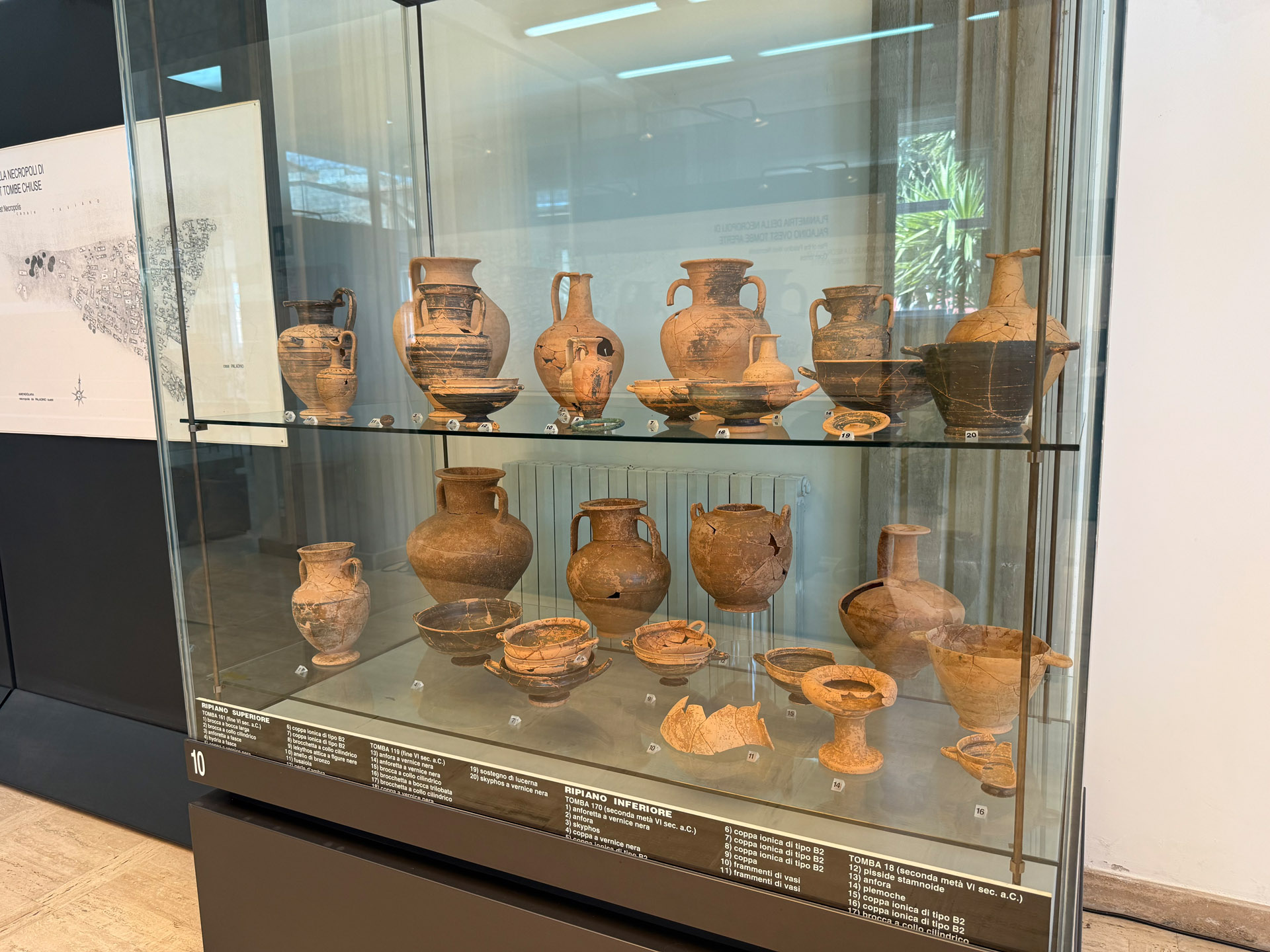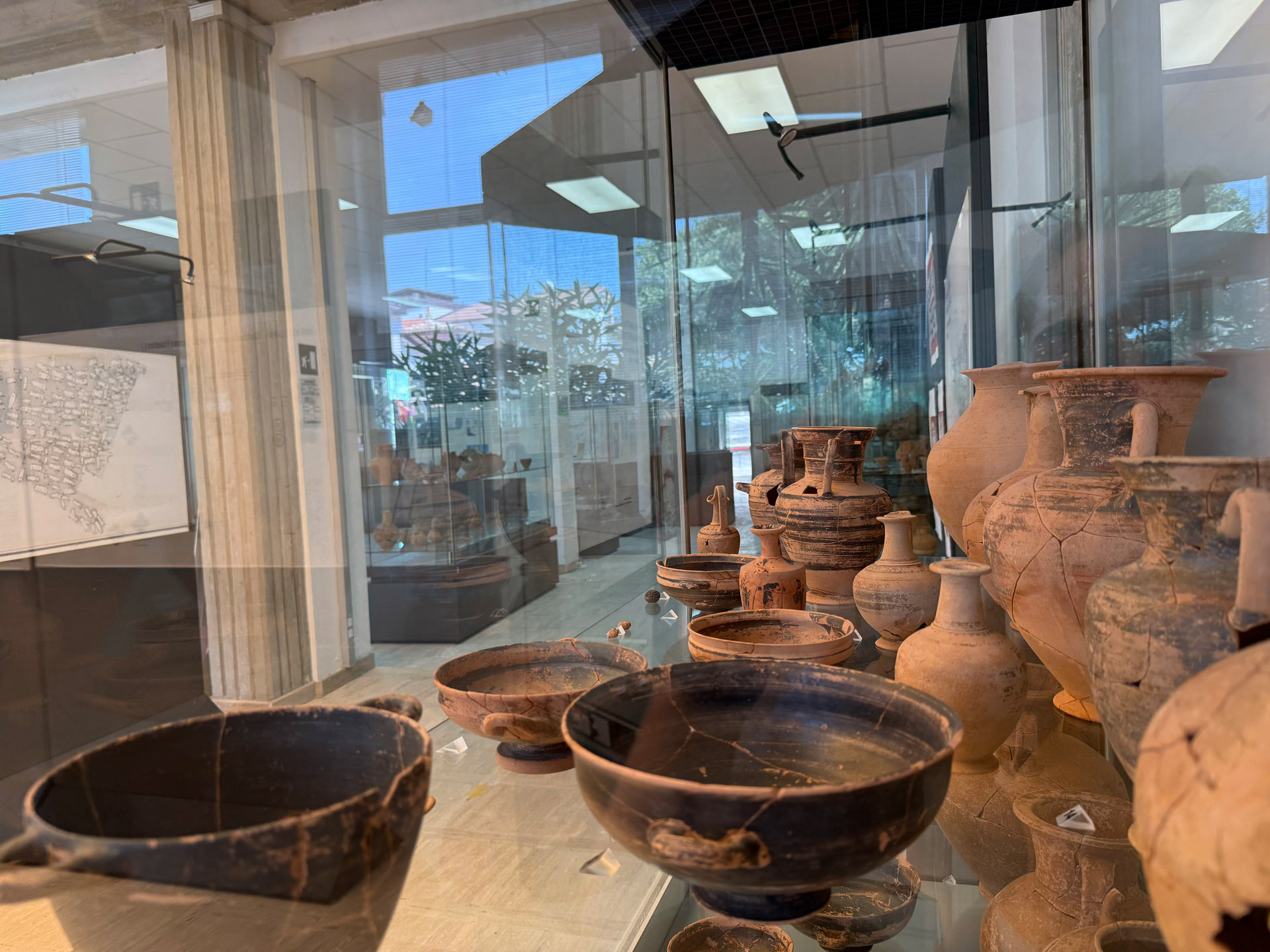
Information about the earliest phases of occupation of the territory of Amendolara, dating back to the emergence of the first protohistoric settlement, is scarce and fragmentary. From the Iron Age onward, between the 9th and 8th centuries BC, more concrete data begin to emerge. The discovery of several necropolises makes it possible to better understand the characteristics of a stable and well-organized community.
Burial areas are concentrated in particular in the districts of Mangosa and Paladino (also known as Uomo Morto), as well as in the area of the San Nicola plateau, not far from the location where an Archaic settlement would later develop. Most of the graves date between the 8th and the 6th centuries BC and are accompanied by grave goods that vary according to the status of the deceased
... read more >Information about the earliest phases of occupation of the territory of Amendolara, dating back to the emergence of the first protohistoric settlement, is scarce and fragmentary. From the Iron Age onward, between the 9th and 8th centuries BC, more concrete data begin to emerge. The discovery of several necropolises makes it possible to better understand the characteristics of a stable and well-organized community.
Burial areas are concentrated in particular in the districts of Mangosa and Paladino (also known as Uomo Morto), as well as in the area of the San Nicola plateau, not far from the location where an Archaic settlement would later develop. Most of the graves date between the 8th and the 6th centuries BC and are accompanied by grave goods that vary according to the status of the deceased.
The objects recovered include locally produced and imported ceramic vessels, bronze pins (fibulae), weapons, ornaments made of amber and glass paste, and occasionally iron tools. These finds provide not only valuable information for reconstructing the material culture of the period, but also important clues about social organization and the contacts that had already developed between indigenous populations and the Greek world even before the foundation of Sybaris.
The variety and quality of the grave goods testify to a complex society, in which distinctions of status and social roles are clearly defined. Greek cultural influence becomes progressively more evident, not only through the presence of imported pottery from the Ionian area and Attica, but also through the adoption of funerary practices closer to those of Greek culture. These influences grew stronger thanks to the contacts established with the Greek colonies along the Ionian coast, such as Sybaris, founded at the end of the 8th century BC less than 30 km to the south, and Metapontum, about 60 km to the north.
read less <