Built around AD 50, the baths of Copiae are located in a central area of the ancient city, near the intersection of two important road axes (plateia A and plateia B) and not far from the semicircular theatre, in what must have been the city’s public district.
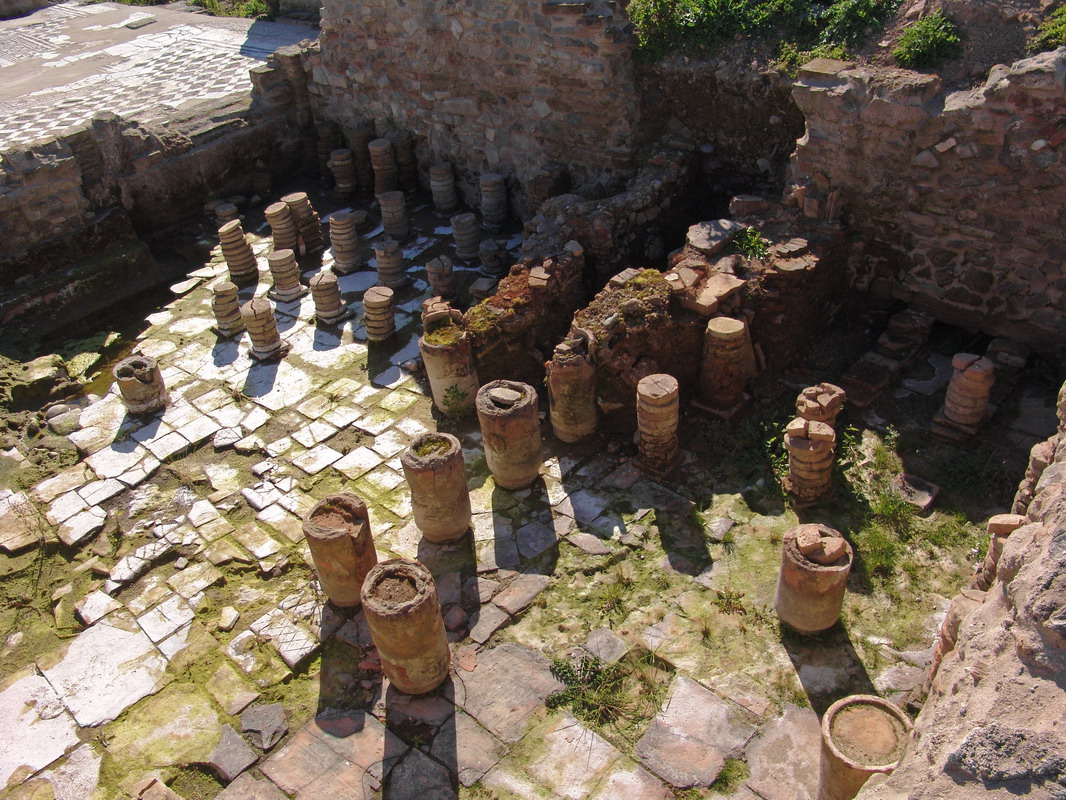
The main entrance faced north, toward the principal streets, and led into a series of interconnected rooms paved in opus spicatum, a technique characterized by the herringbone arrangement of small terracotta bricks. From here, visitors accessed the heated rooms: the tepidarium (warm room) and the calidarium (hot room). The latter still preserves the hypocaust heating system, clearly visible thanks to the terracotta pillars that supported the floor. Hot air, produced in the praefurnia (furnaces), circulated beneath the floor, warming
... read more >Built around AD 50, the baths of Copiae are located in a central area of the ancient city, near the intersection of two important road axes (plateia A and plateia B) and not far from the semicircular theatre, in what must have been the city’s public district.
The main entrance faced north, toward the principal streets, and led into a series of interconnected rooms paved in opus spicatum, a technique characterized by the herringbone arrangement of small terracotta bricks. From here, visitors accessed the heated rooms: the tepidarium (warm room) and the calidarium (hot room). The latter still preserves the hypocaust heating system, clearly visible thanks to the terracotta pillars that supported the floor. Hot air, produced in the praefurnia (furnaces), circulated beneath the floor, warming the room.
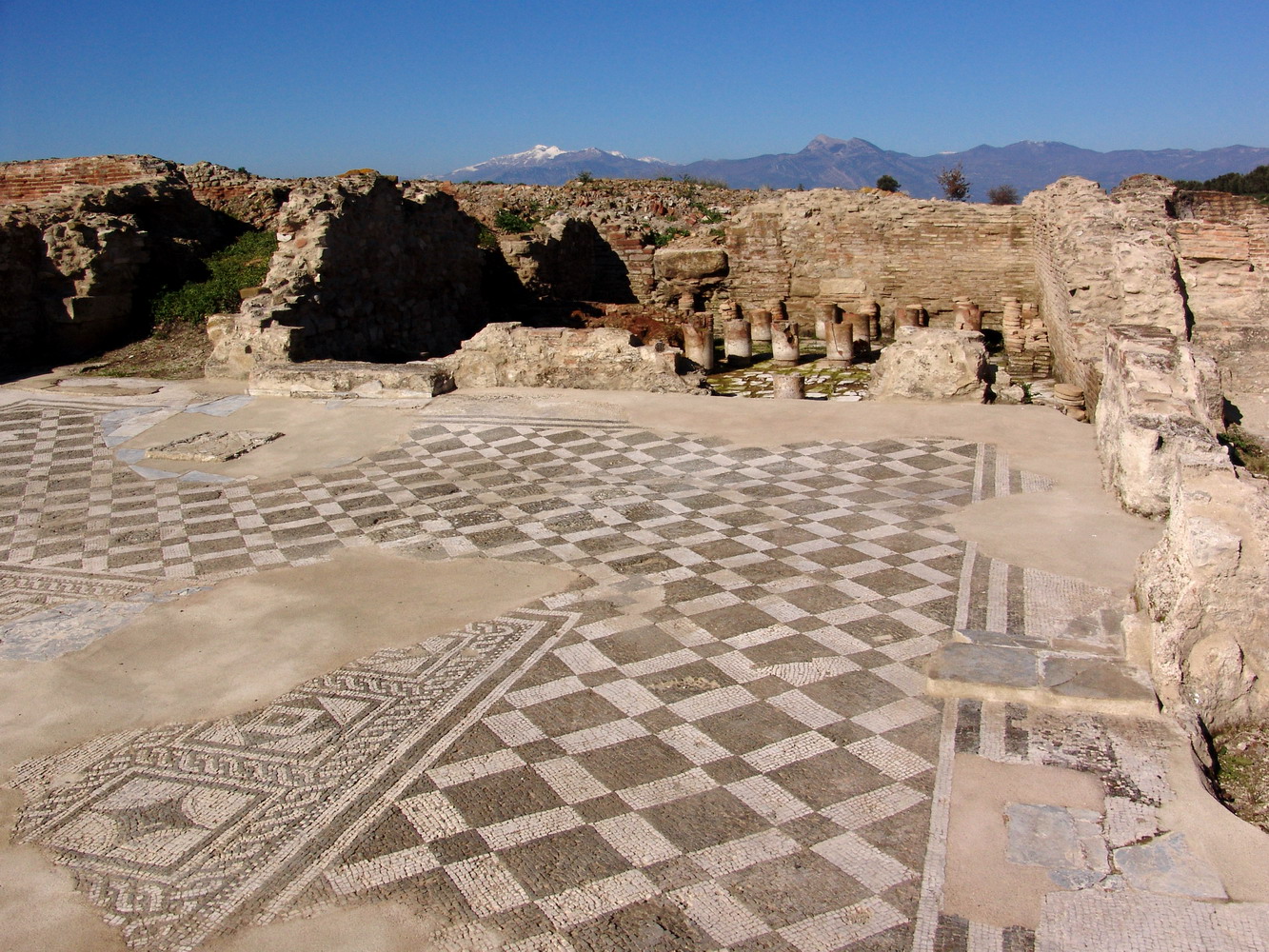
On the opposite side of the building was the frigidarium, the cold room equipped with a bathing pool (natatio), intended for refreshment after the hot stages of the bathing sequence. The floors of the main rooms were decorated with black-and-white mosaics, adorned with geometric motifs and scenes typical of Roman bath culture.
The baths underwent several renovations in the centuries that followed, indicating prolonged use. In Late Antiquity, between the 5th and 7th centuries AD, the building lost its original function and was transformed into a Christian place of worship, demonstrating how Roman public spaces could adapt to new spiritual contexts without losing their central role in collective life.
read less <