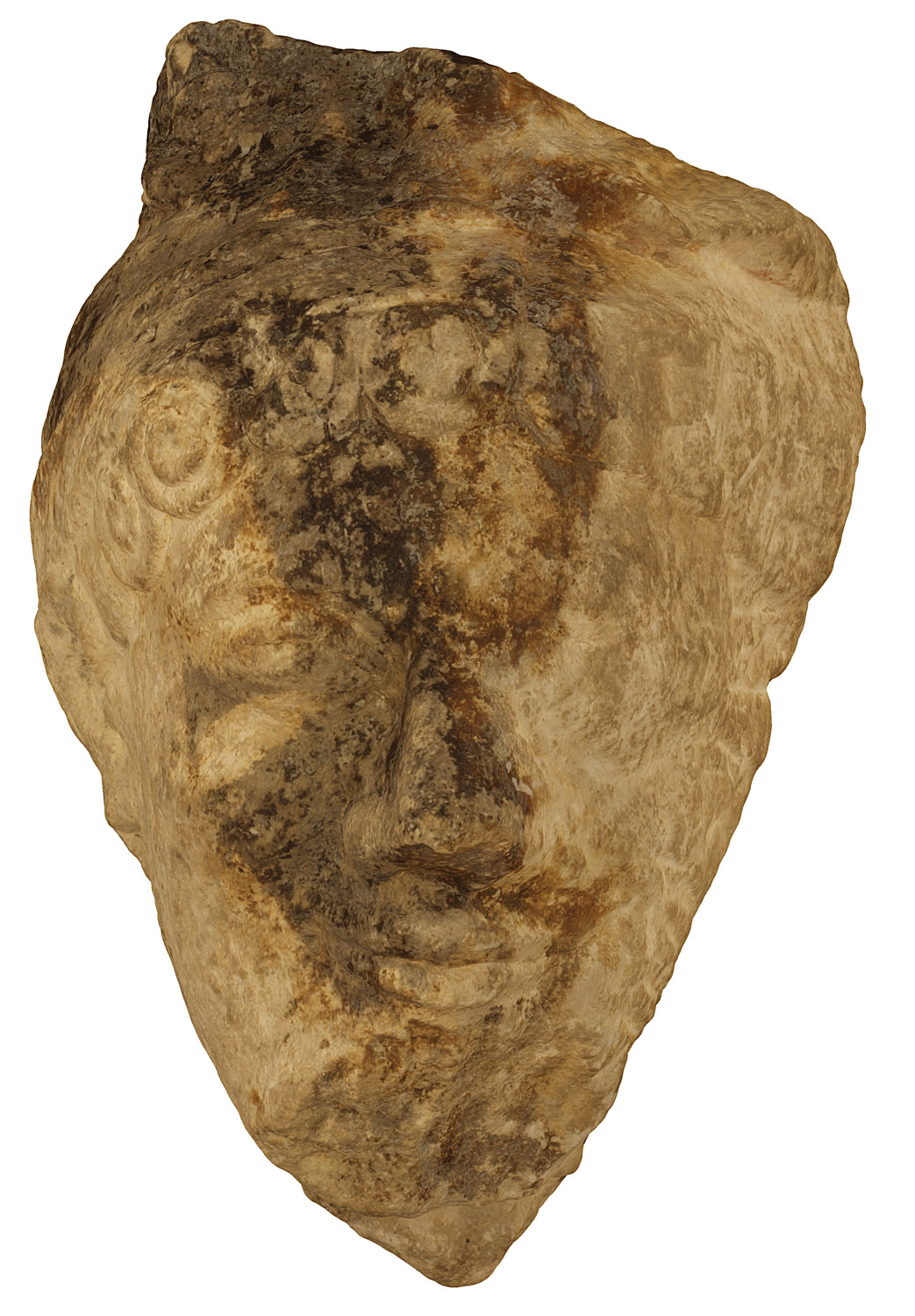
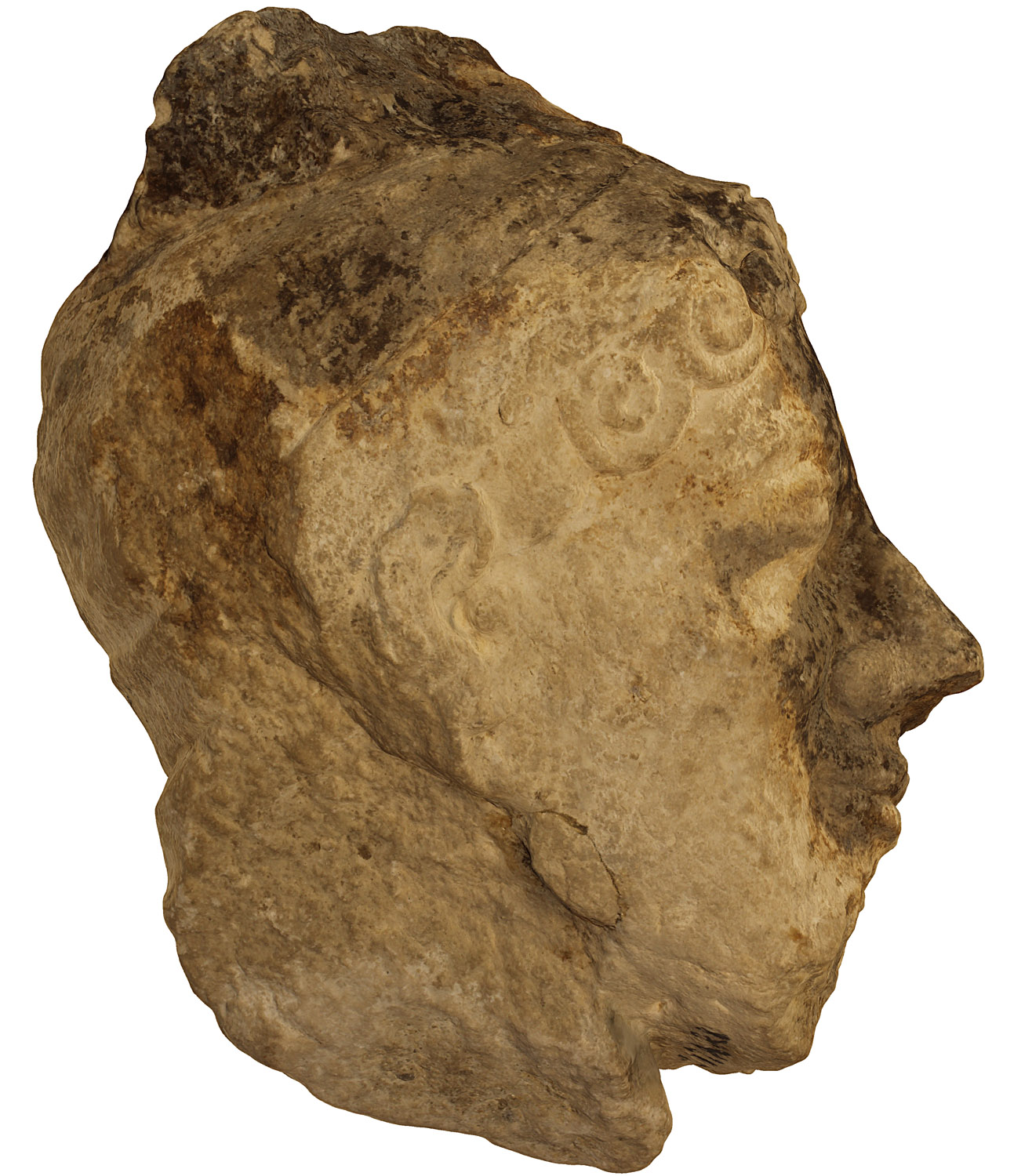
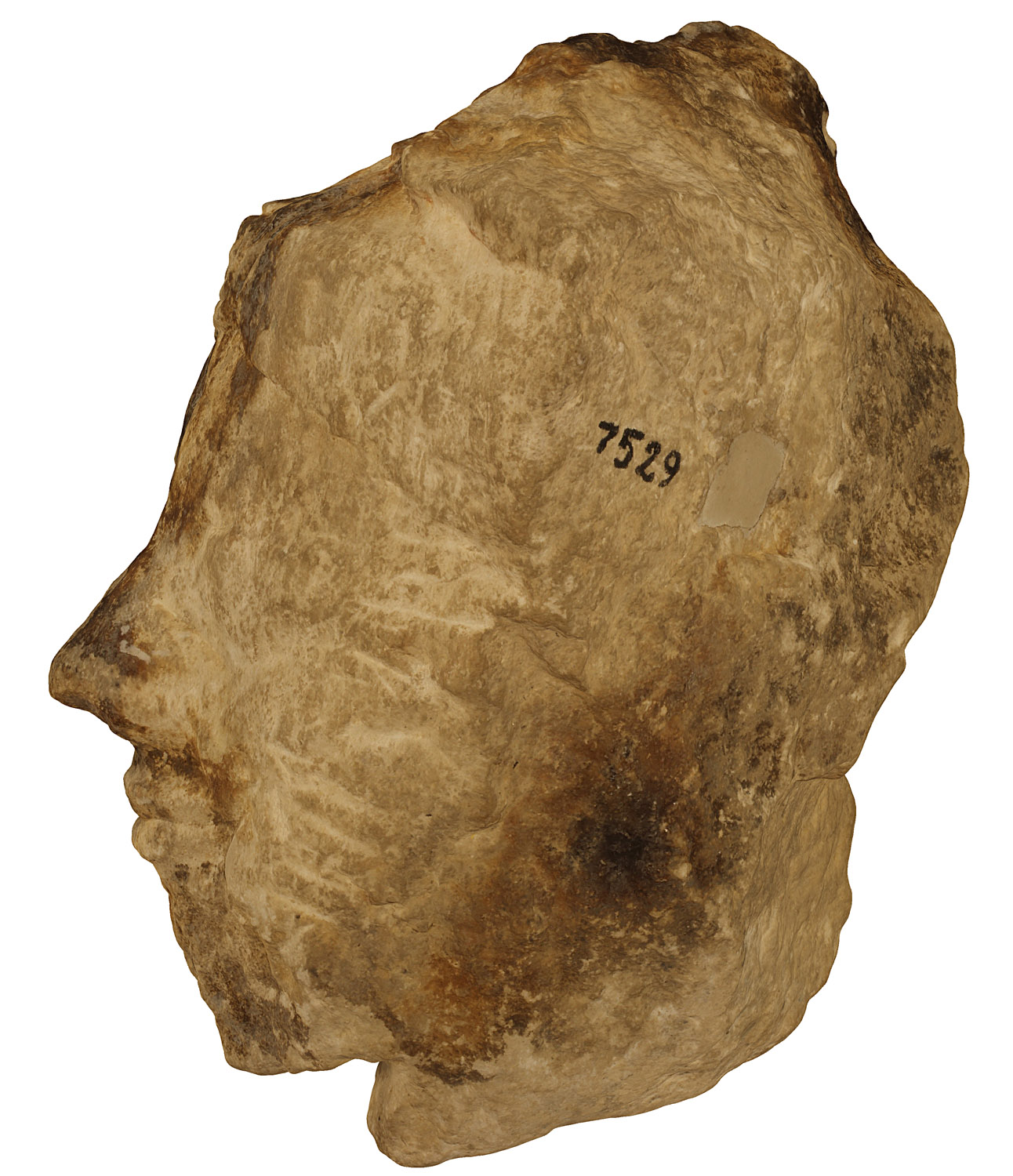
Fragment of Figured Frieze with Male Head
Where
Museo Archeologico Nazionale della Sibaritide
Località Casabianca – Frazione Sibari
87011 – Cassano All’Ionio (CS)
Description
The fragment originally belonged to an architectural frieze, a horizontal band placed between the columns and the roof of a building for decorative purposes. In this case, the decoration was executed in
... read more >The fragment originally belonged to an architectural frieze, a horizontal band placed between the columns and the roof of a building for decorative purposes. In this case, the decoration was executed in high relief, with sculpted figures projecting from the background and representing narrative or symbolic scenes. The head belongs to the depiction of a male figure who took part in the overall composition. The subject is turned to the right, with the head slightly inclined forward. The facial features are typical of Archaic art: the face is elongated and framed at the forehead by a rigid, schematically rendered mass of curls, emerging from a band that probably supported an ornamental element made of another material covering the back of the head, perhaps a metal helmet. The eyes are prominent and almond-shaped, with clearly defined eyebrows; the nose is sharp, and the lips are slightly parted, forming a gentle upward curve that conveys the subtle smile known in technical terms as the “Archaic smile.” Dark patches are visible on the stone surface, identifiable as traces of burning. At the time of discovery, the fragment still preserved traces of color: blue in the background and among the hair and nape, and red on the band encircling the hair.
This male head represents one of the most significant finds made during the earliest excavation campaigns in the Plain of Sibari, initiated in 1932 by Umberto Zanotti Bianco. Its discovery—together with other fragments of a figured frieze now preserved in the museum—enabled the archaeologist to confirm that the investigated area, located near a column emerging from the muddy ground of the marsh, corresponded to the site where the superimposed remains of the three cities of Sybaris, Thurii, and Copiae lay, until then never identified with certainty.
Only a few centimeters from the column—clearly belonging to a Roman-period building—and at a depth of about 2.80 meters, ceramics and architectural fragments datable to the Greek Archaic period were found. These discoveries provided tangible evidence of the urban stratification known from historical and literary sources.
The head offered Zanotti Bianco further confirmation of his hypothesis: the traces of burning visible on the surface indicate that the fragment likely came from a building destroyed by fire during the devastation of 510 BC, when the Greek colony of Sybaris was annihilated by Crotone.
read less <INSIGHTS >
Explore the areas of Crotone and Sibari
History awaits you inside the Archaeological Sites of Crotone and Sibari. Start your visit.
planDiscover current events
Concerts, tastings and dedicated exhibitions to relive the history of Magna Graecia.
discover more
Experience the Parks and Museums
History awaits you inside the Archaeological Sites of Crotone and Sibari. Start your visit.
plan

Whether you are with family, at school or experience the world in a unique way, here you will find paths designed for you.