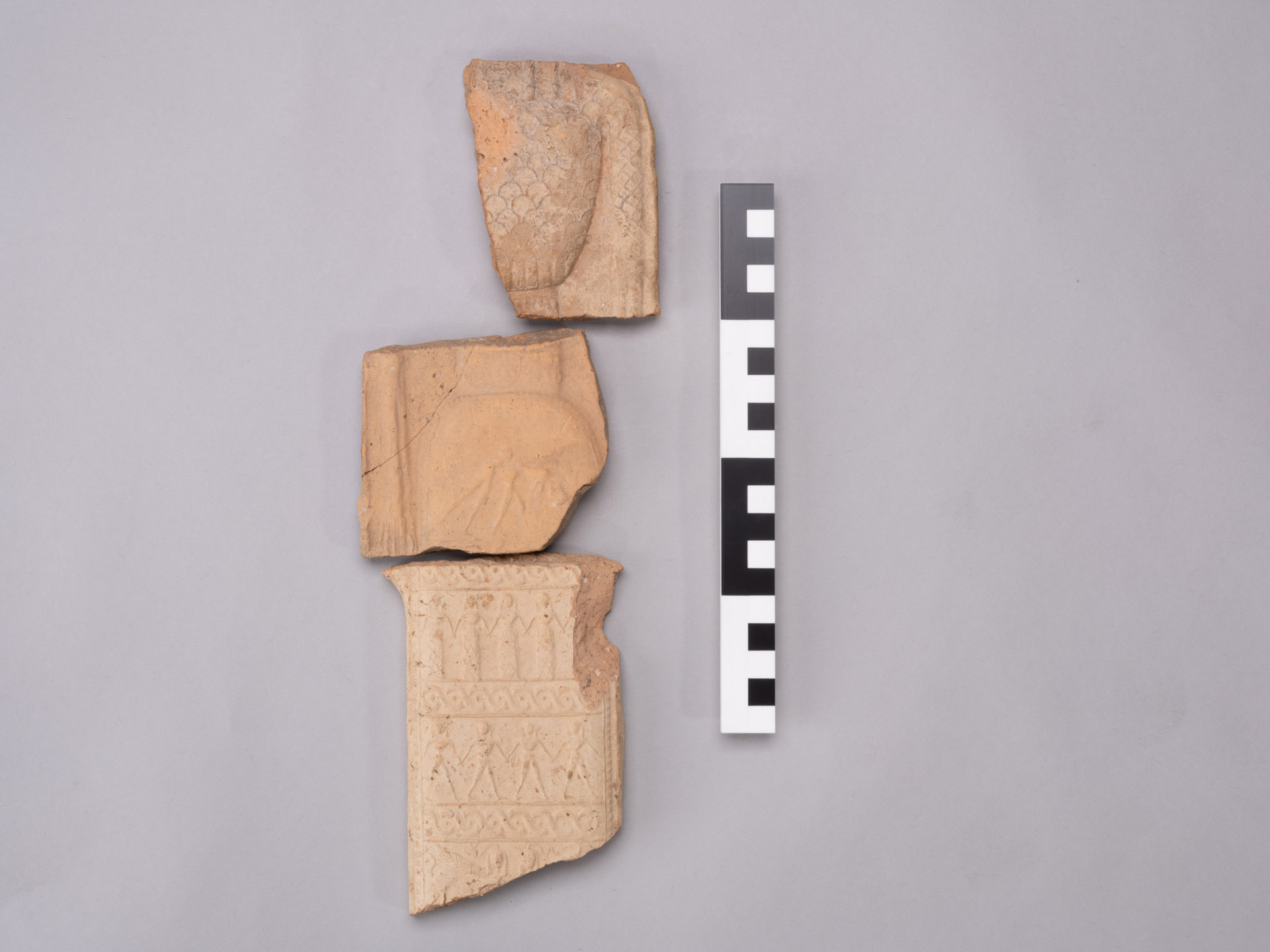
Fragments of a Votive Terracotta with Female Figure (the so-called “Lady of Sybaris”)
Where
Museo Archeologico Nazionale della Sibaritide
Località Casabianca – Frazione Sibari
87011 – Cassano All’Ionio (CS)
Description
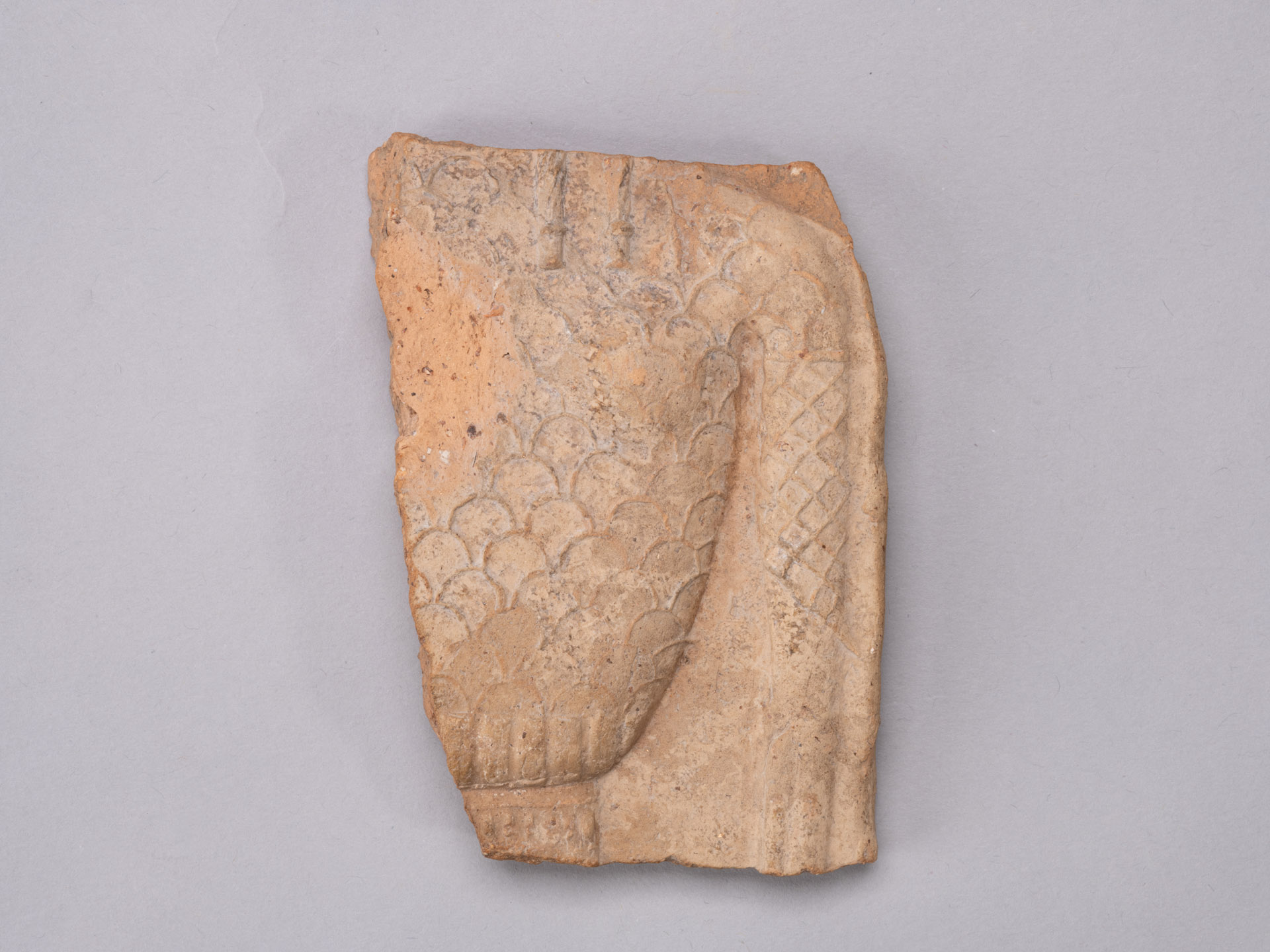
Fragments of a terracotta plaque (pinax) depicting a standing female figure. The first fragment preserves the upper part of the torso, covered by a garment decorated with an arcade motif, along which the
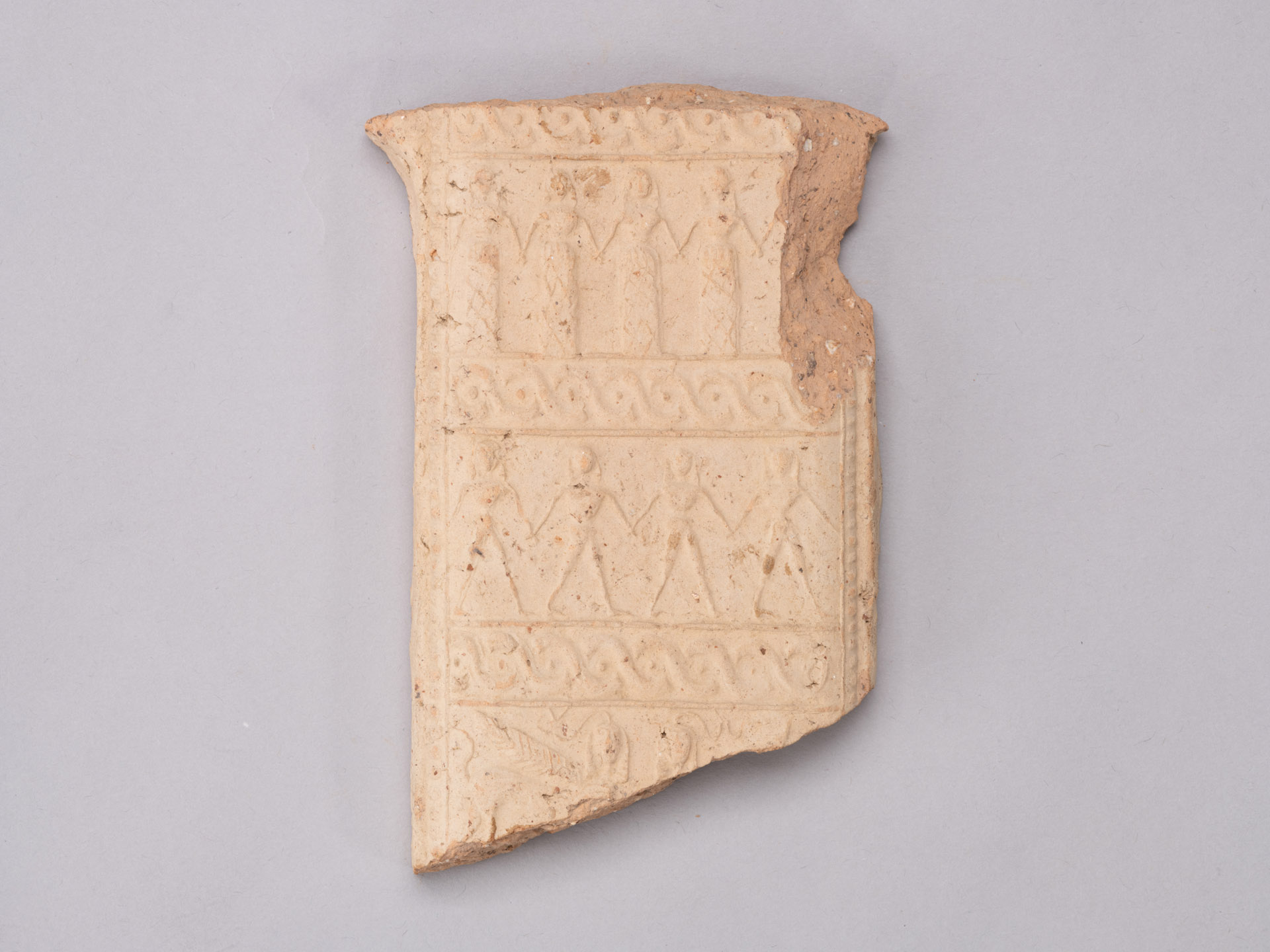
... read more >Fragments of a terracotta plaque (pinax) depicting a standing female figure. The first fragment preserves the upper part of the torso, covered by a garment decorated with an arcade motif, along which the left arm descends, itself covered by a thin net-patterned fabric. The second fragment corresponds to part of the right arm and the waist of the female figure, wrapped in the upper section of a finely embroidered skirt, which is largely preserved in the third fragment.
The decoration of the skirt is organized into four registers of figurative scenes. In the upper register, the depiction of a male figure carrying an armed male figure on his shoulders has been interpreted as the transport of the lifeless body of Achilles by his companion Ajax, according to the episode narrated in the Iliad. This is followed by a double band showing a procession of five young maidens holding hands, dressed in richly decorated garments, and four youths in the same pose, represented nude. The lower register finally depicts two confronted sphinxes.
The reconstruction of the missing portions of these terracotta pinax fragments is based on comparison with the so-called “Lady of Sybaris,” a terracotta figurine attributable to the type of the figured pinax. This object was discovered around the mid-19th century on the upper hill of Timpone della Motta, at Francavilla Marittima (CS), an area of great cultic importance during the Archaic period. The figurine is generally interpreted as a high-status female figure, possibly an offerant or a deity, consistent with the sacred character of the Timpone della Motta. The pinakes and terracotta figurines found at the site served a votive function and testify to the intense religious and artistic activity of the Sybarite community and the local populations during the Archaic age.
From a stylistic point of view, the Lady of Sybaris displays features typical of Magna Graecia coroplastic production, with Eastern Greek influences and a refined rendering of clothing and hairstyle. These formal qualities make the piece a fundamental reference model for the reconstruction of other terracotta fragments from the same context, such as those exhibited in the Museo della Sibaritide. The fragments can be admired today thanks to the recovery of looted artifacts taken from Timpone della Motta during the 1970s, carried out over the years by the Italian Carabinieri’s Cultural Heritage Protection Unit. This process made it possible to reunite the first two fragments of the terracotta figurine—found during excavations conducted in the 1990s—with the fragment that had entered the antiquities market under unknown circumstances and was later acquired by the J. Paul Getty Museum.
read less <INSIGHTS >
Explore the areas of Crotone and Sibari
History awaits you inside the Archaeological Sites of Crotone and Sibari. Start your visit.
planDiscover current events
Concerts, tastings and dedicated exhibitions to relive the history of Magna Graecia.
discover more
Experience the Parks and Museums
History awaits you inside the Archaeological Sites of Crotone and Sibari. Start your visit.
plan

Whether you are with family, at school or experience the world in a unique way, here you will find paths designed for you.