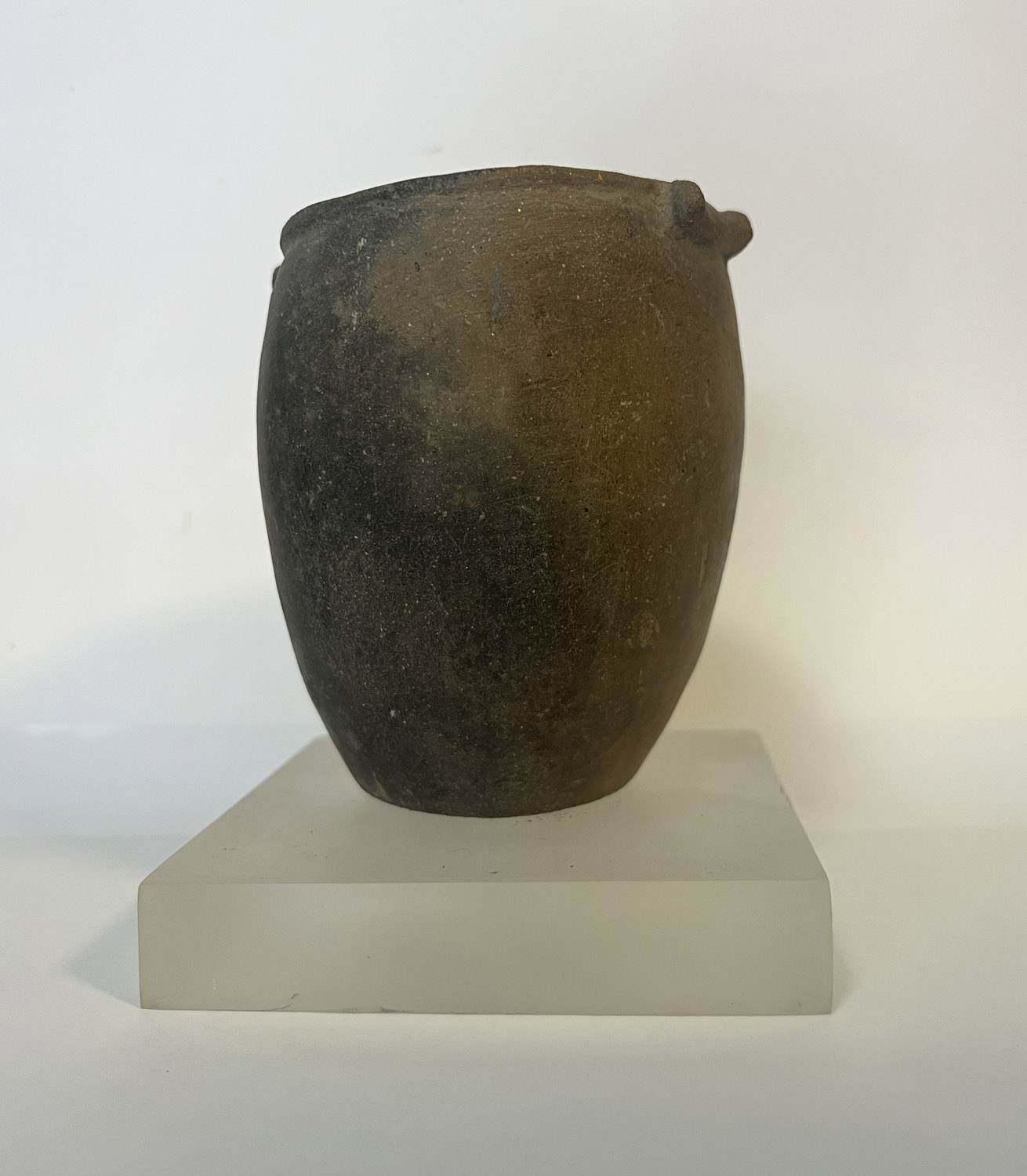
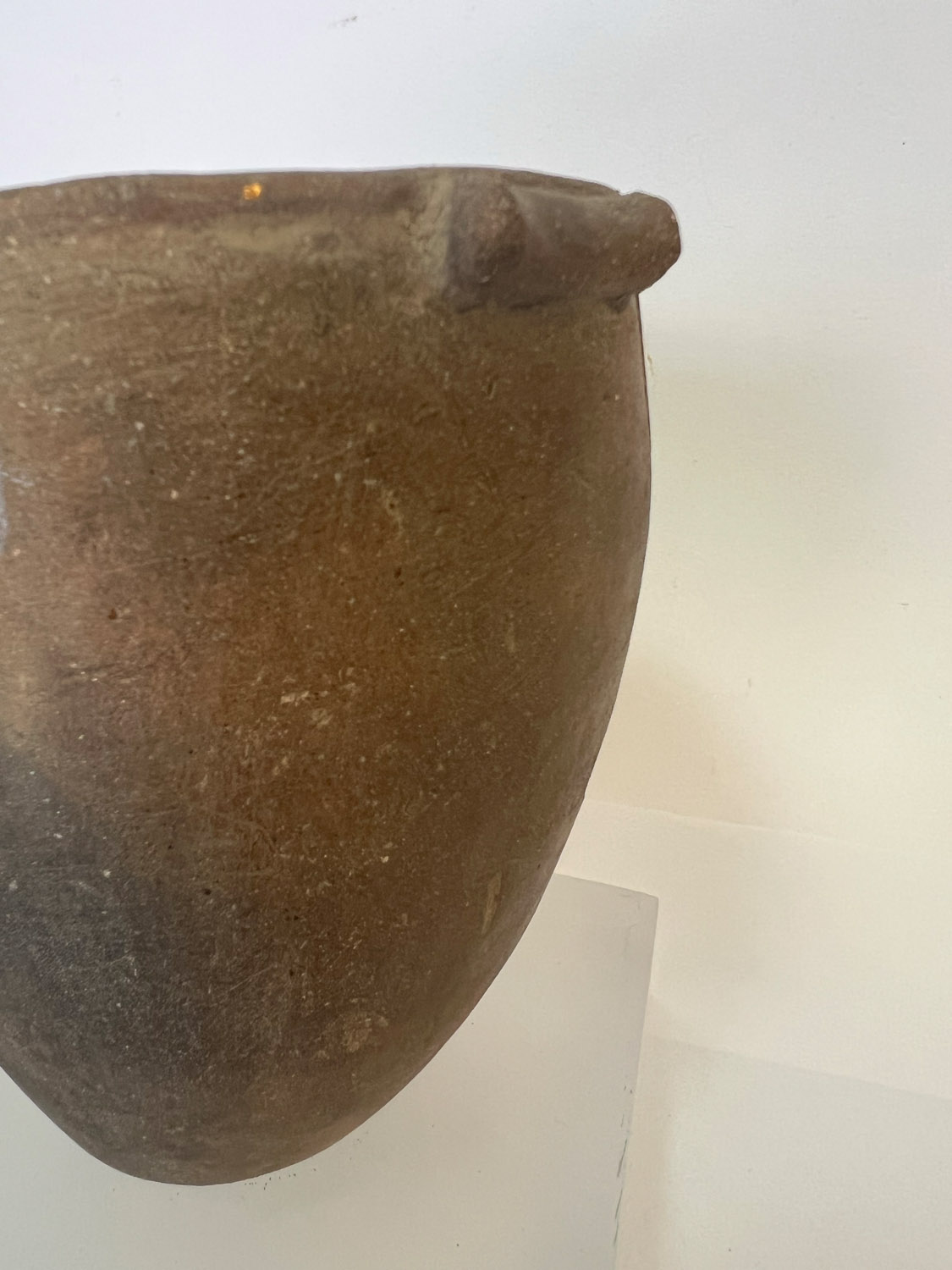
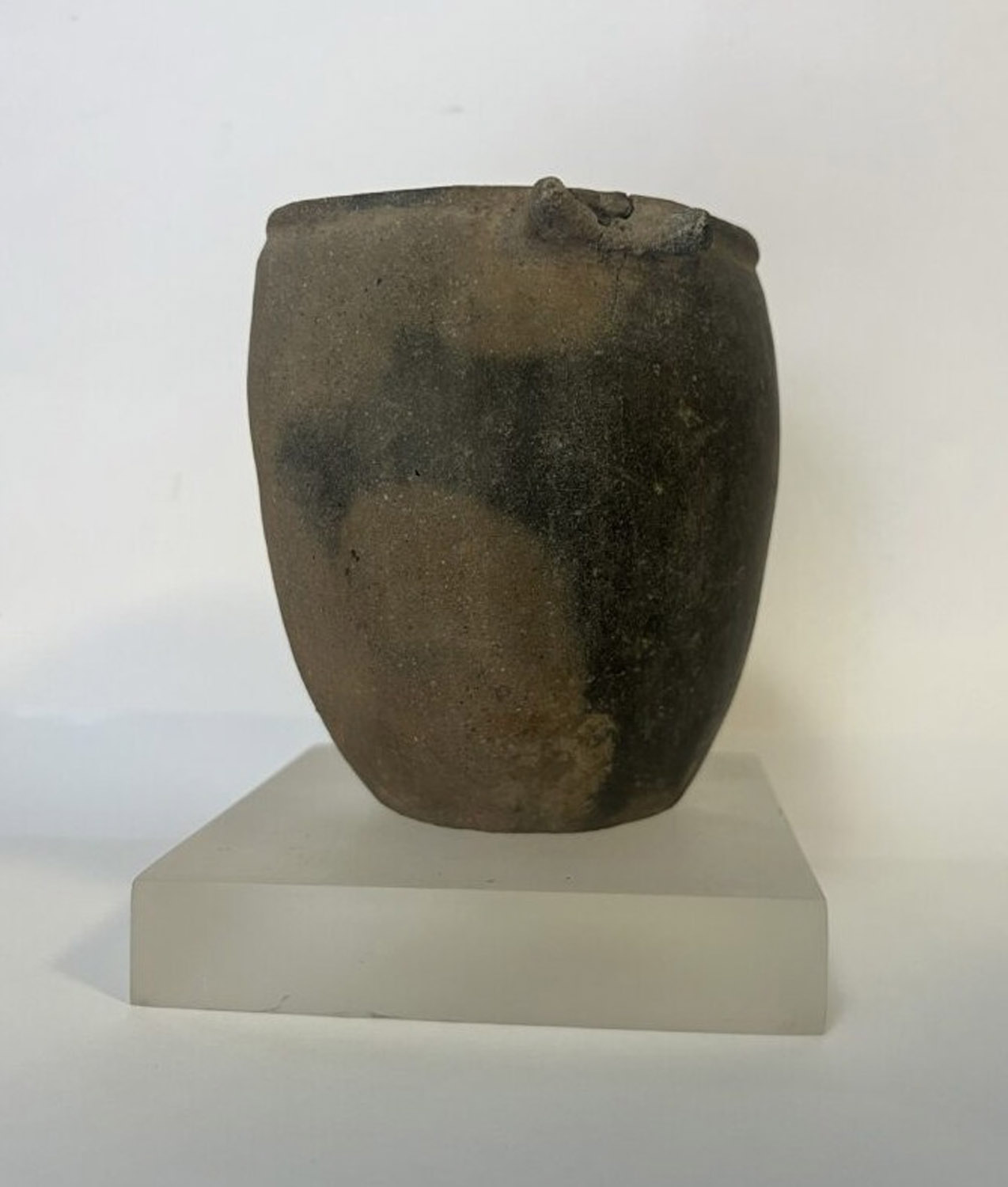
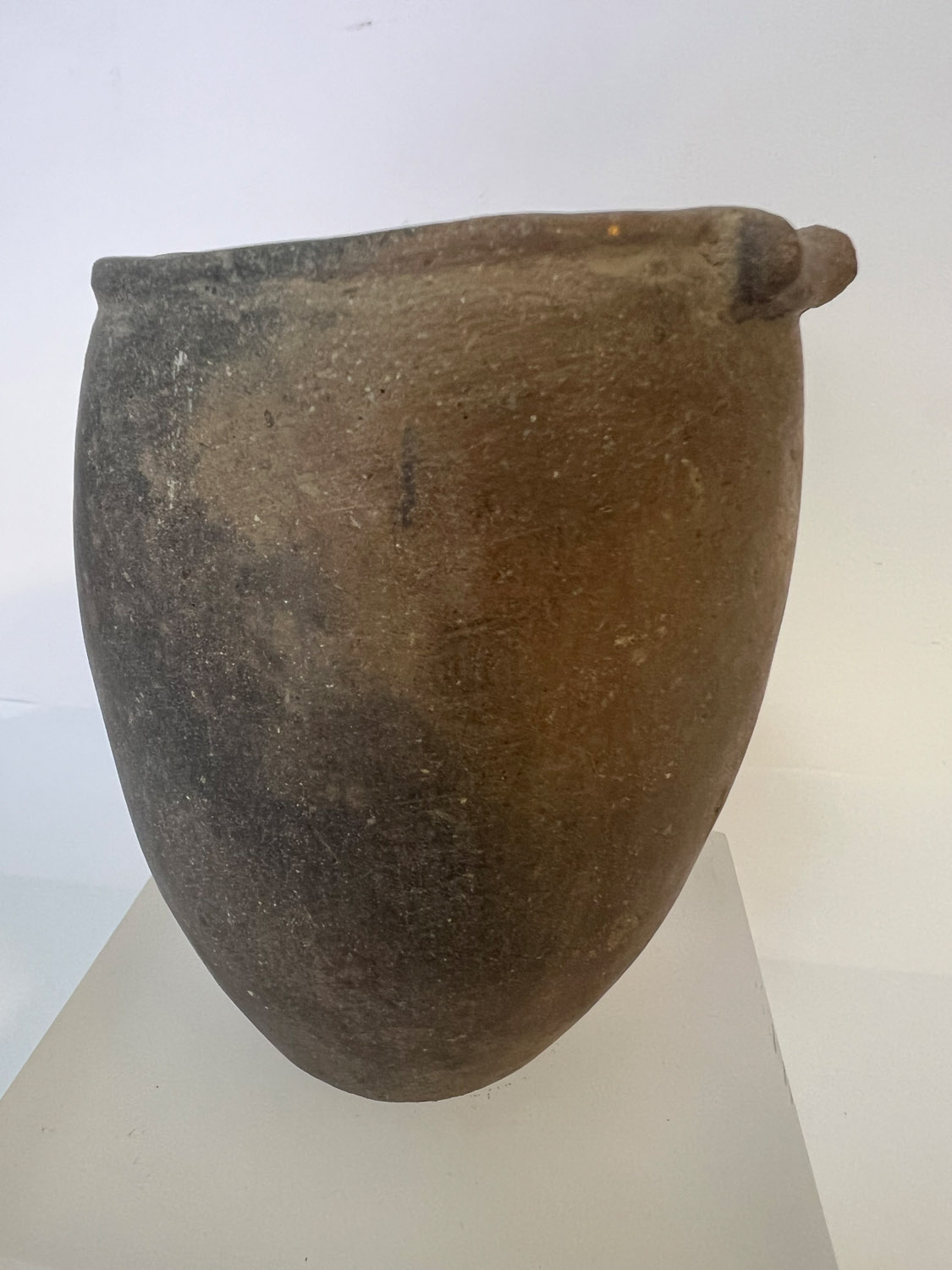
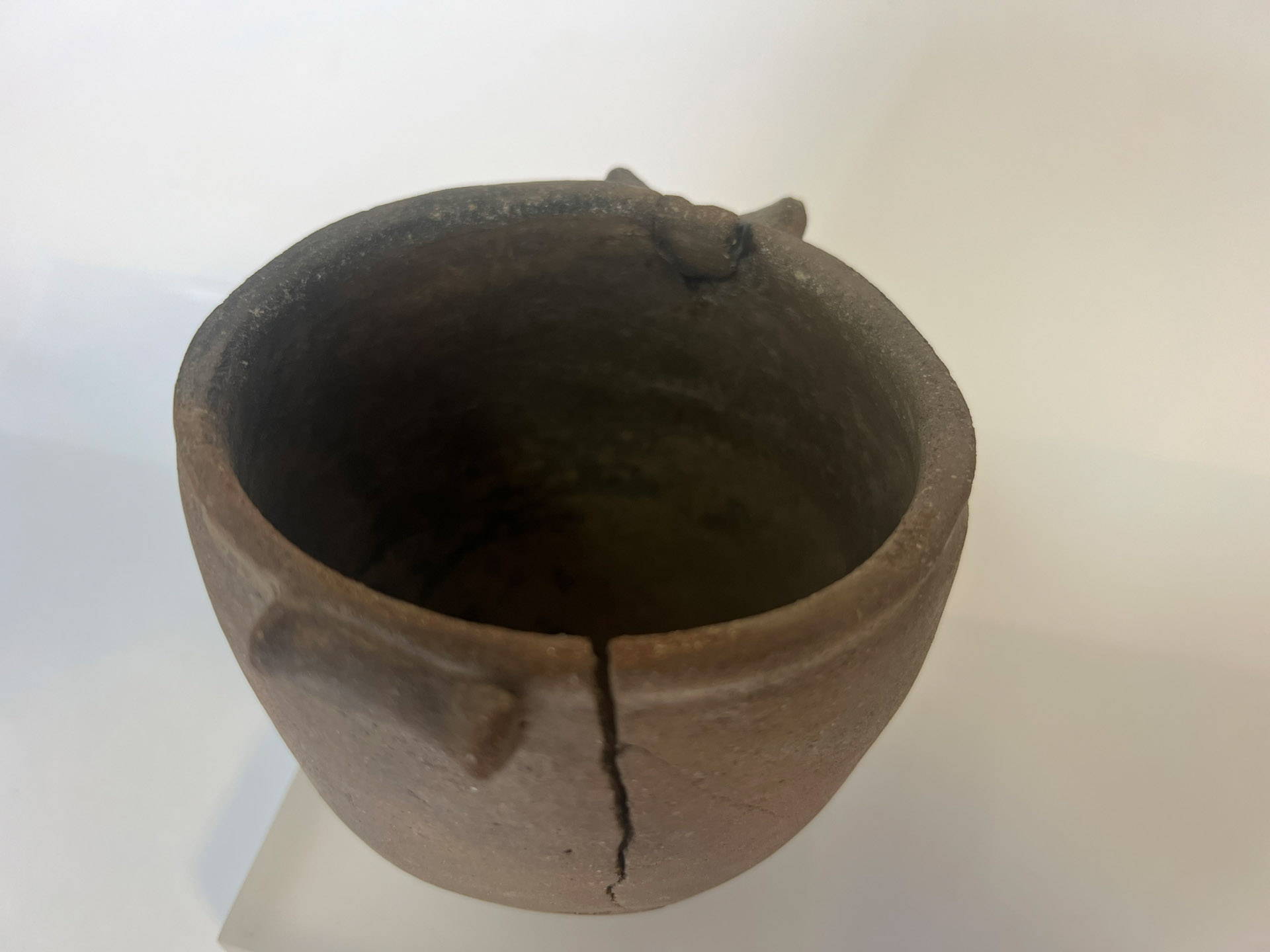
Handmade Vessel in Coarse Clay
Description
Cylindrical-ovoid vessel (olla) made of coarse, unrefined clay and shaped by hand, known as impasto ware. The handles are spool-shaped, tapering toward the center.
The olla comes from the funerary assemblage
... read more >Cylindrical-ovoid vessel (olla) made of coarse, unrefined clay and shaped by hand, known as impasto ware. The handles are spool-shaped, tapering toward the center.
The olla comes from the funerary assemblage of a Neolithic burial (3500–3000 BC) discovered at the site of Carìa, in the territory of Girifalco (CZ). The tomb was identified in 1899 by Marquis Armando Lucifero, together with another burial; both were characterized by a kind of stone cist formed by large limestone slabs arranged around and above the interments. For many years, this discovery represented a key piece of evidence for reconstructing patterns of human settlement in prehistoric Calabria. In addition to this olla, the grave goods included a cup—also made of impasto ware with spool-shaped handles—a fragment of a flint blade, and a stone disc with a central perforation. These finds provide important evidence of everyday objects that likely assumed ritual or symbolic significance within the funerary context.
read less <INSIGHTS >
Explore the areas of Crotone and Sibari
History awaits you inside the Archaeological Sites of Crotone and Sibari. Start your visit.
planDiscover current events
Concerts, tastings and dedicated exhibitions to relive the history of Magna Graecia.
discover more
Experience the Parks and Museums
History awaits you inside the Archaeological Sites of Crotone and Sibari. Start your visit.
plan

Whether you are with family, at school or experience the world in a unique way, here you will find paths designed for you.