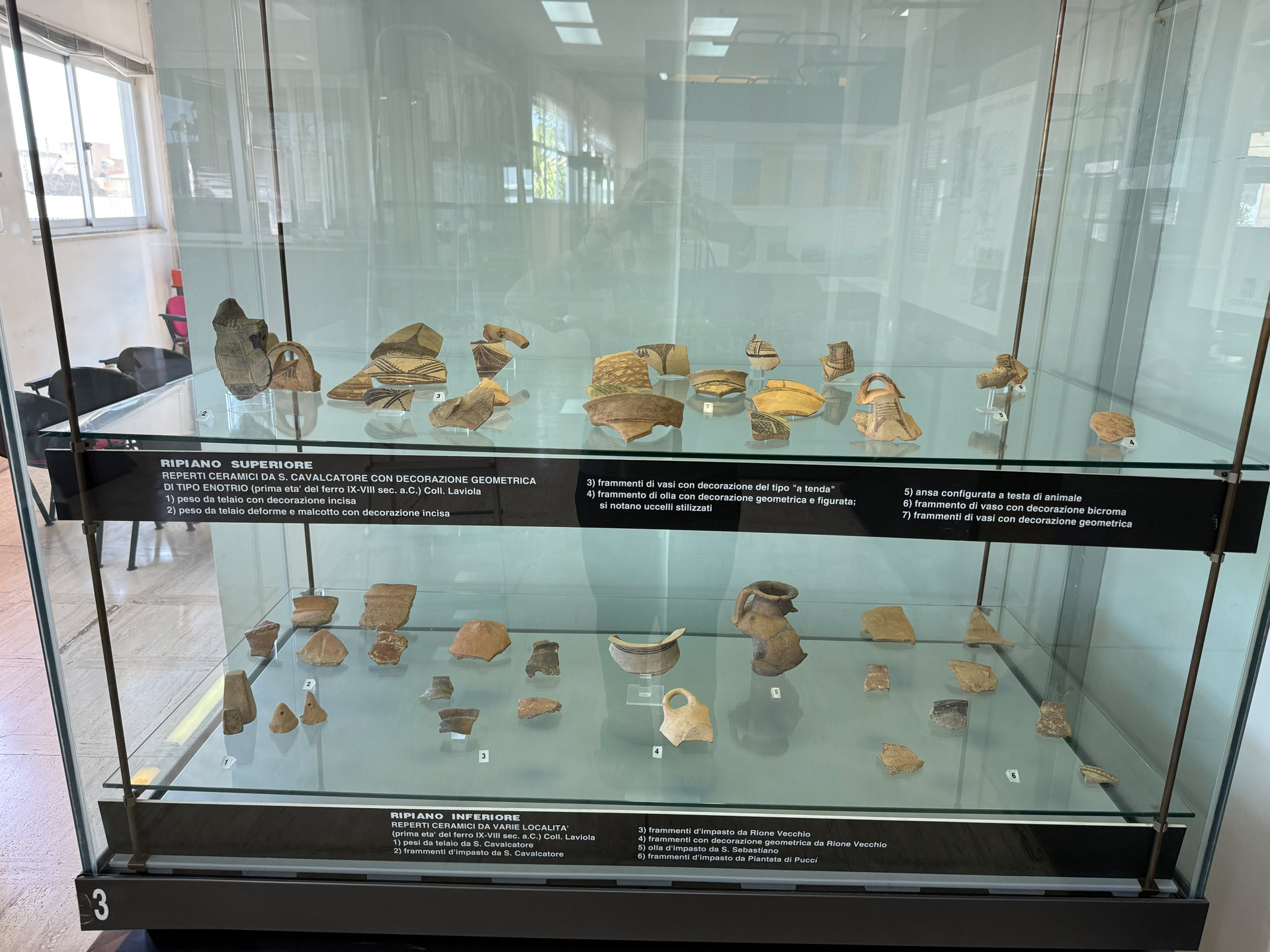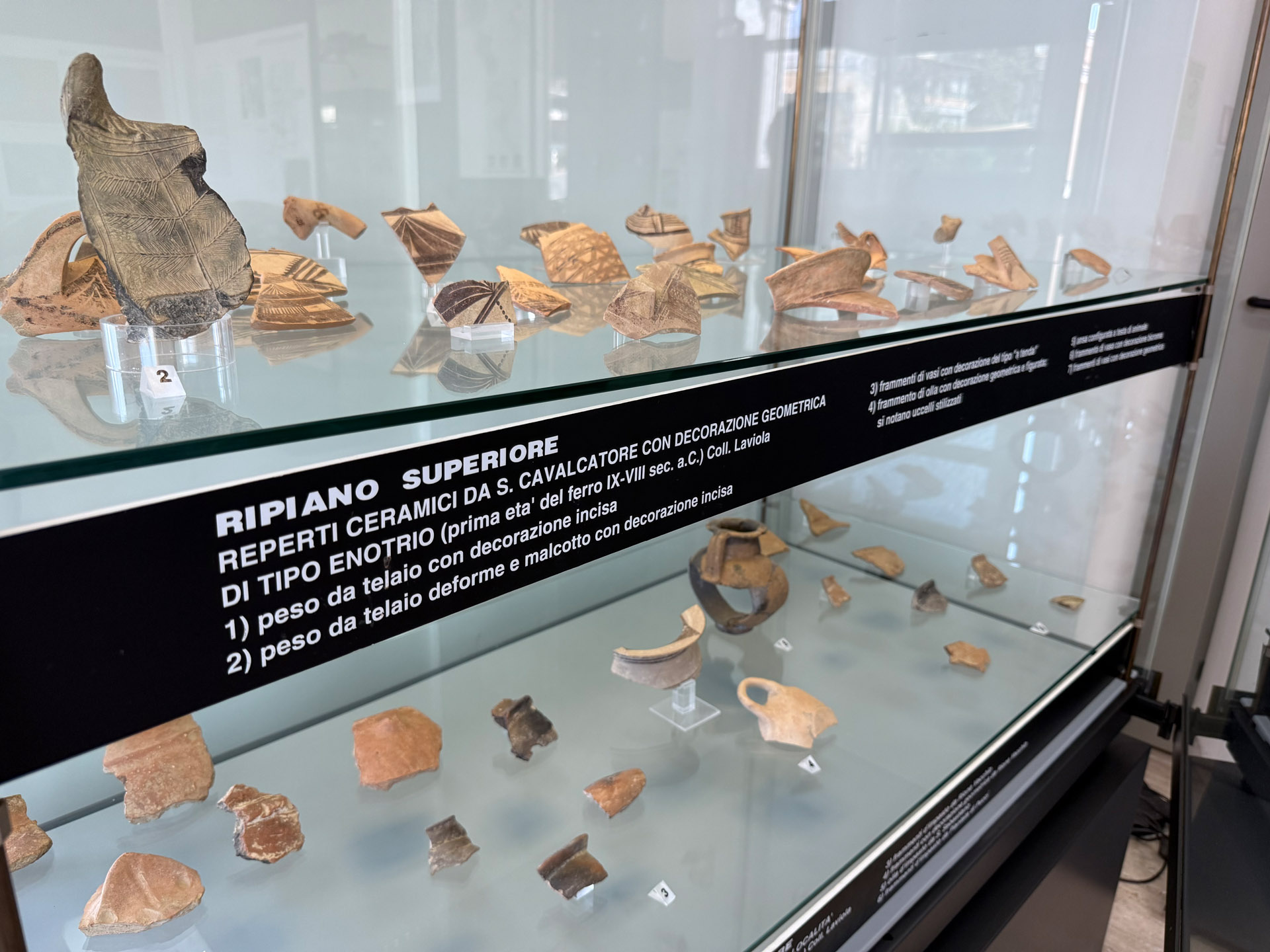
Amendolara is a small town located on the Ionian coast of Calabria that conceals an ancient and fascinating past. Before becoming the village known today, it was an important settlement within the Sibaritide, an area rich in history and culture. The origins of Amendolara lie in protohistory, when organized communities developed on the hills that characterize the territory, forming stable settlements connected to one another and in direct contact with other Mediterranean populations.
The earliest evidence for the foundation of a settlement at Amendolara dates to the Bronze Age, between the 16th and 14th centuries BC, when the hill of Rione Vecchio—where the historic center of the modern town now stands—was chosen as the site of the first habitation. The settlement enjoyed a strategic position
... read more >Amendolara is a small town located on the Ionian coast of Calabria that conceals an ancient and fascinating past. Before becoming the village known today, it was an important settlement within the Sibaritide, an area rich in history and culture. The origins of Amendolara lie in protohistory, when organized communities developed on the hills that characterize the territory, forming stable settlements connected to one another and in direct contact with other Mediterranean populations.
The earliest evidence for the foundation of a settlement at Amendolara dates to the Bronze Age, between the 16th and 14th centuries BC, when the hill of Rione Vecchio—where the historic center of the modern town now stands—was chosen as the site of the first habitation. The settlement enjoyed a strategic position, naturally defended by steep hillsides on three sides, while on the fourth it overlooked the sea, allowing control of commercial routes and defense against attacks.
Finds recovered since the 1970s have revealed the presence of huts, stone tools, and pottery, attesting to a population whose livelihood was based on agriculture, animal husbandry, and exchange with nearby settlements. The superimposition of the modern village makes it difficult to reconstruct the exact internal organization of the ancient settlement, but archaeological evidence suggests that it covered an area slightly smaller than approximately 10 hectares.
read less <