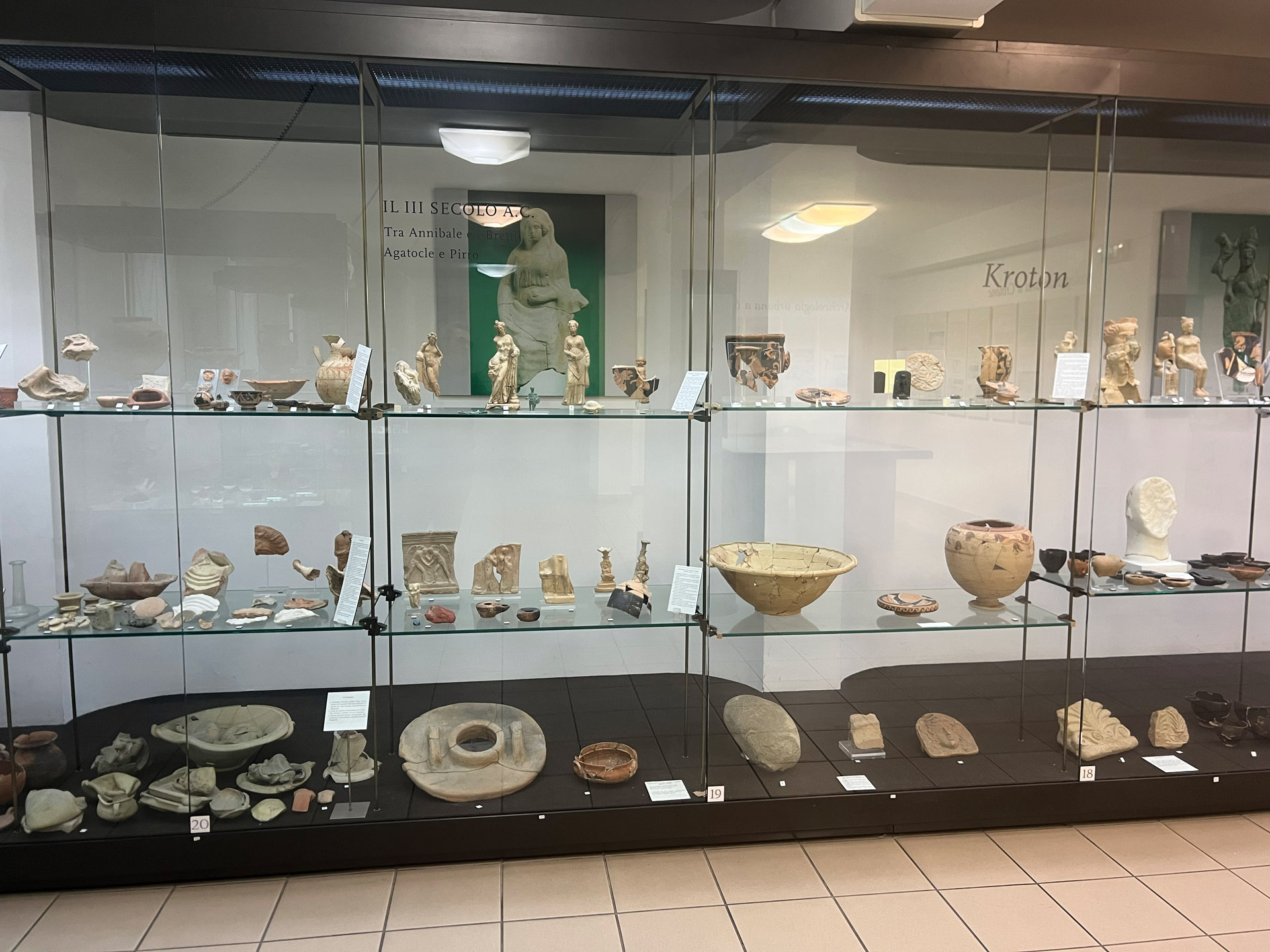
In the 3rd century BC, Crotone was no longer the great power of Magna Graecia that in previous centuries had excelled in military strength, philosophical culture, and athletic prestige. Although the city continued to play an important role within the urban network of the Ionian coast, it experienced a slow but steady political decline, marked by internal crises and by its entry into the sphere of Roman influence.
Two key moments shaped this century: Crotone’s involvement in the war between Taranto and Rome and its participation in the Second Punic War.
In 277 BC, during the Tarantine War, Crotone initially allied itself with Rome and later with General Pyrrhus, who had arrived from Epirus to aid Taranto. This shift in allegiance led to an attack by the troops of the Roman general Cornelius
... read more >In the 3rd century BC, Crotone was no longer the great power of Magna Graecia that in previous centuries had excelled in military strength, philosophical culture, and athletic prestige. Although the city continued to play an important role within the urban network of the Ionian coast, it experienced a slow but steady political decline, marked by internal crises and by its entry into the sphere of Roman influence.
Two key moments shaped this century: Crotone’s involvement in the war between Taranto and Rome and its participation in the Second Punic War.
In 277 BC, during the Tarantine War, Crotone initially allied itself with Rome and later with General Pyrrhus, who had arrived from Epirus to aid Taranto. This shift in allegiance led to an attack by the troops of the Roman general Cornelius Rufinus, who captured the city. The historian Livy recounts that the population, already reduced in the preceding period, now numbered only about 2,000 inhabitants.
During the Second Punic War, which brought Hannibal to southern Italy, the population became divided: the aristocracy supported Rome, while the common people backed the Carthaginian general and the Brettii, an indigenous people allied with him. The city fell into their hands, suffering a further collapse. At the end of the war, the Romans founded a maritime colony there, composed of 300 citizens and led by Gnaeus Octavius, Lucius Aemilius Paullus, and Gaius Laetorius.
Livy relates that even twenty years after these events, Crotone had not yet recovered. He recounts the difficulty of repairing the temple of Hera Lacinia on the promontory of Capo Colonna, from which marble roof tiles had been removed, due to a shortage of craftsmen. The urban center, much smaller in extent than the Greek city, occupied mainly the ancient acropolis and part of the nearby plain, as shown by the necropolises discovered during excavation campaigns in the present-day city center. These have provided valuable information on the city’s demography and economy during this historical phase.
read less <