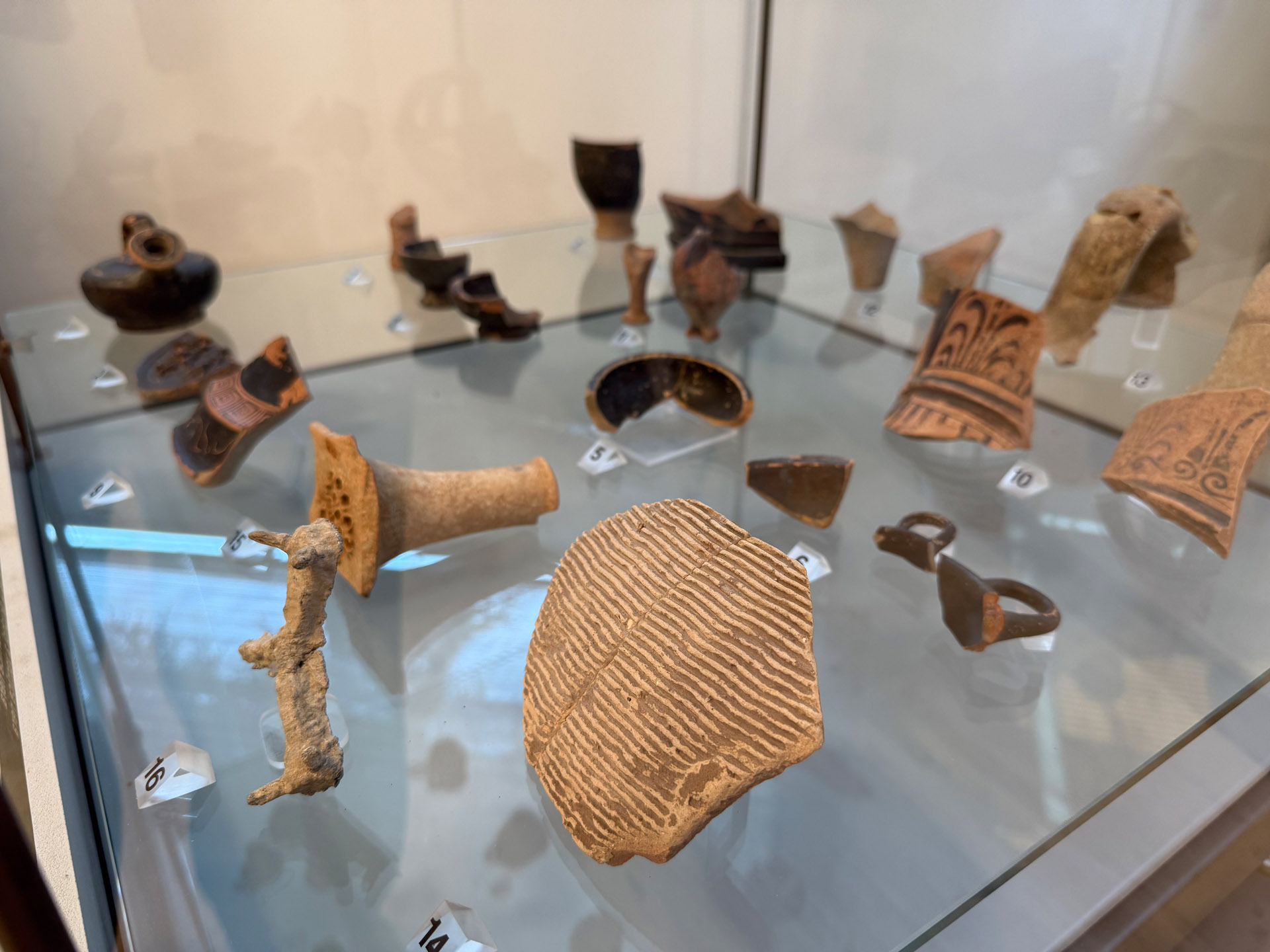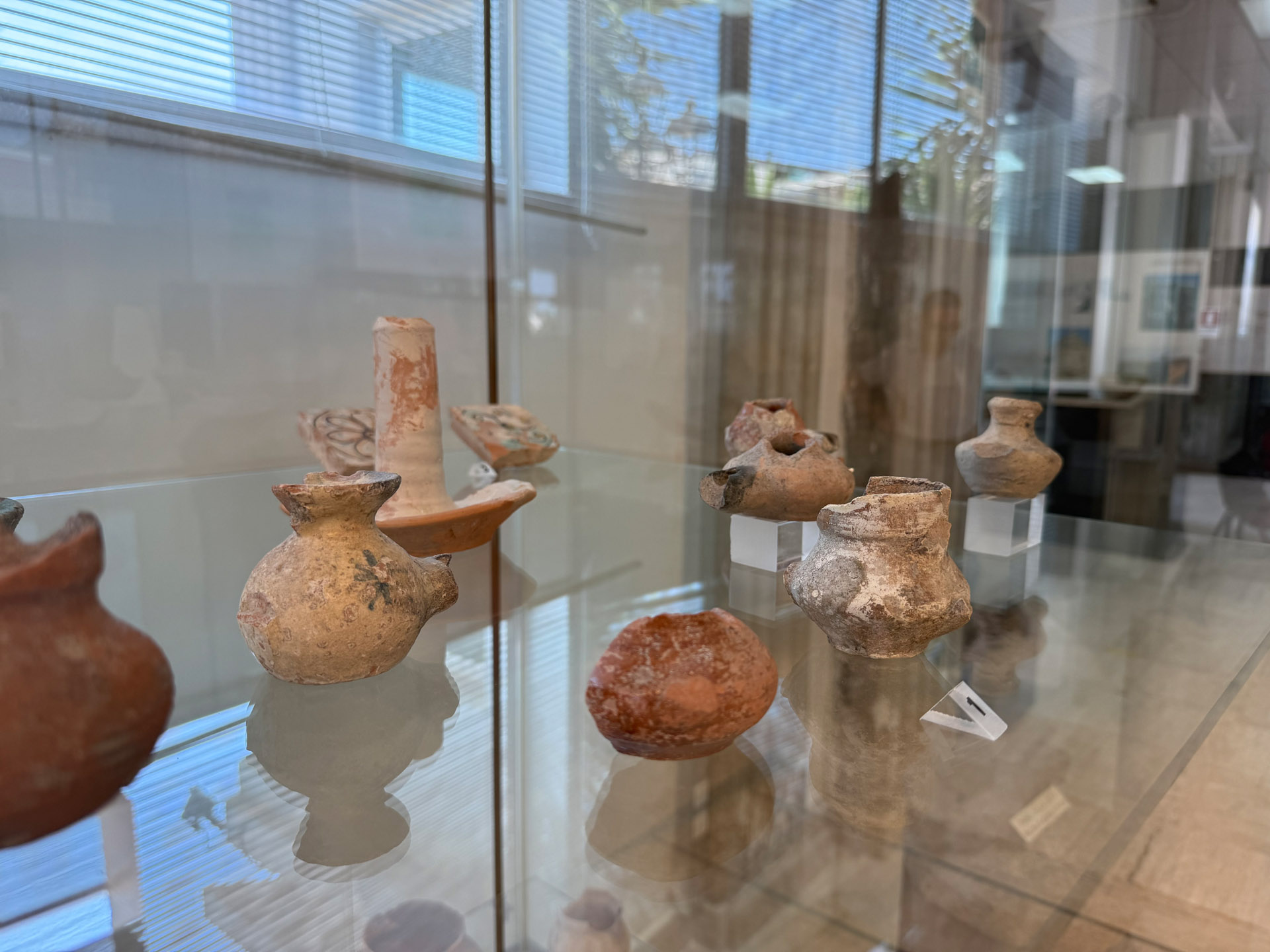
Between the 5th and the 1st centuries BC, archaeological evidence from the territory of Amendolara is scarce and sporadic, indicating a period of relative marginality compared to the major centers of Magna Graecia. The ancient settlement of San Nicola, which had flourished during the Archaic period, had by then disappeared, and in its place only small rural settlements survived, scattered irregularly across the landscape.
Among the few material traces from the Roman period is a cocciopesto floor discovered in the Camodeca area, datable to the 1st century BC. This modest yet significant find suggests the presence of a villa rustica or a residential structure connected with agricultural activity. More substantial remains from the height of the Roman Imperial period have been identified on the
... read more >Between the 5th and the 1st centuries BC, archaeological evidence from the territory of Amendolara is scarce and sporadic, indicating a period of relative marginality compared to the major centers of Magna Graecia. The ancient settlement of San Nicola, which had flourished during the Archaic period, had by then disappeared, and in its place only small rural settlements survived, scattered irregularly across the landscape.
Among the few material traces from the Roman period is a cocciopesto floor discovered in the Camodeca area, datable to the 1st century BC. This modest yet significant find suggests the presence of a villa rustica or a residential structure connected with agricultural activity. More substantial remains from the height of the Roman Imperial period have been identified on the Piano della Lista, near present-day Amendolara Marina. In this area, evidence of building structures and ceramic materials points to the existence of a well-organized rural settlement, perhaps part of an agrarian network serving the supply needs of coastal centers.
After centuries of archaeological silence, the revival of Amendolara occurred only in the medieval period. The new settlement developed precisely in the area that had once hosted the protohistoric habitation, attesting to the enduring attraction of its strategic location, naturally protected and commanding the sea. The Rione Vecchio, the heart of the present historic center, grew around the Norman castle, a symbol of feudal power, and the church of Santa Maria, probably of Byzantine foundation. Today the medieval village appears as an intricate network of alleys, stairways, and stone houses, interspersed with elegant noble palaces and religious buildings of notable interest, such as the church of Santa Margherita.
read less <