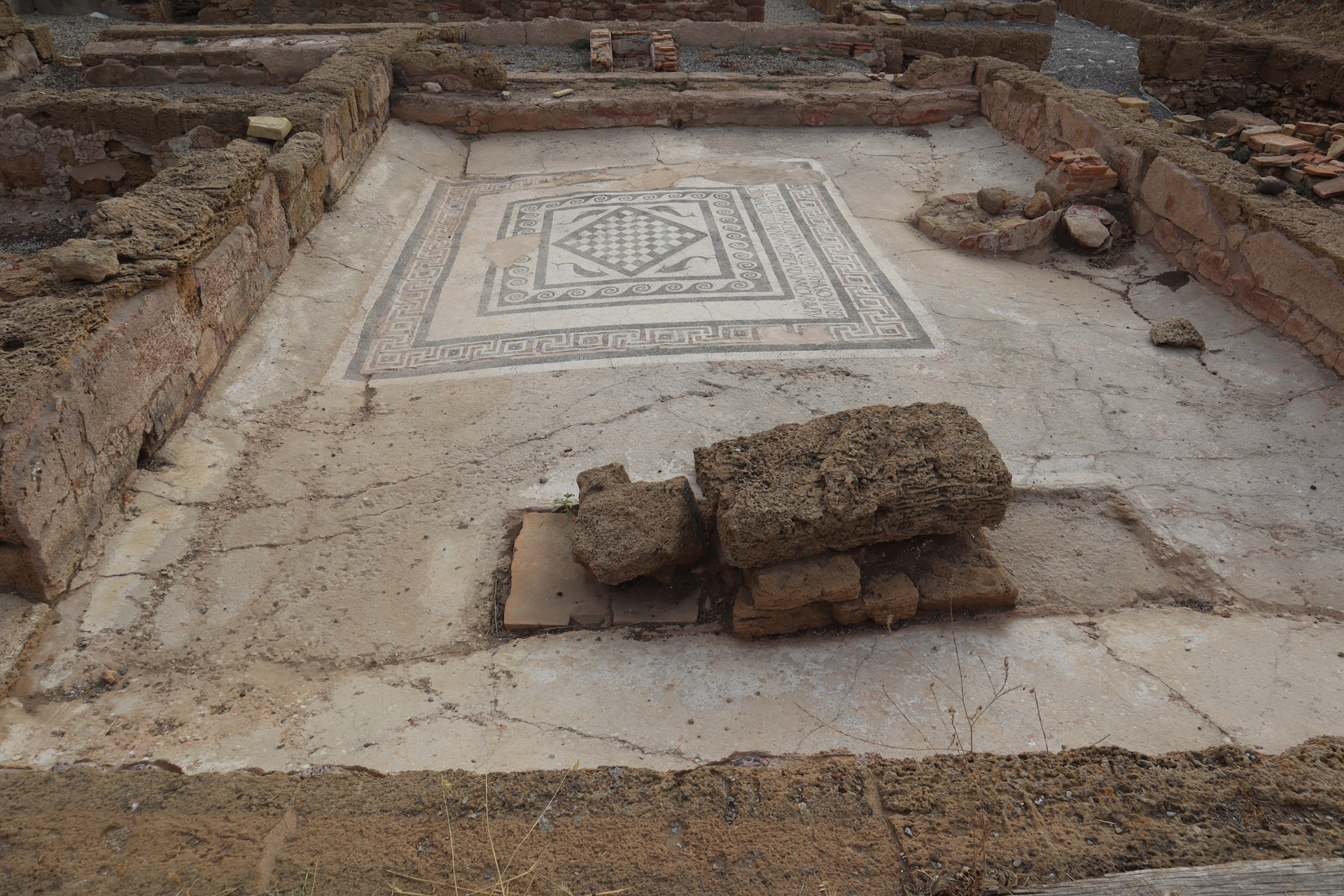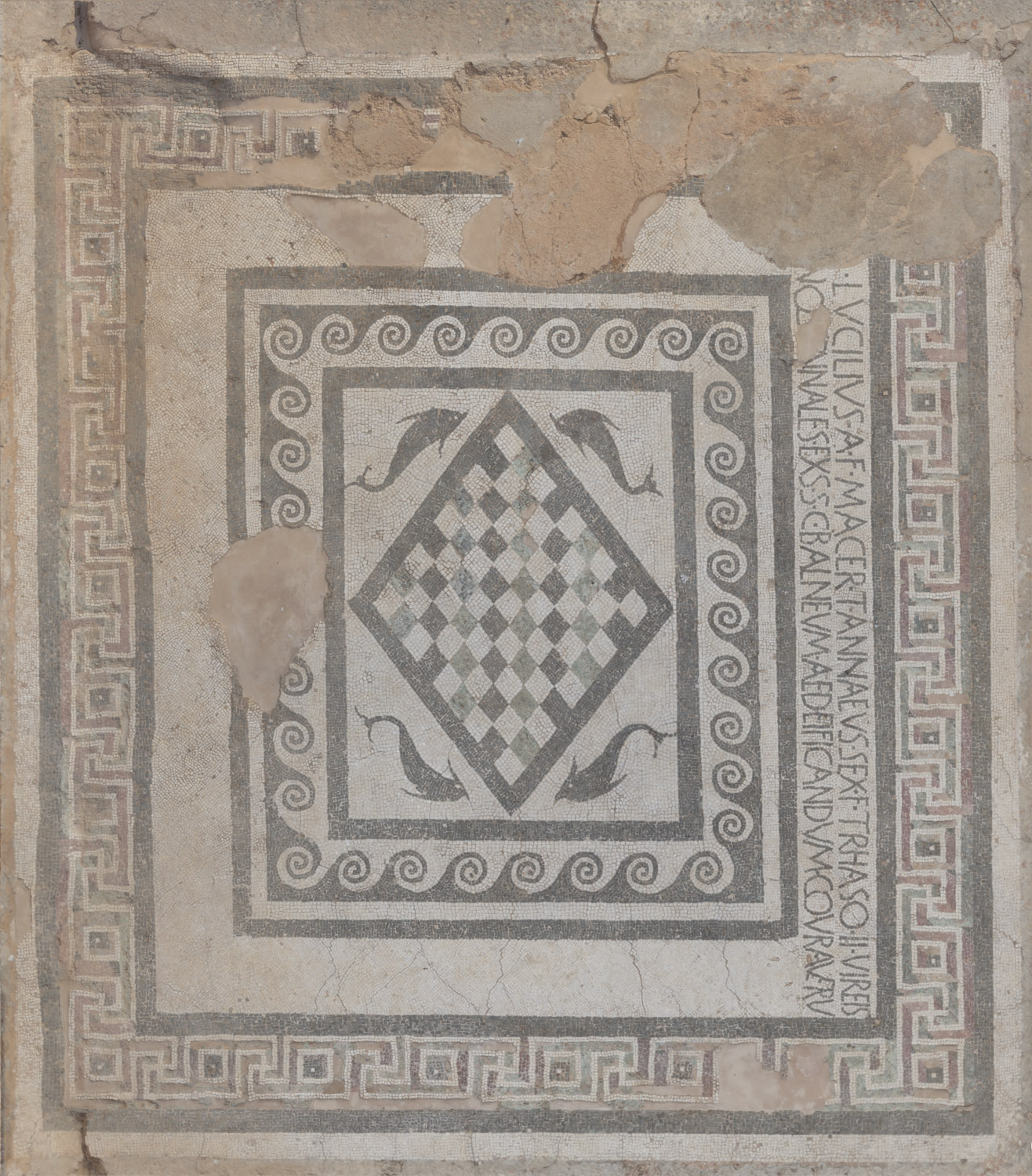
Between the late 2nd century BC and the beginning of the 1st century BC, a building of uncertain function was constructed in the northern area of the promontory. It was characterized by a portico facing the main east–west road (the Via delle Terme), two square rooms, and large rectangular spaces. About thirty years later, the structure was converted into a bath complex (18 × 22 meters), with the addition of a circular sweating room (laconicum) and a furnace (praefurnium) to heat the water of the pool located in an adjoining room, where hot baths took place.
This room is decorated with a beautiful mosaic featuring geometric patterns and depictions of dolphins, and bears an inscription naming the Roman magistrates who commissioned the construction of the balneum: the duoviri
... read more >
Between the late 2nd century BC and the beginning of the 1st century BC, a building of uncertain function was constructed in the northern area of the promontory. It was characterized by a portico facing the main east–west road (the Via delle Terme), two square rooms, and large rectangular spaces. About thirty years later, the structure was converted into a bath complex (18 × 22 meters), with the addition of a circular sweating room (laconicum) and a furnace (praefurnium) to heat the water of the pool located in an adjoining room, where hot baths took place.
This room is decorated with a beautiful mosaic featuring geometric patterns and depictions of dolphins, and bears an inscription naming the Roman magistrates who commissioned the construction of the balneum: the duoviri quinquennales Lucilius Macer and Titus Annaeus Thraso.
Between the end of the 1st century BC and the early decades of the 1st century AD, the building underwent several transformations. First, the internal spaces and circulation routes—still associated with bathing activities—were modified; later, the pools were filled in and the building completely changed its function, which nevertheless remains unknown.
read less <