In the Greek period, the stretch of coast at Le Castella lay within the sphere of influence of the powerful Magna Graecia colony of Kroton, founded by the Achaeans in the 8th century BC and soon becoming one of the main political and commercial centers of Magna Graecia. Thanks to the presence of a natural harbor and a favorable position for controlling maritime routes along the Ionian coastline, the islet of Le Castella represented a strategic point for navigation and for the defense of the territory of Kroton.
Between the 4th and 3rd centuries BC, during a phase of reorganization of Kroton’s defensive system, a phrourion—that is, a fortified military outpost—was built on the islet. Its purpose was to monitor coastal traffic and to ensure the security of the connections between the Achaean
... read more >In the Greek period, the stretch of coast at Le Castella lay within the sphere of influence of the powerful Magna Graecia colony of Kroton, founded by the Achaeans in the 8th century BC and soon becoming one of the main political and commercial centers of Magna Graecia. Thanks to the presence of a natural harbor and a favorable position for controlling maritime routes along the Ionian coastline, the islet of Le Castella represented a strategic point for navigation and for the defense of the territory of Kroton.
Between the 4th and 3rd centuries BC, during a phase of reorganization of Kroton’s defensive system, a phrourion—that is, a fortified military outpost—was built on the islet. Its purpose was to monitor coastal traffic and to ensure the security of the connections between the Achaean colonies of Kroton, Kaulon, and Locri. This role as a garrison and maritime lookout is further confirmed by the site’s dominant position and its visual interconnection with other fortified points along the Ionian coast.
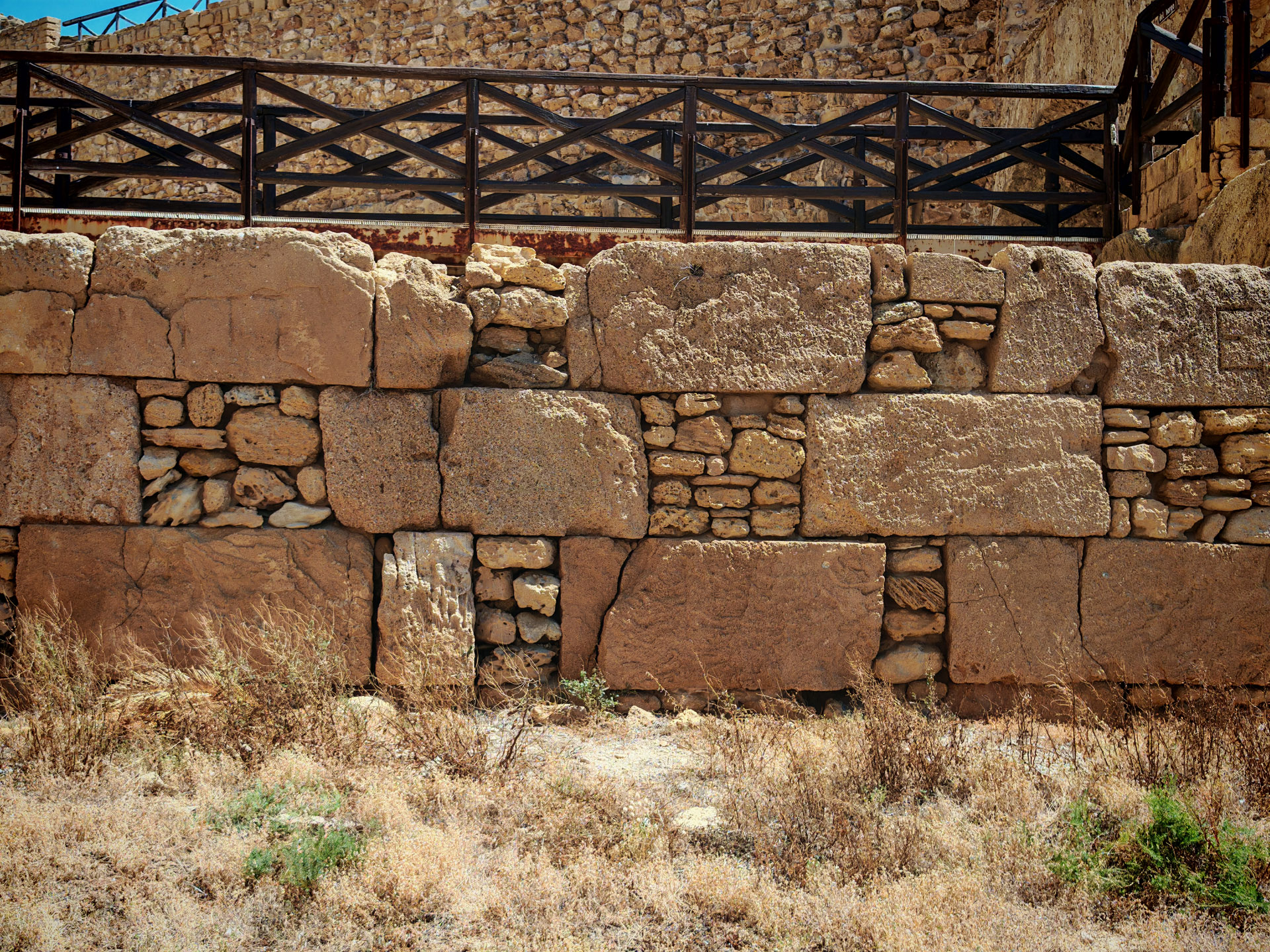
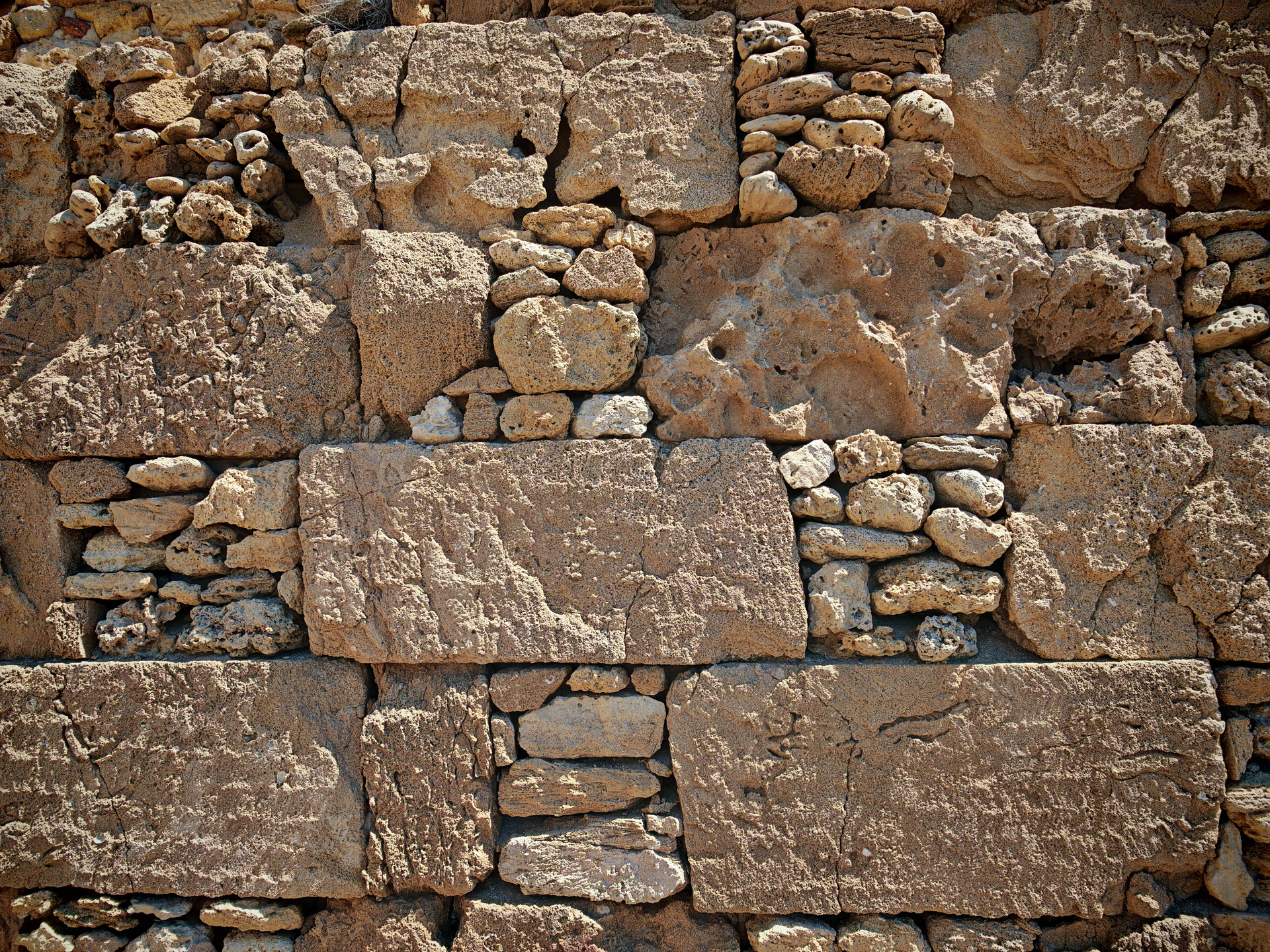
The archaeological remains of the phrourion, partly incorporated into later medieval and Renaissance constructions, are still clearly recognizable today. Of particular importance is a long stretch of walling built using the so-called “checkerboard” technique, characterized by the regular alternation of squared stone blocks and areas of infill made of irregular dry-laid stone. This wall, preserved for about 30 meters in length and 3 meters in height, represents a remarkable example of Hellenistic military architecture.
Other wall segments belonging to the same defensive complex are visible on the western side of the islet, beneath the medieval and 16th-century fortifications. Archaeological investigations have also brought to light the remains of internal spaces and sections of the perimeter wall, allowing the layout of the fort to be reconstructed as a small coastal stronghold, probably equipped with corner towers and structures intended for surveillance and for sheltering boats.
These material remains, integrated with archival data and the topographical study of the area, convey the image of a fortified settlement with a long lifespan, whose military and strategic vocation was maintained almost uninterruptedly from the Greek period through to the height of the Renaissance.
read less <