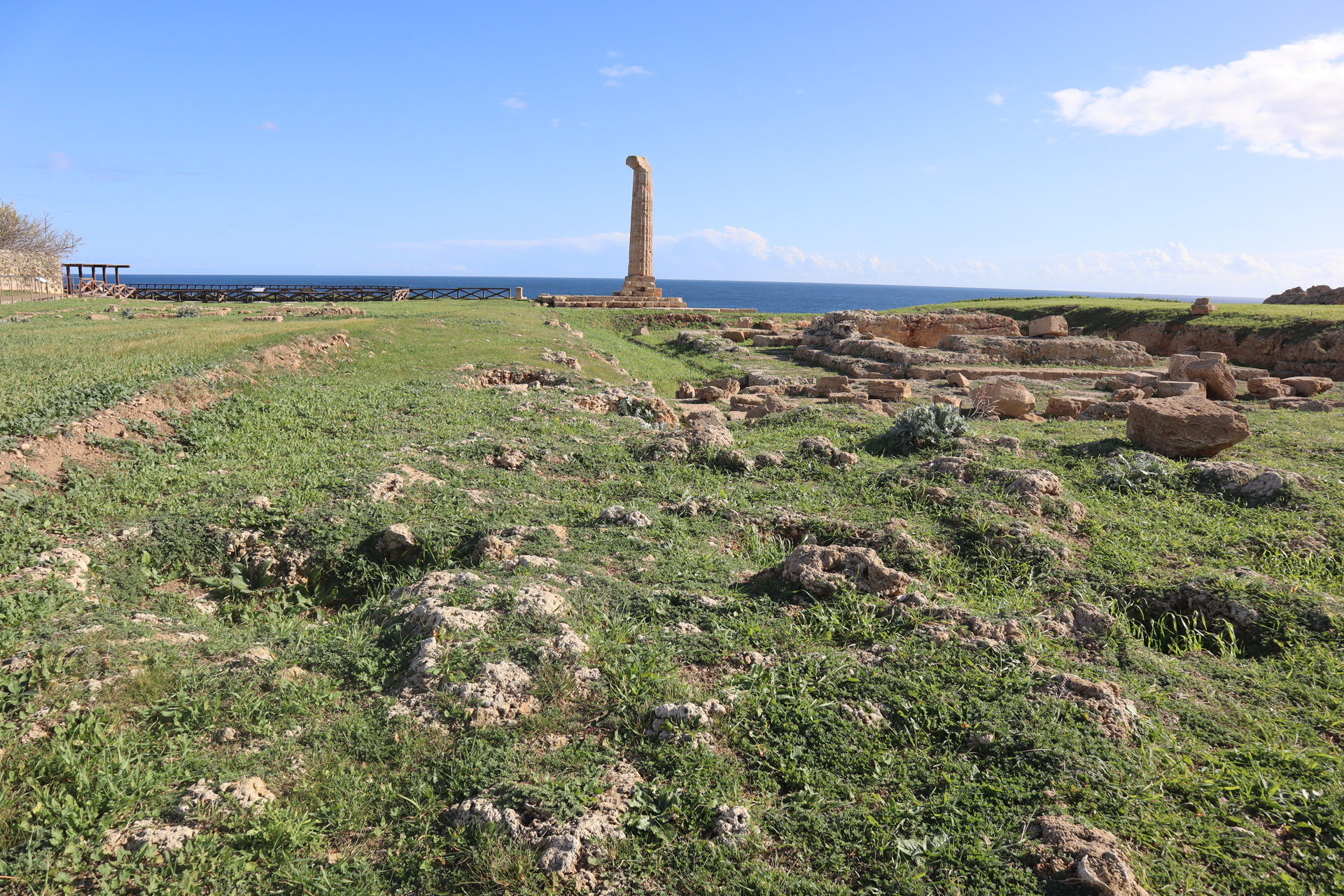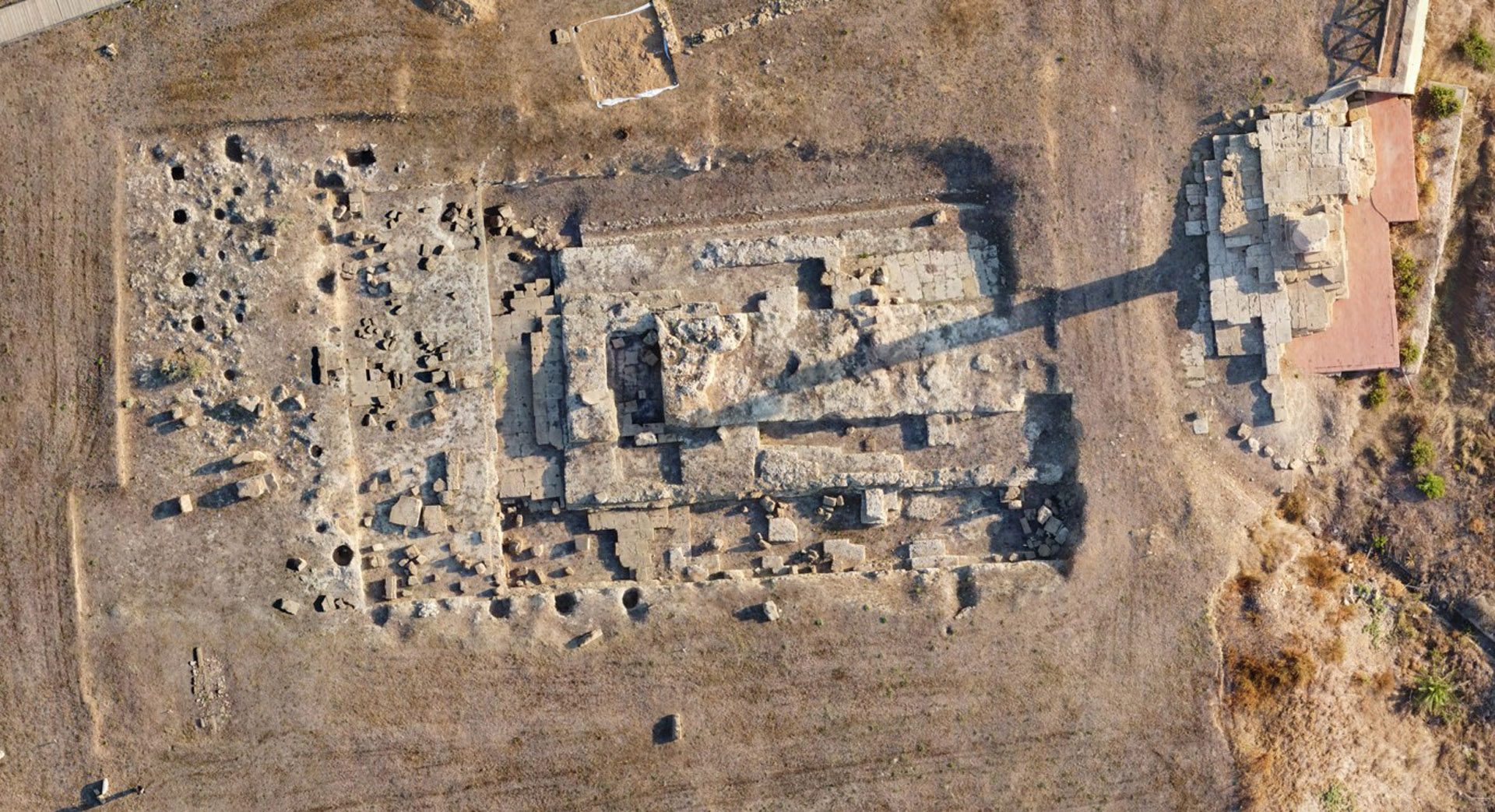
The largest cult building of the sanctuary was a majestic temple with Doric columns made of local limestone (six along the short sides and fourteen along the long sides), perfectly aligned on an east–west astronomical axis and set on a massive platform measuring 22 × 55 meters. The only column preserved today was the second one along the short side facing the sea.
The temple must have been an imposing sight: roof tiles and cover tiles made of white marble imported from the Aegean formed the roof, which was further adorned with sculptural decoration, also in Greek marble, depicting horses and female figures, probably divine and connected to a mythological narrative. The richness of its decorative program—almost unparalleled in the Greek and Magna Graecia world of the 5th century BC—conveys
... read more >The largest cult building of the sanctuary was a majestic temple with Doric columns made of local limestone (six along the short sides and fourteen along the long sides), perfectly aligned on an east–west astronomical axis and set on a massive platform measuring 22 × 55 meters. The only column preserved today was the second one along the short side facing the sea.
The temple must have been an imposing sight: roof tiles and cover tiles made of white marble imported from the Aegean formed the roof, which was further adorned with sculptural decoration, also in Greek marble, depicting horses and female figures, probably divine and connected to a mythological narrative. The richness of its decorative program—almost unparalleled in the Greek and Magna Graecia world of the 5th century BC—conveys the image of an exceptionally prosperous city and bears witness to its deep bond with Hera.
This relationship, however, had begun at least a century earlier. Archaeological excavations have in fact identified traces of another large, finely decorated temple that previously occupied the same area in the 6th century BC, before the construction of the great Classical-period temple.
read less <