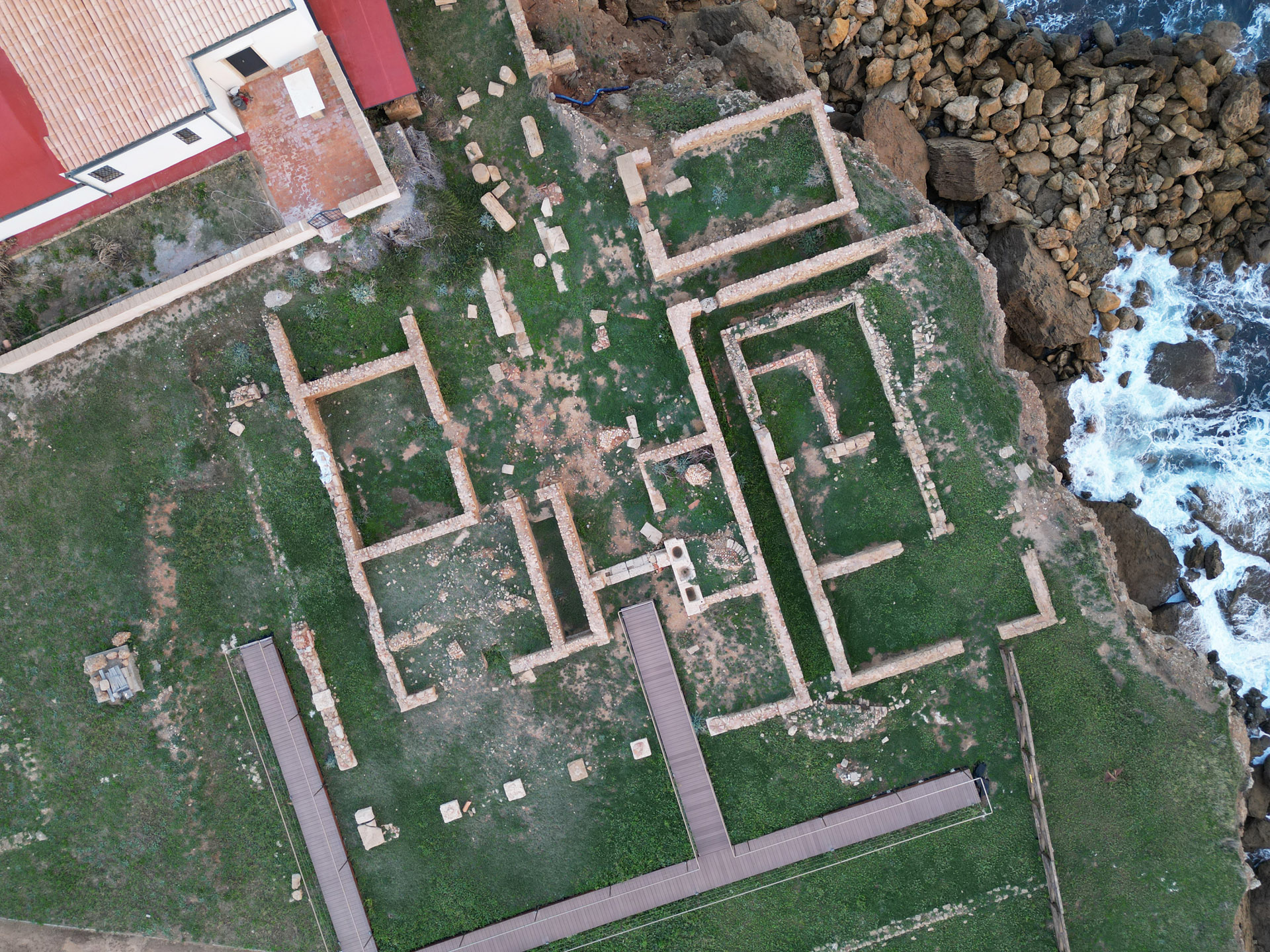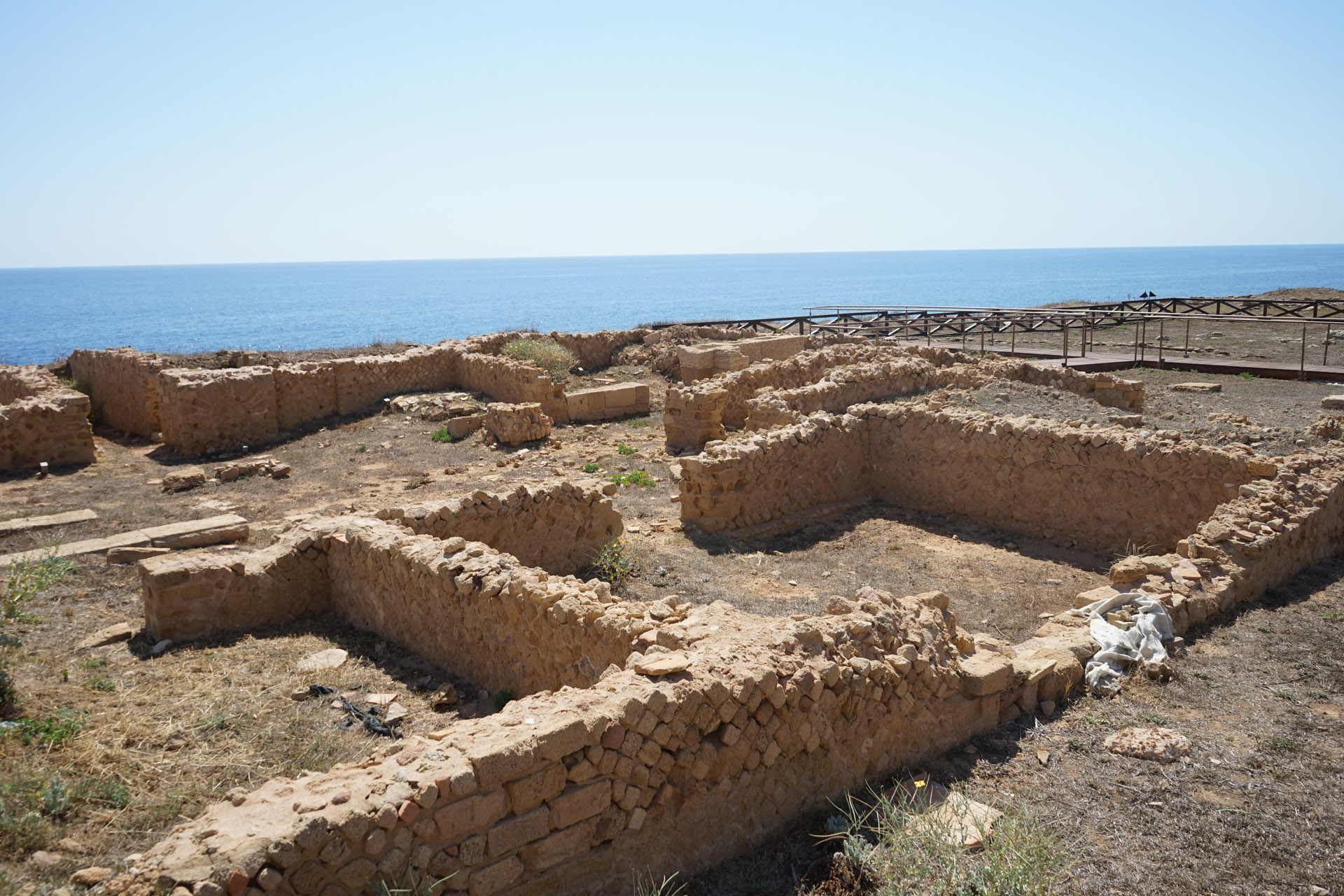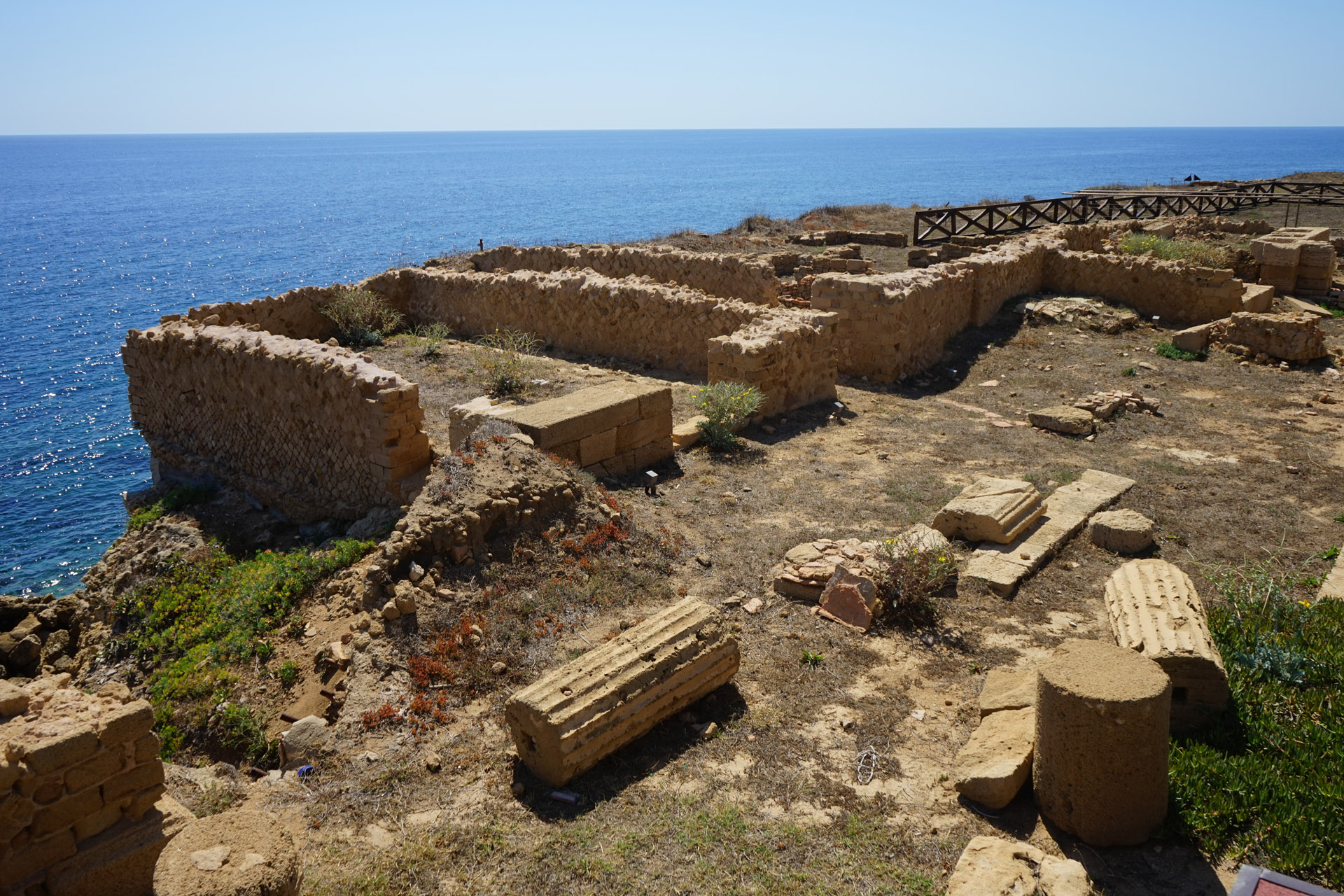
The largest and most sumptuous residence built on the Lacinian promontory in the Roman period is the Domus CRr, constructed in the last three decades of the 1st century BC. Its extent is exceptional: currently reduced to 46.50 × 35 meters (over 1,600 square meters) due to numerous landslides along the cliff, it must originally have covered at least 2,100 square meters, possibly occupying an entire, roughly square city block.
The walls of the rooms are almost entirely built of square limestone blocks (cubilia) laid diagonally in opus reticulatum. The house displays the traditional features of Roman dwellings of the period. After the entrance portico, there followed in sequence a vestibule, opening onto a room used for the sale of beverages (caupona) equipped with a limestone
... read more >
The largest and most sumptuous residence built on the Lacinian promontory in the Roman period is the Domus CRr, constructed in the last three decades of the 1st century BC. Its extent is exceptional: currently reduced to 46.50 × 35 meters (over 1,600 square meters) due to numerous landslides along the cliff, it must originally have covered at least 2,100 square meters, possibly occupying an entire, roughly square city block.
The walls of the rooms are almost entirely built of square limestone blocks (cubilia) laid diagonally in opus reticulatum. The house displays the traditional features of Roman dwellings of the period. After the entrance portico, there followed in sequence a vestibule, opening onto a room used for the sale of beverages (caupona) equipped with a limestone serving counter. This was followed by a large rectangular atrium with a basin (impluvium) for the collection of rainwater and a reception hall (tablinum), both connected to dining rooms (triclinia) or bedrooms (cubicula).
The house underwent numerous renovations during the 1st century AD and ceased to be occupied toward the end of that century. Between the late 2nd and the early 3rd century AD, a small portion of the building was reoccupied with the installation of a kiln, before the site was definitively abandoned during the 3rd century AD.
read less <