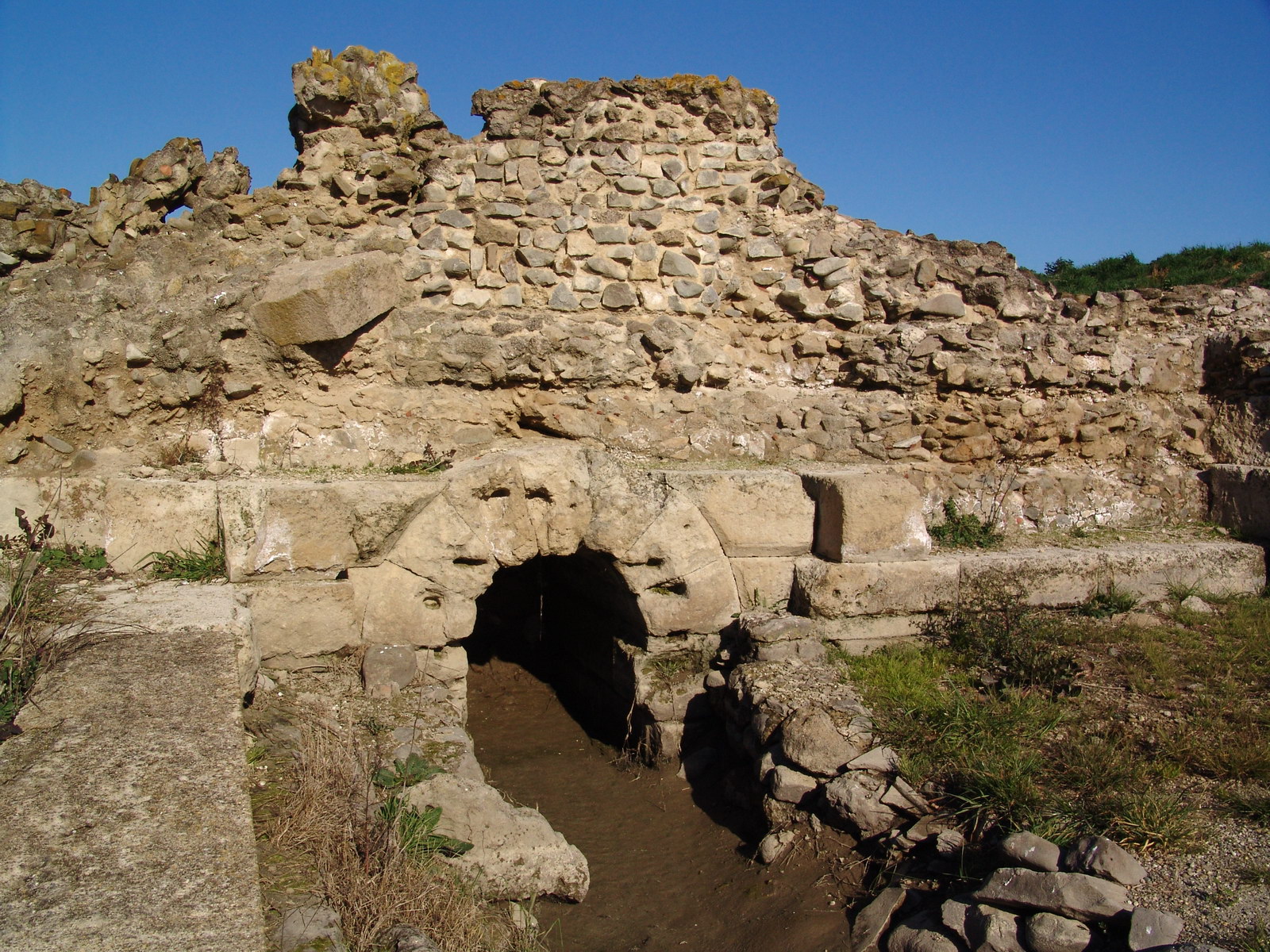
The North Gate was one of the main access points to the ancient city of Copiae and was connected to the system of fortifications that once enclosed the urban center, now no longer preserved. This entrance was located at the junction with plateia A, one of the two main streets running north–south through the city, which continued beyond the city walls toward the northern Ionian coast, linking Copiae to the regional road network.
The structure is characterized by a central arched passage, about 3.60 meters wide, designed to allow the controlled passage of a single cart at a time—a typical security feature of Roman city gates, intended to regulate the flow of people and vehicles entering and leaving the city. On either side of the central entrance were two pedestrian passages, each just over
... read more >The North Gate was one of the main access points to the ancient city of Copiae and was connected to the system of fortifications that once enclosed the urban center, now no longer preserved. This entrance was located at the junction with plateia A, one of the two main streets running north–south through the city, which continued beyond the city walls toward the northern Ionian coast, linking Copiae to the regional road network.
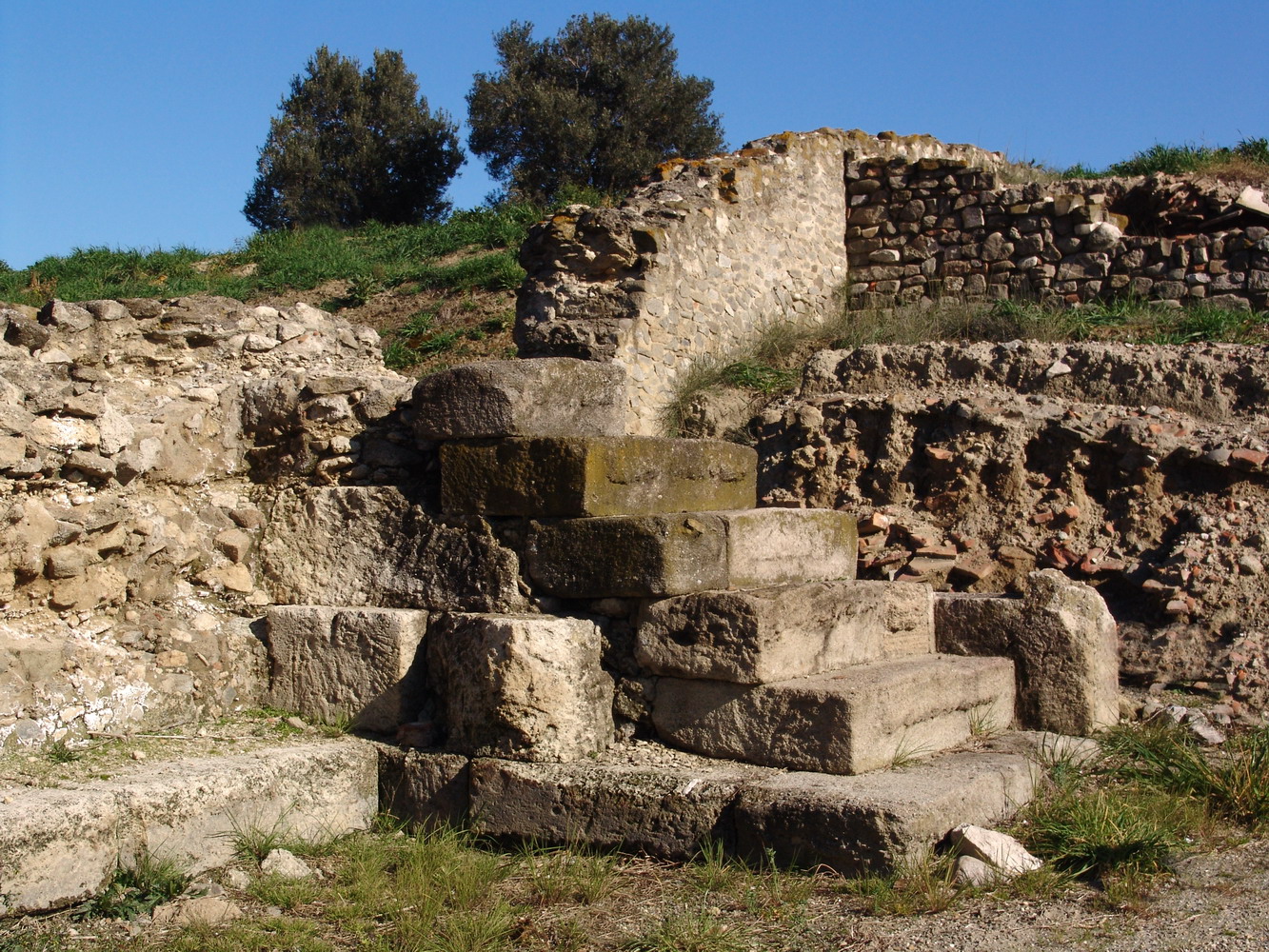
The structure is characterized by a central arched passage, about 3.60 meters wide, designed to allow the controlled passage of a single cart at a time—a typical security feature of Roman city gates, intended to regulate the flow of people and vehicles entering and leaving the city. On either side of the central entrance were two pedestrian passages, each just over one meter wide, intended for foot traffic. Stone steps, still visible today, led to the upper level of the gate, where a patrol walkway was located and, most likely, a small room used by the guard on duty.
Excavations have brought to light numerous blocks belonging to the structure, some of which bear Latin letters forming the initials R E F, an abbreviation of the verb refecit, meaning “rebuilt.” This inscription indicates that the gate underwent a significant restoration or reconstruction around 50 BC, probably in connection with other public works carried out in the city during the Late Republican period. It represents one of the most direct testimonies to the long urban and military life of the city and to the strategic role played by Copiae in controlling the surrounding territory.
read less <