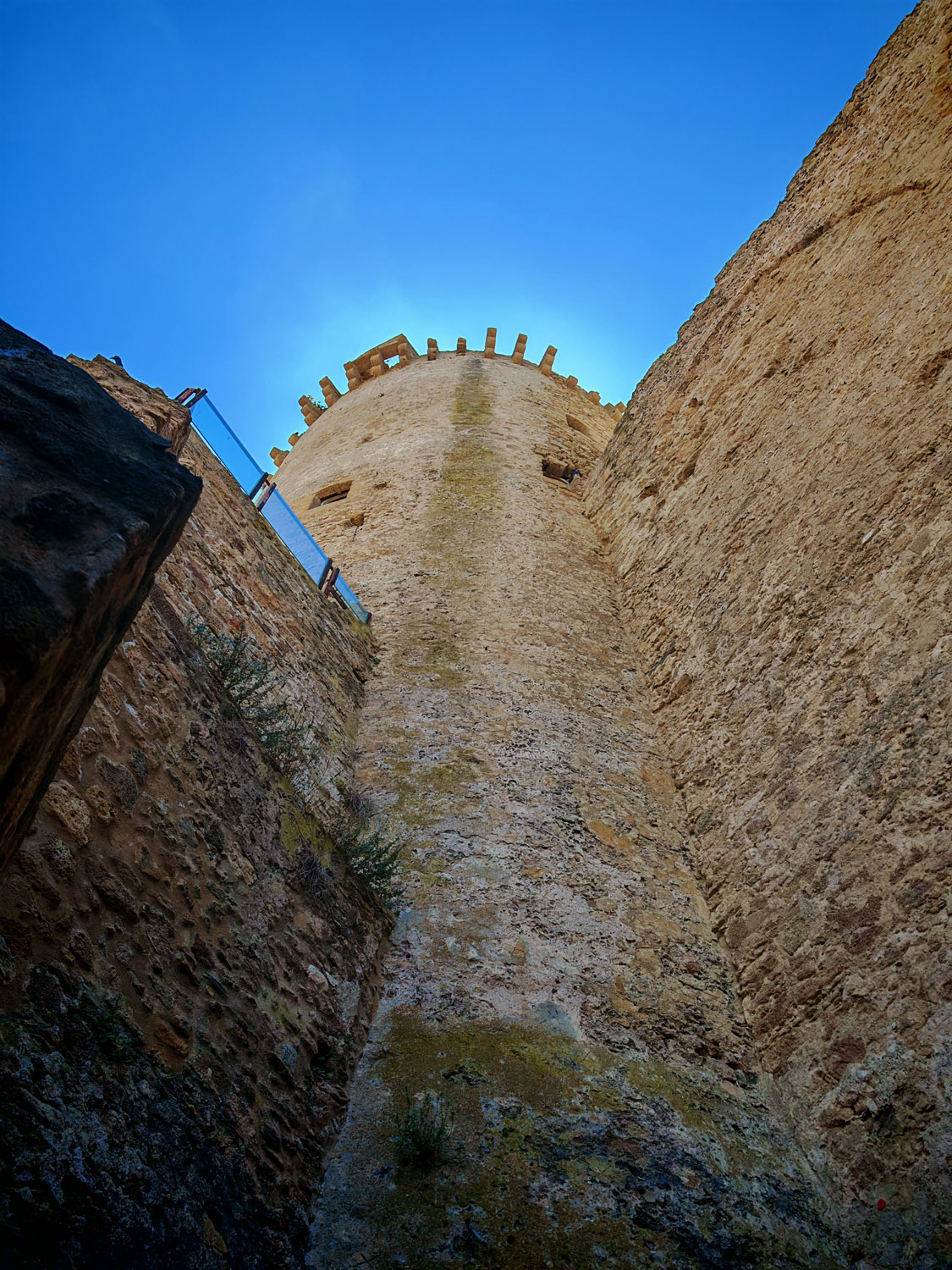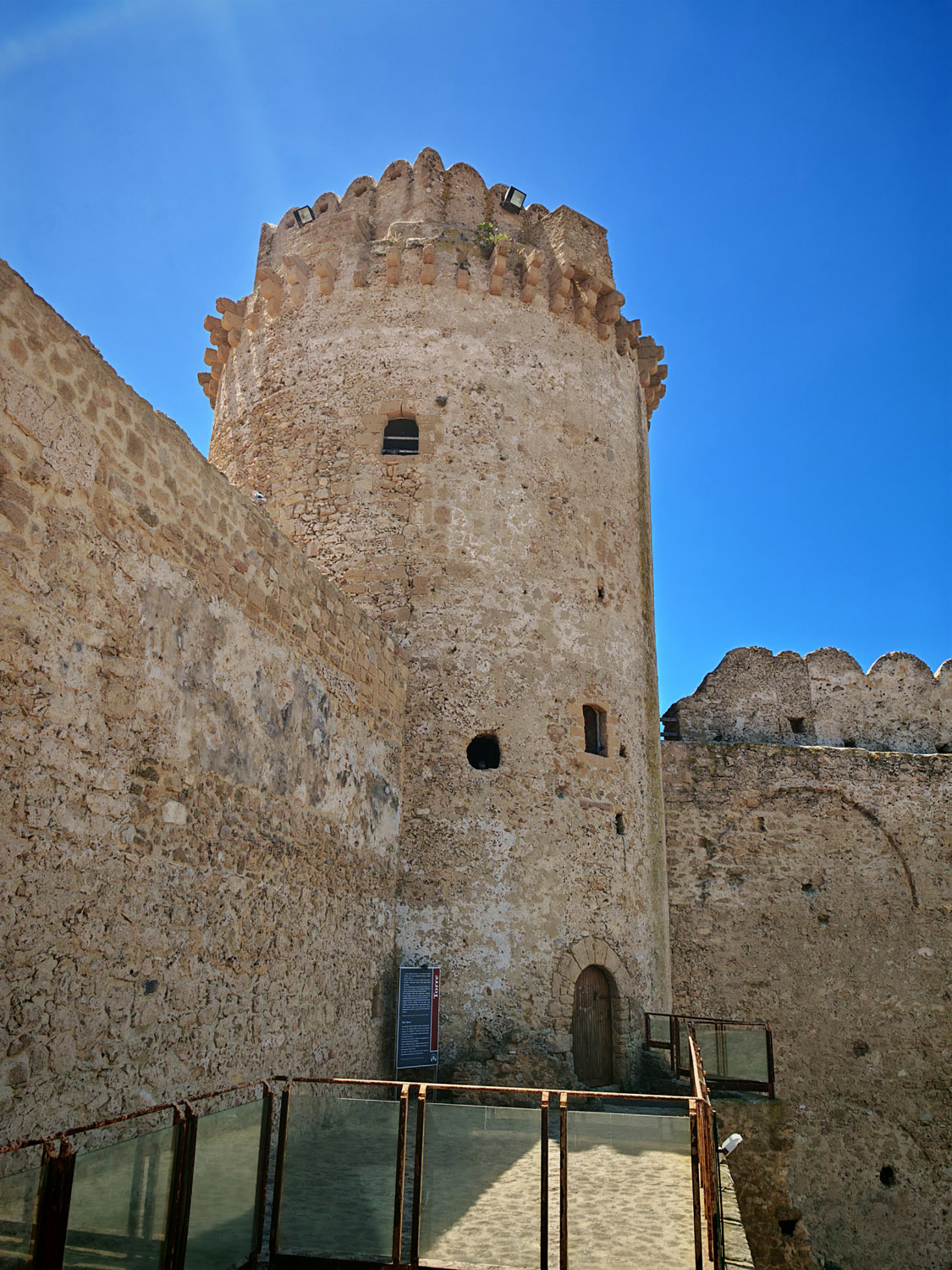
The tower as we see it today is the result of numerous phases of reconstruction and enlargement carried out between the 13th and the 16th centuries. The original construction can be dated to around the 12th century, during the Norman Kingdom, when a castle was built on the remains of the Greek-period phrourion.
About a century later, following the attacks by Ruggero di Lauria during the War of the Vespers (1282–1302), the castle and its central keep suffered considerable damage, including, most likely, the collapse of the square-plan tower. In the 14th century, the structure was rebuilt under Charles II of Anjou, at which time it acquired the circular plan that it still retains today.
The tower was organized on three levels, connected by a spiral staircase. The entrance was located on the
... read more >The tower as we see it today is the result of numerous phases of reconstruction and enlargement carried out between the 13th and the 16th centuries. The original construction can be dated to around the 12th century, during the Norman Kingdom, when a castle was built on the remains of the Greek-period phrourion.
About a century later, following the attacks by Ruggero di Lauria during the War of the Vespers (1282–1302), the castle and its central keep suffered considerable damage, including, most likely, the collapse of the square-plan tower. In the 14th century, the structure was rebuilt under Charles II of Anjou, at which time it acquired the circular plan that it still retains today.
The tower was organized on three levels, connected by a spiral staircase. The entrance was located on the second level; below it was a room without openings, probably used as a cistern. On the third level, surmounted by a crenellated terrace, there was a service room for the garrisons stationed to guard the fortification.
Between the 14th and the 16th centuries, the tower underwent at least two further structural interventions. The last of these is probably connected with the renovation works commissioned by Count Andrea Carafa in the first half of the 16th century, to whom the construction of the fortress in the architectural form we see today is attributed.
read less <