On the natural terrace of San Nicola, just north of the present historic center of Amendolara, stood an important Archaic-period settlement, active between the late 7th and the 6th centuries BC. The site, covering an area of about twenty hectares, developed not far from Rione Vecchio, a hill that had already been the location of a protohistoric settlement established around the 16th century BC. The growth of the Archaic settlement thus maintained the strategic position of the earlier village, naturally protected on three sides by steep slopes and open toward the sea.
Archaeological excavations, initiated in the 1960s, have brought to light a regular urban layout, with rectangular-plan houses arranged according to a consistent orientation, featuring internal courtyards, spaces for domestic life
... read more >On the natural terrace of San Nicola, just north of the present historic center of Amendolara, stood an important Archaic-period settlement, active between the late 7th and the 6th centuries BC. The site, covering an area of about twenty hectares, developed not far from Rione Vecchio, a hill that had already been the location of a protohistoric settlement established around the 16th century BC. The growth of the Archaic settlement thus maintained the strategic position of the earlier village, naturally protected on three sides by steep slopes and open toward the sea.
Archaeological excavations, initiated in the 1960s, have brought to light a regular urban layout, with rectangular-plan houses arranged according to a consistent orientation, featuring internal courtyards, spaces for domestic life, and areas dedicated to craft activities. This type of organization, typical of Greek cities, clearly reflects technical expertise and cultural influences derived from the proximity of the settlement to the Greek colony of Sybaris, located only about 30 km to the south.
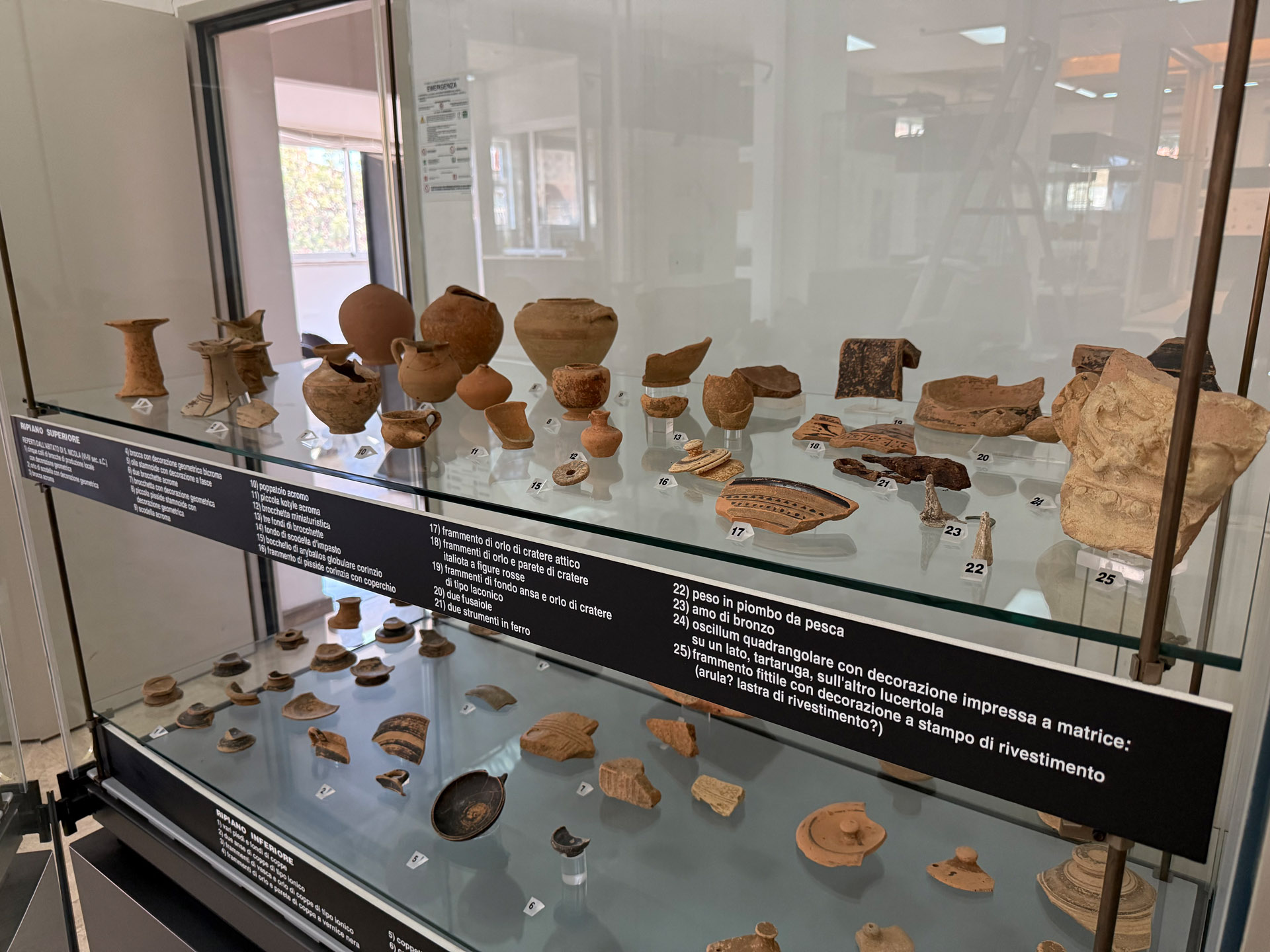
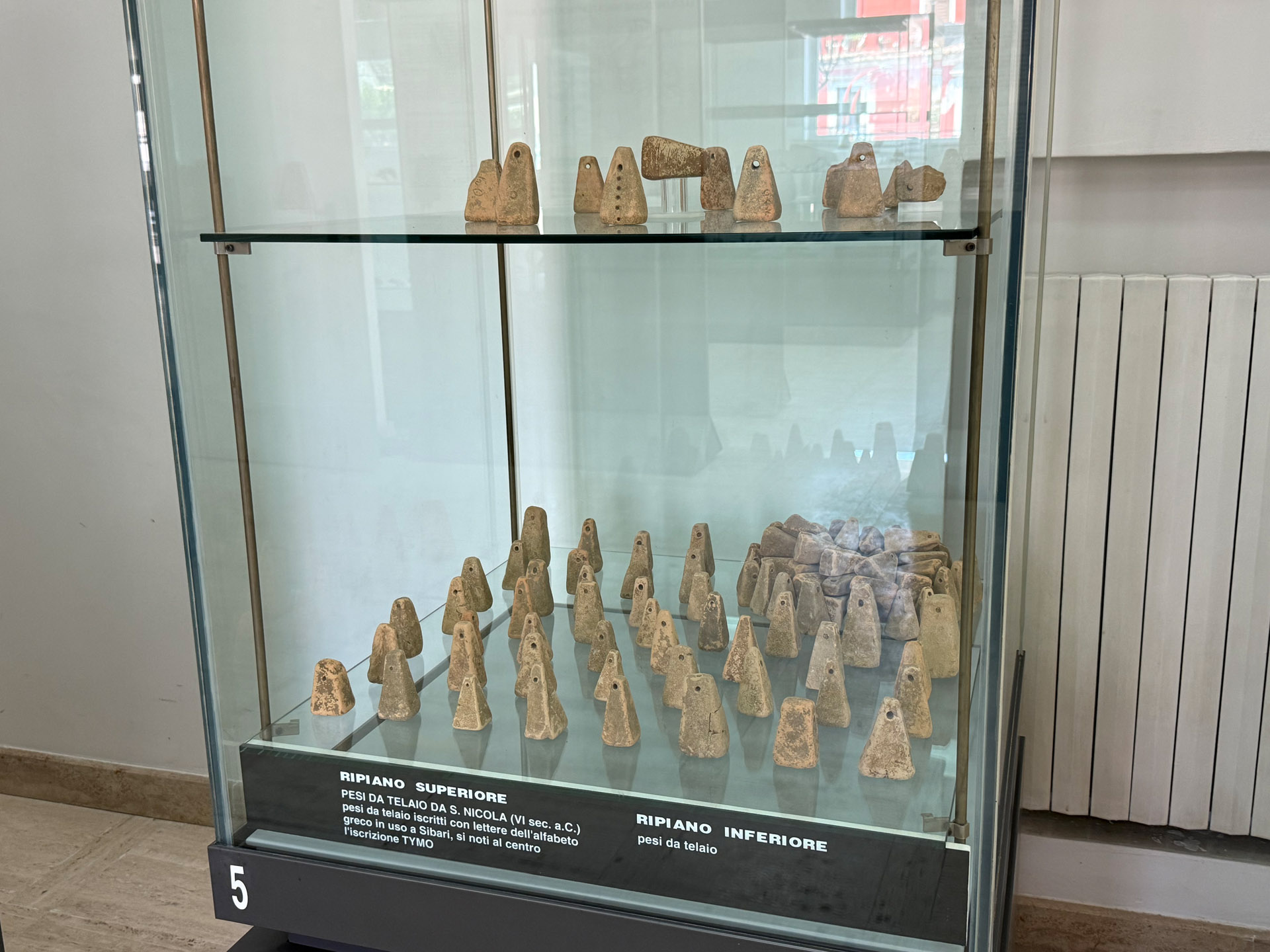
Among the most significant structures identified is a kiln for the production of local pottery, along with numerous fragments of imported vessels, especially from eastern Greece, the Corinthian area, and Attica. The discovery of more than a thousand loom weights further indicates that weaving must have been a very flourishing productive activity in the settlement of San Nicola. Of particular interest is a small group of loom weights bearing incised inscriptions with female names written in the Achaean alphabet, the language of the Sybarite colonists. This evidence confirms the active participation of this center in cultural and commercial exchanges with nearby Sybaris, although direct contacts with other Greek colonies along the Ionian coast, such as Metapontum, must also be envisaged.
read less <