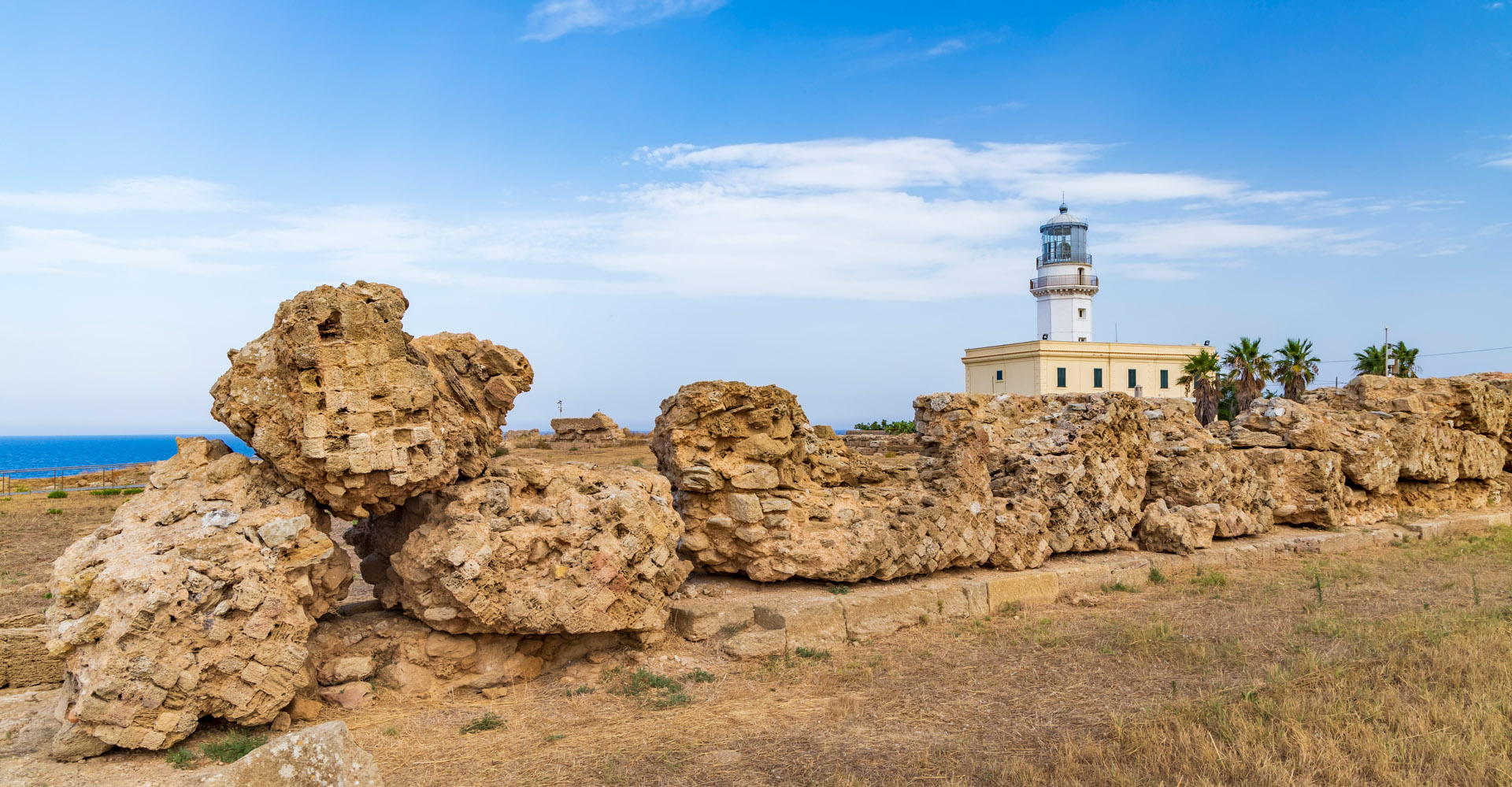
Around the last three decades of the 1st century BC, probably for defensive reasons, the area of the sanctuary and the Roman settlement was enclosed by a massive circuit of walls. Today, these walls are preserved along the western and southern sides, enclosing an area of approximately 300 × 250 meters.
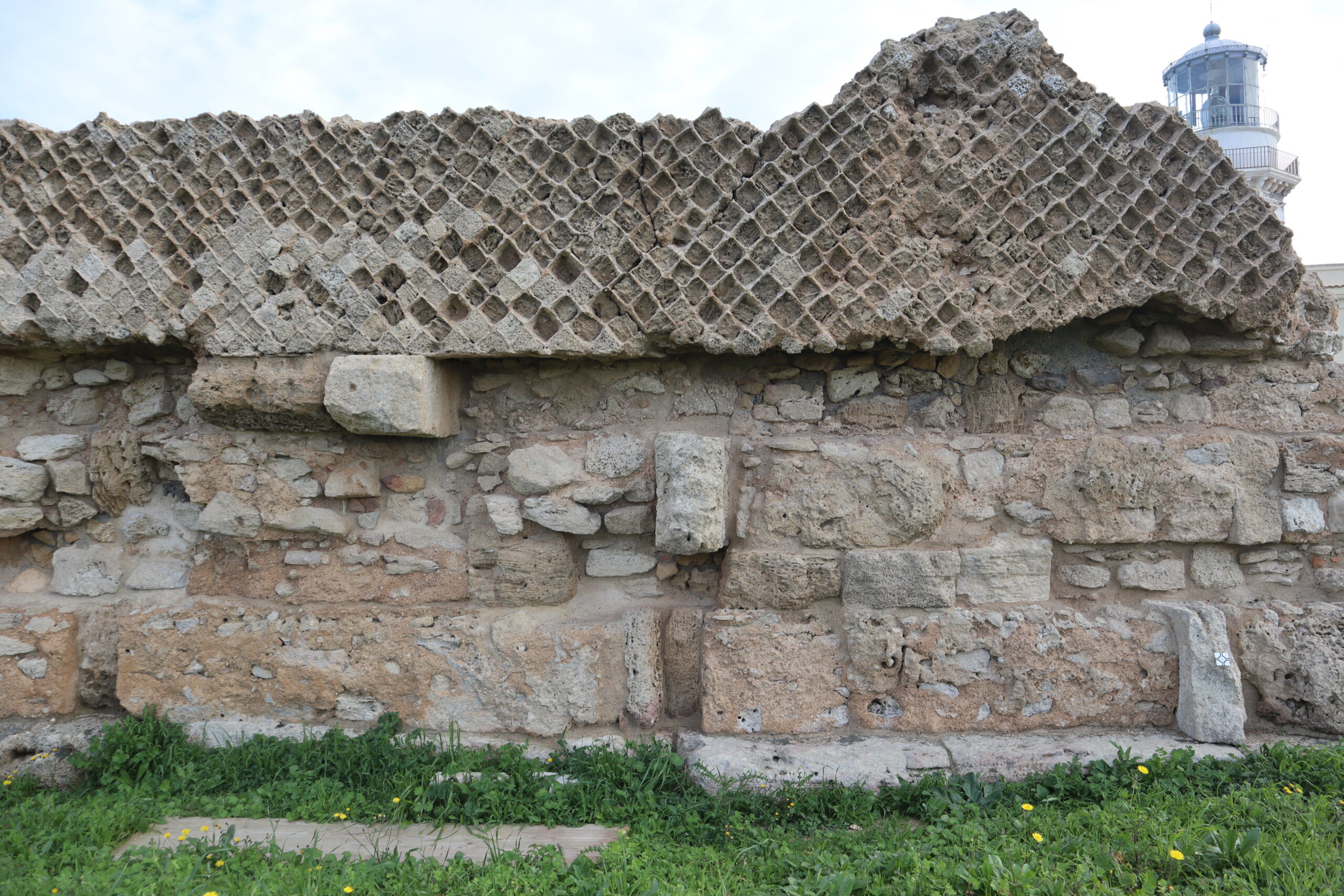
The masonry is composed of large and medium-sized blocks of local calcarenite (opus quadratum), topped by a facing of small square limestone blocks laid diagonally (opus reticulatum). Both facings are bonded to an internal core made of fragments of calcarenite, stones, and terracotta, held together with a mortar of lime, sand, and pozzolana (opus caementitium).
On the western side, three square towers and a monumental entrance gate are preserved. The earliest investigations, conducted by Paolo
... read more >Around the last three decades of the 1st century BC, probably for defensive reasons, the area of the sanctuary and the Roman settlement was enclosed by a massive circuit of walls. Today, these walls are preserved along the western and southern sides, enclosing an area of approximately 300 × 250 meters.
The masonry is composed of large and medium-sized blocks of local calcarenite (opus quadratum), topped by a facing of small square limestone blocks laid diagonally (opus reticulatum). Both facings are bonded to an internal core made of fragments of calcarenite, stones, and terracotta, held together with a mortar of lime, sand, and pozzolana (opus caementitium).
On the western side, three square towers and a monumental entrance gate are preserved. The earliest investigations, conducted by Paolo Orsi in 1910, brought to light the large entrance propylon.
read less <