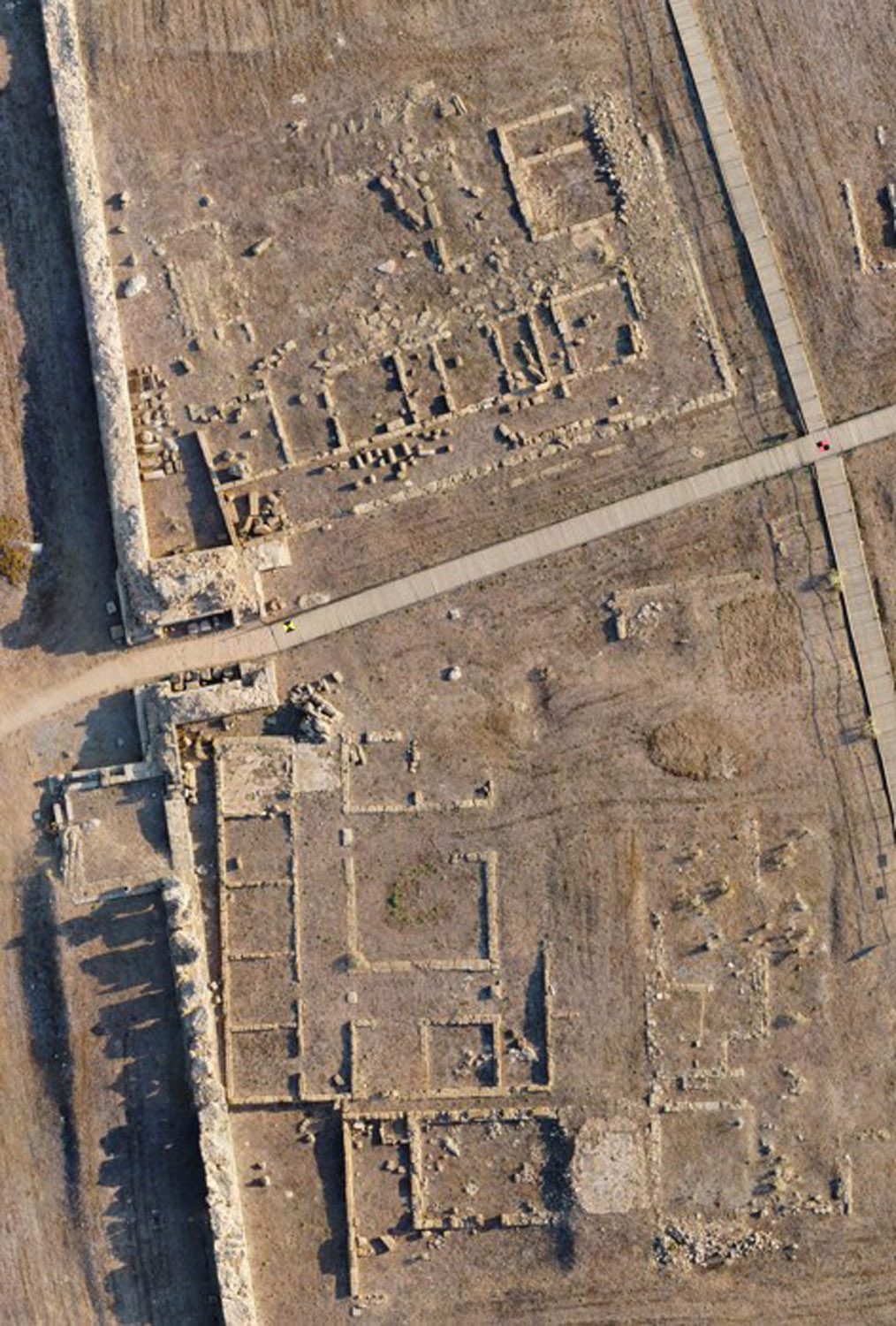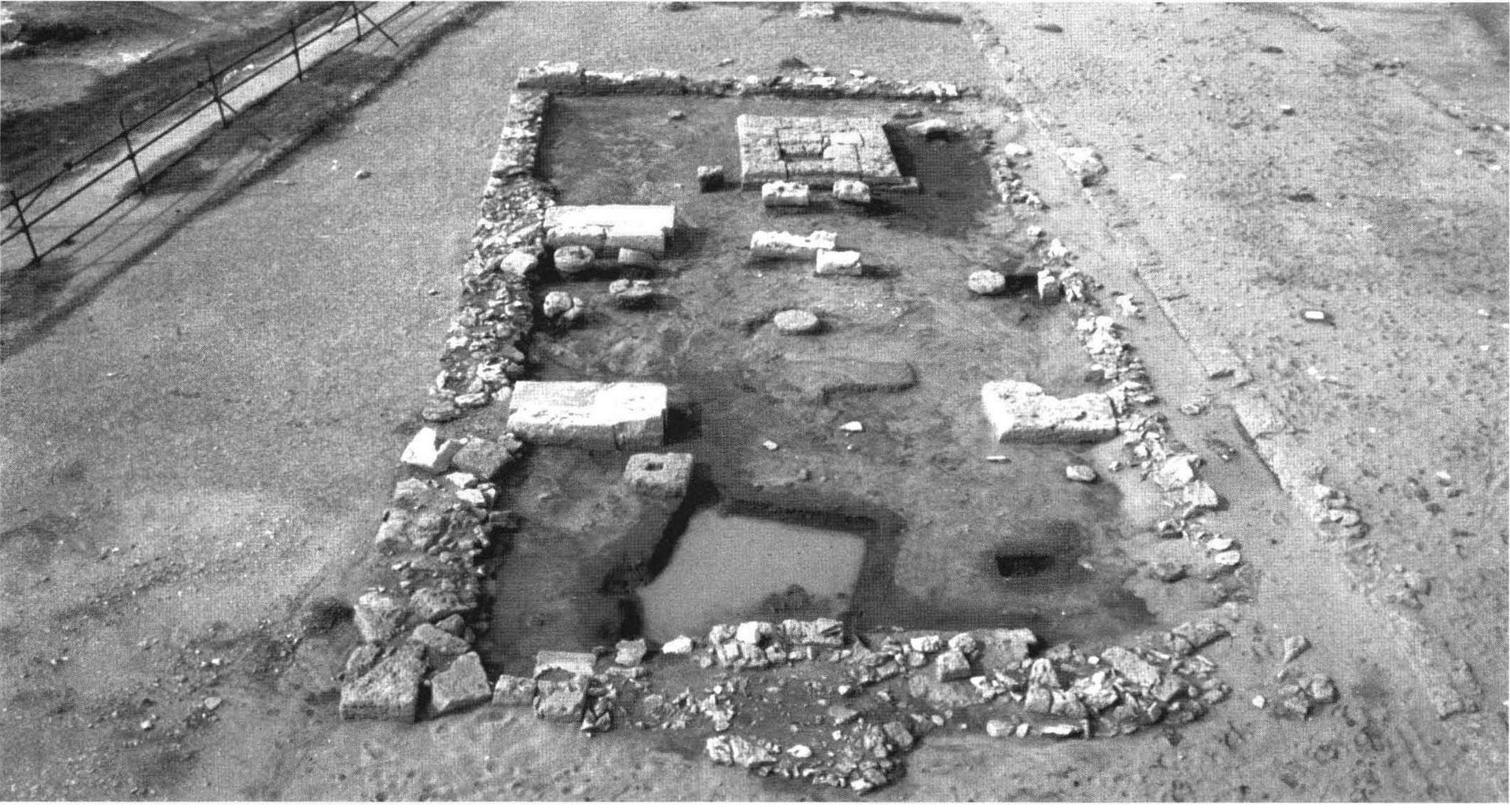
Between 1987 and 1989, to the north of the great Temple A, a rectangular building (approximately 22 × 9 m), oriented east–west, was discovered and designated as Building B. Constructed around the beginning of the 6th century BC, it underwent several phases of rebuilding during the 5th century BC, until it was probably abandoned around the middle of that century. Between 500 and 475 BC, many materials reused in the building came from a nearby monumental structure, likely the Archaic temple dismantled to make way for the new Temple A.
Building B was one of the earliest sacred structures of the sanctuary. A boundary stone (horos), placed along its southern side, marked the limits of the sacred area. For at least part of its lifespan—perhaps during its final phase—the building was probably
... read more >Between 1987 and 1989, to the north of the great Temple A, a rectangular building (approximately 22 × 9 m), oriented east–west, was discovered and designated as Building B. Constructed around the beginning of the 6th century BC, it underwent several phases of rebuilding during the 5th century BC, until it was probably abandoned around the middle of that century. Between 500 and 475 BC, many materials reused in the building came from a nearby monumental structure, likely the Archaic temple dismantled to make way for the new Temple A.
Building B was one of the earliest sacred structures of the sanctuary. A boundary stone (horos), placed along its southern side, marked the limits of the sacred area. For at least part of its lifespan—perhaps during its final phase—the building was probably used as a thesauros, that is, a structure intended to house offerings dedicated to the deity. Excavations have in fact yielded the most remarkable votive objects from the sanctuary—the so-called “Treasure of Hera”—many of them made of precious metals, including the gold crown now preserved in the museum.
read less <