According to ancient historians, after the dramatic destruction of Sybaris the surviving exiles made several attempts to refound their city, but without success. Only in 444 BC, thanks to the initiative of Athens and a coalition of settlers from various regions of Greece, was it possible to establish a new foundation: Thurii, built not far from the ancient site of Sybaris.
This new colony was conceived from the outset as an ambitious project, involving some of the most brilliant minds of contemporary Greece. The philosopher Protagoras was entrusted with drafting the constitution, while urban planning was assigned to Hippodamus of Miletus, regarded as one of the fathers of Western urbanism. The city’s layout, with its orthogonal street grid and well-ordered public spaces, is still partly visible
... read more >According to ancient historians, after the dramatic destruction of Sybaris the surviving exiles made several attempts to refound their city, but without success. Only in 444 BC, thanks to the initiative of Athens and a coalition of settlers from various regions of Greece, was it possible to establish a new foundation: Thurii, built not far from the ancient site of Sybaris.
This new colony was conceived from the outset as an ambitious project, involving some of the most brilliant minds of contemporary Greece. The philosopher Protagoras was entrusted with drafting the constitution, while urban planning was assigned to Hippodamus of Miletus, regarded as one of the fathers of Western urbanism. The city’s layout, with its orthogonal street grid and well-ordered public spaces, is still partly visible in the archaeological area today.
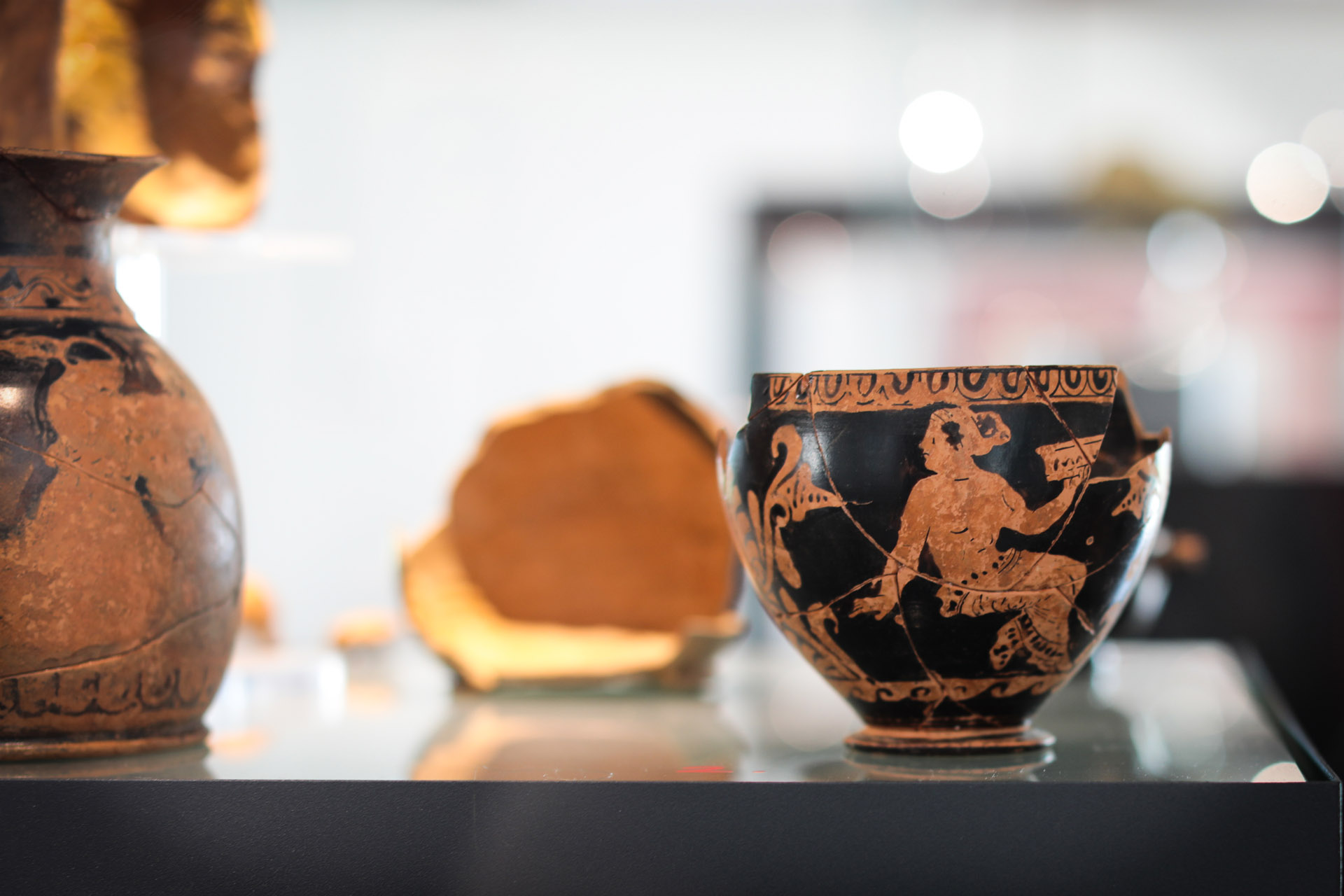
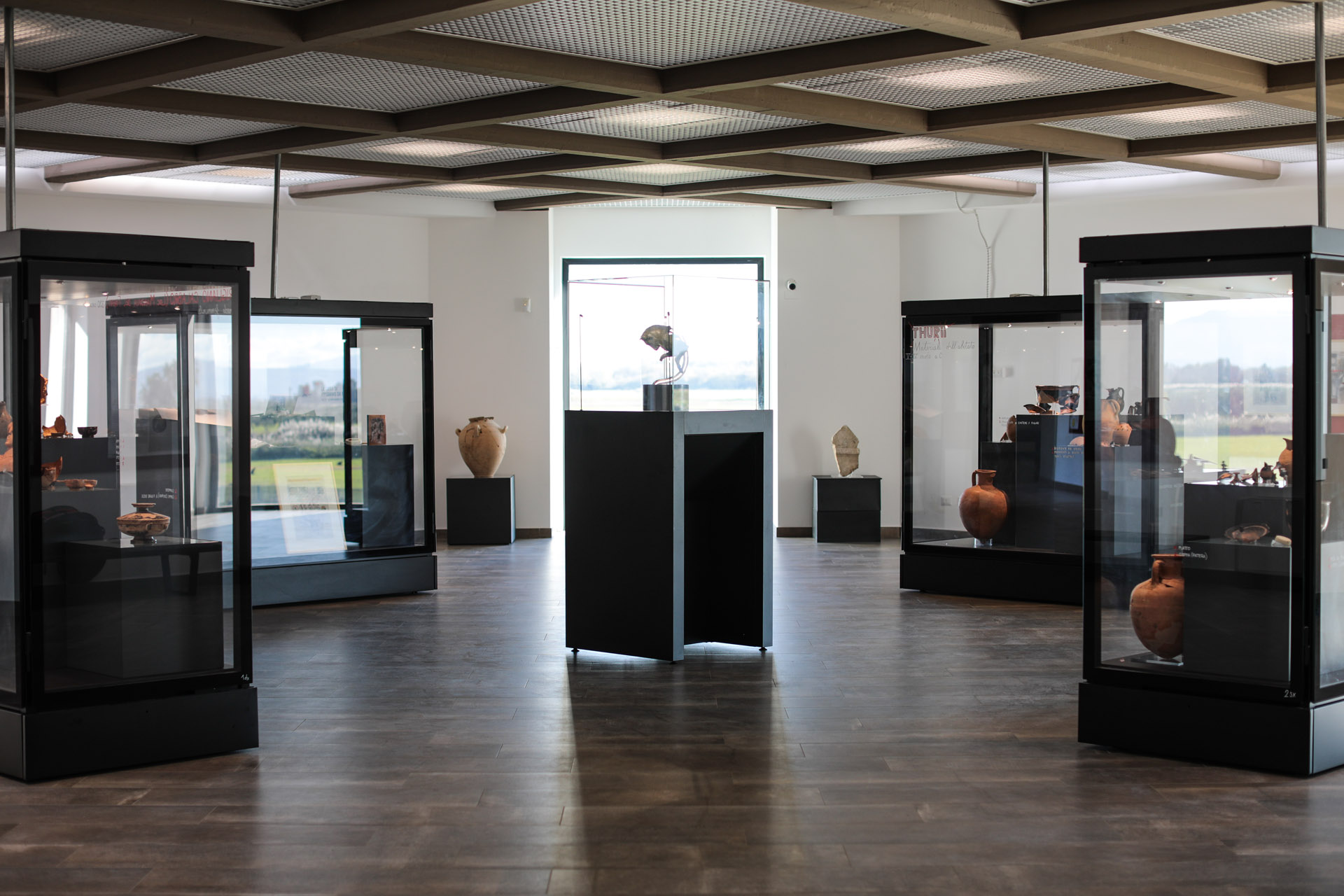
The charging bull (cozzante), an ancient symbol of strength and territorial identity, was chosen as the emblem of the new city and appears both on coinage and on a refined bronze statue. During the 5th and 4th centuries BC, Thurii became a vibrant cultural and artisanal center of Magna Graecia. This is evidenced, among other things, by the splendid locally produced red-figure pottery, which attests to refined craftsmanship and to the city’s deep engagement with the major artistic movements of the Greek world.
read less <