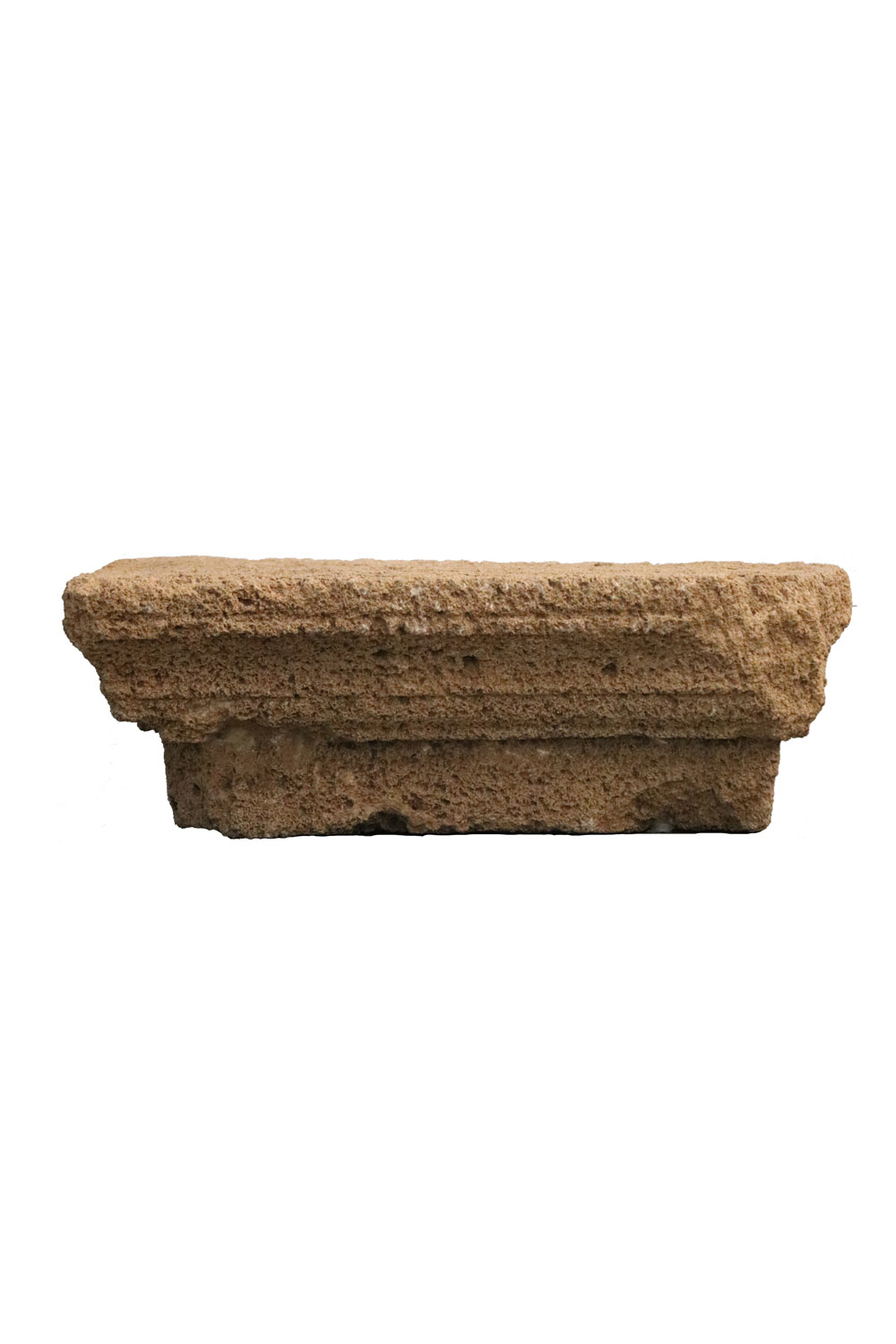
Anta Capital in Limestone
Where
Museo Archeologico Nazionale di Capo Colonna
Via Michele Di Donato 1
(Già Via Hera Lacinia)
88900 – Crotone (KR)
Description
Doric anta capital with a square abacus (the upper element) and an underlying echinus, which connects to the shaft of the pilaster (parasta). Its essential form, lacking a base and characterized by sharp-edged
... read more >Doric anta capital with a square abacus (the upper element) and an underlying echinus, which connects to the shaft of the pilaster (parasta). Its essential form, lacking a base and characterized by sharp-edged fluting, is typical of the Doric order, the oldest of the Greek architectural orders.
The capital comes from the collapse layers of the large residence known as domus CRr, built in the last three decades of the 1st century BC. The find was recovered together with other stone architectural elements, including the capitals of the house’s portico, and most likely belonged to the architectural decoration of an entrance or a transitional space. It served both a structural and a decorative function, acting as the terminal element of door jambs or wall antae. Its presence testifies to the high architectural quality of the building and to the adoption of classical stylistic models in the decorative language of late Republican residences at Capo Colonna.
read less <INSIGHTS >
Explore the areas of Crotone and Sibari
History awaits you inside the Archaeological Sites of Crotone and Sibari. Start your visit.
planDiscover current events
Concerts, tastings and dedicated exhibitions to relive the history of Magna Graecia.
discover more
Experience the Parks and Museums
History awaits you inside the Archaeological Sites of Crotone and Sibari. Start your visit.
plan

Whether you are with family, at school or experience the world in a unique way, here you will find paths designed for you.