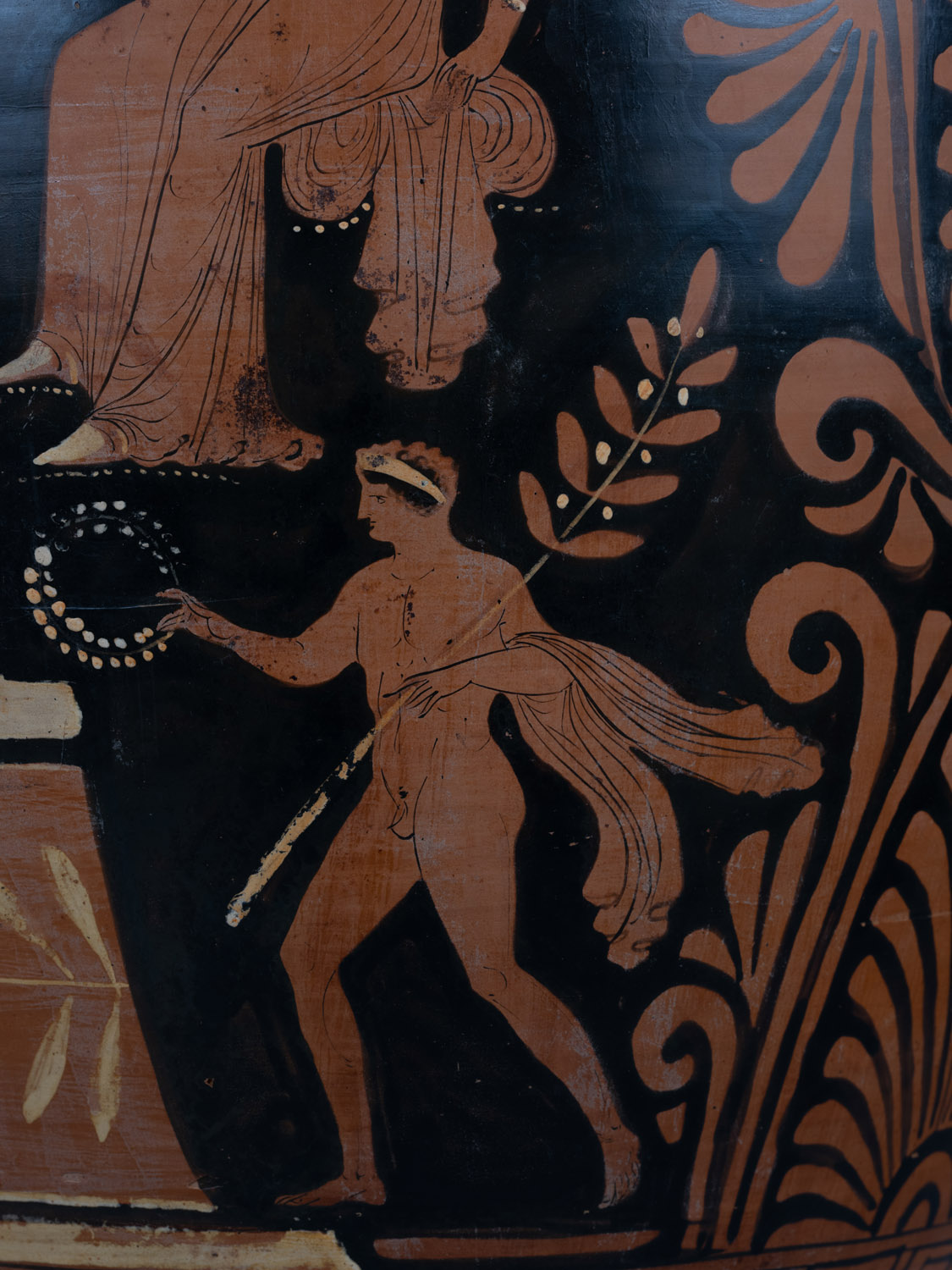
Apulian Red-Figure Panathenaic Amphora
Where
Museo Archeologico Nazionale della Sibaritide
Località Casabianca – Frazione Sibari
87011 – Cassano All’Ionio (CS)
Description
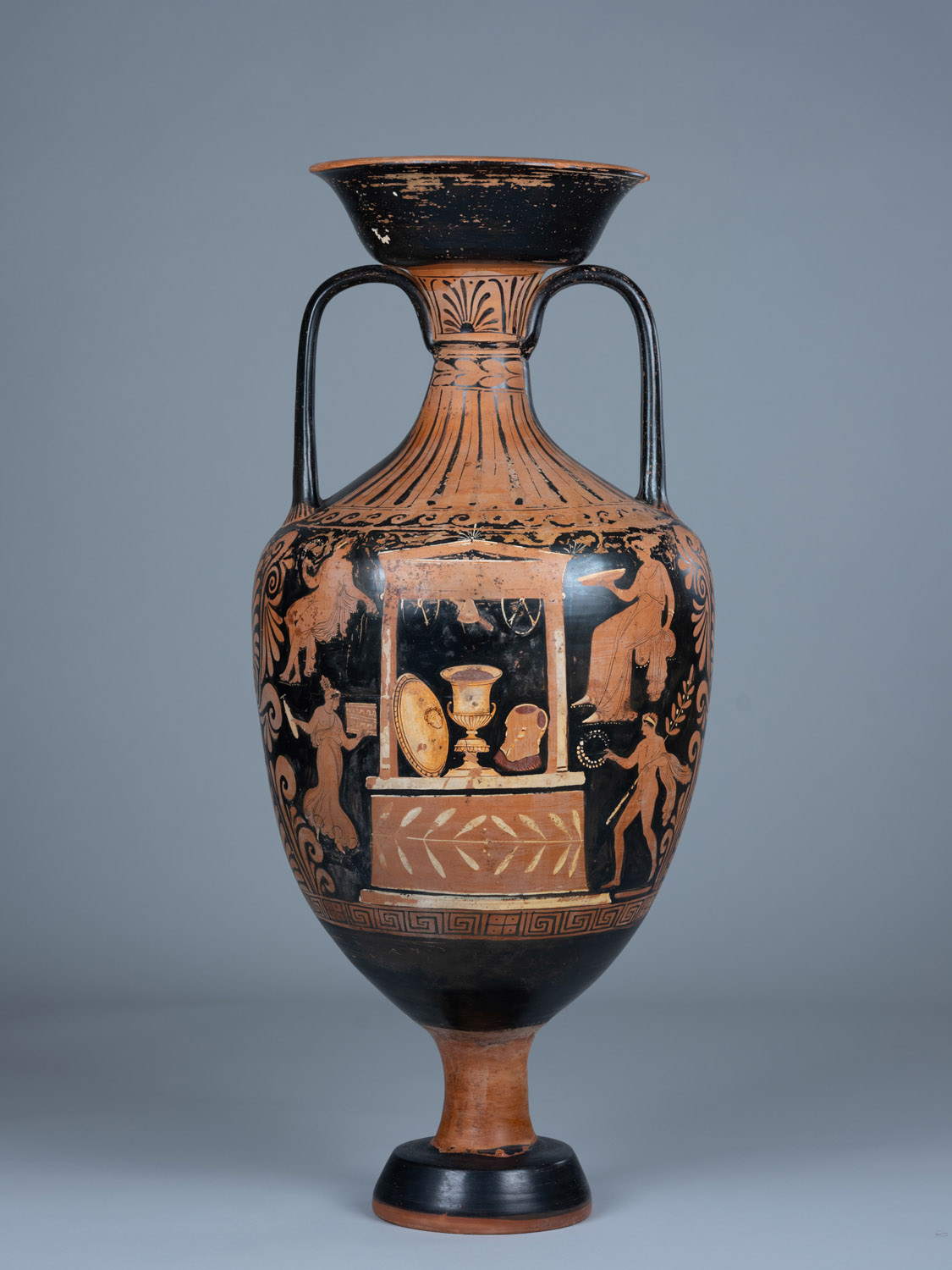
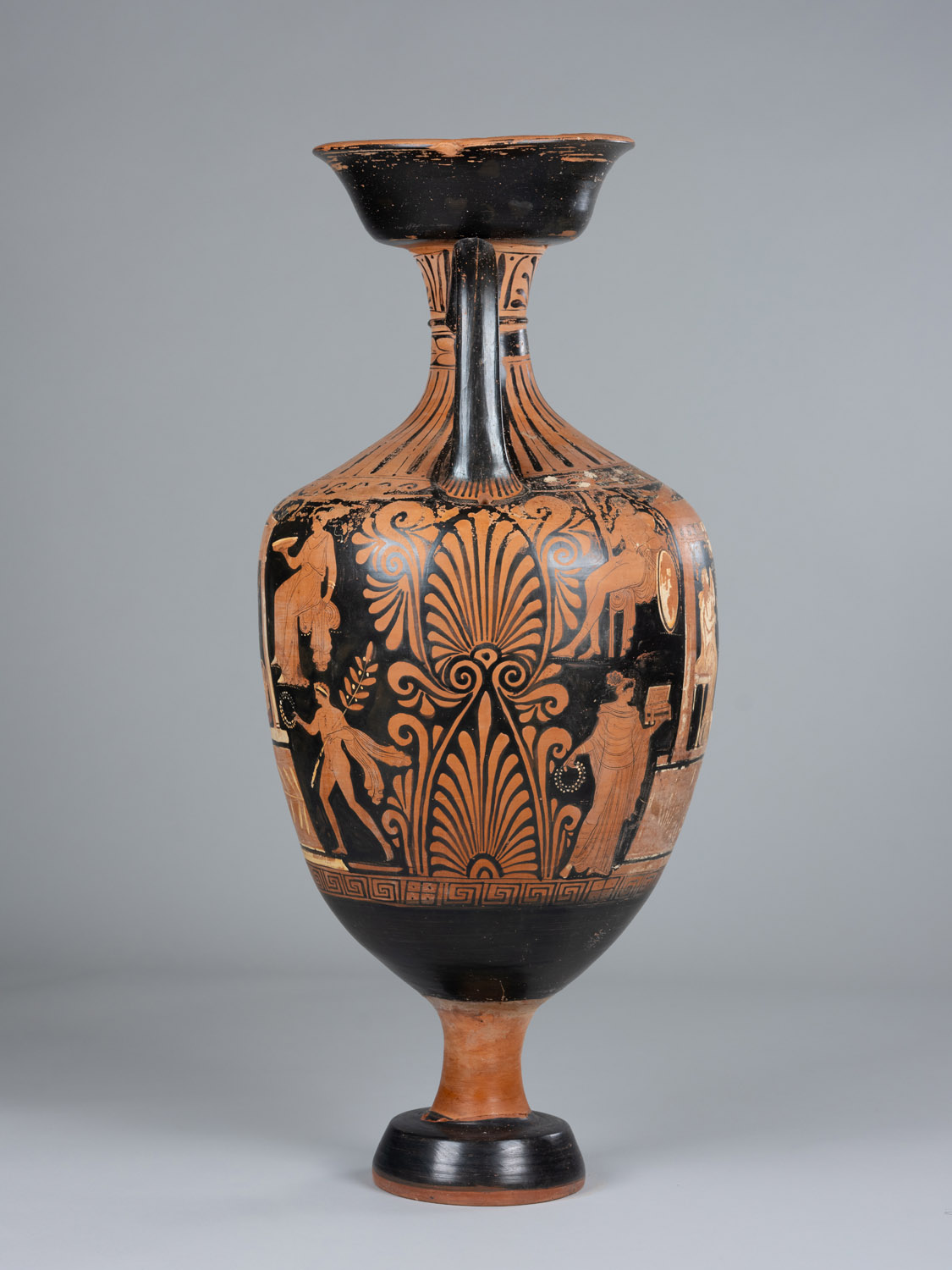
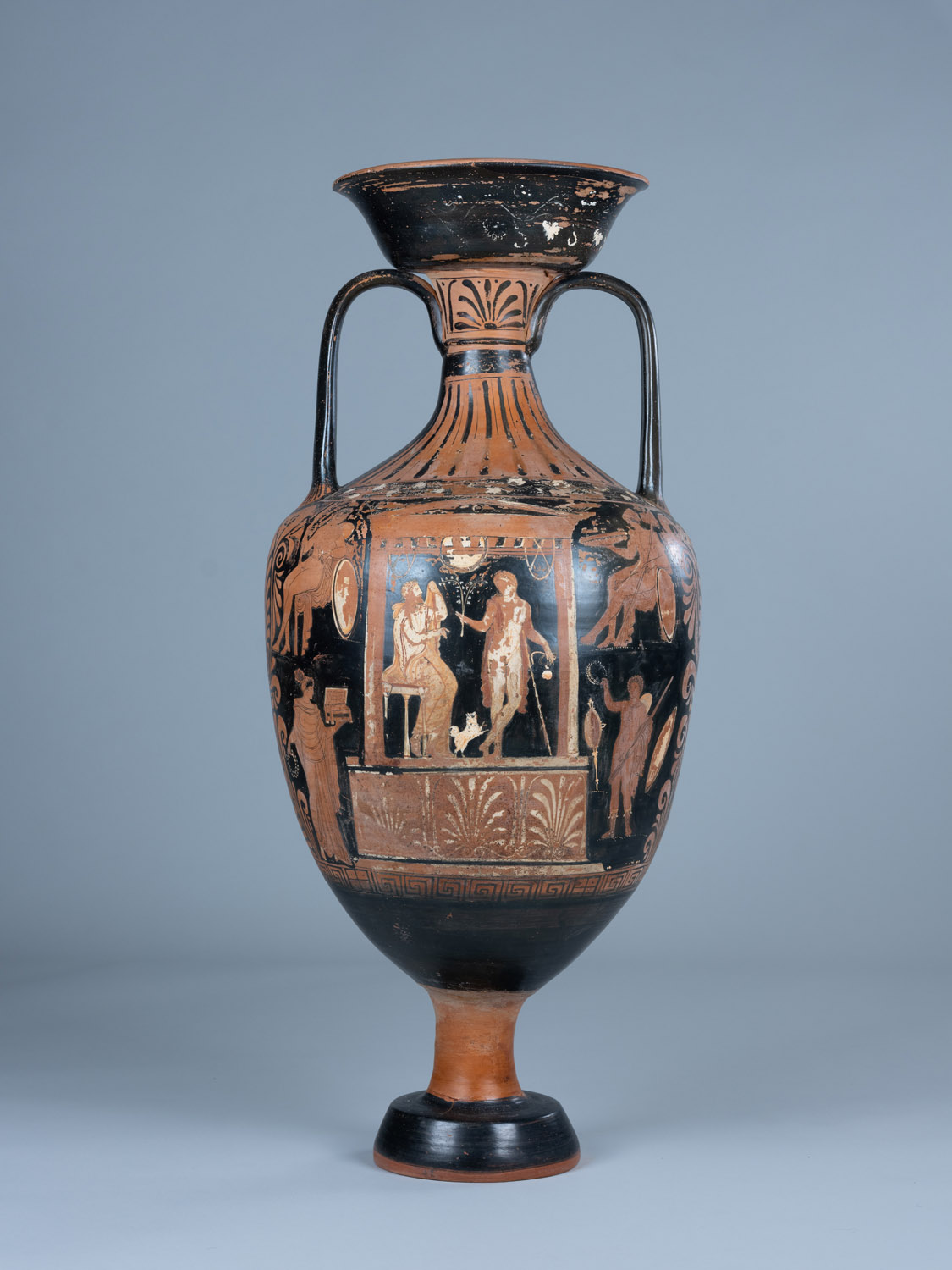
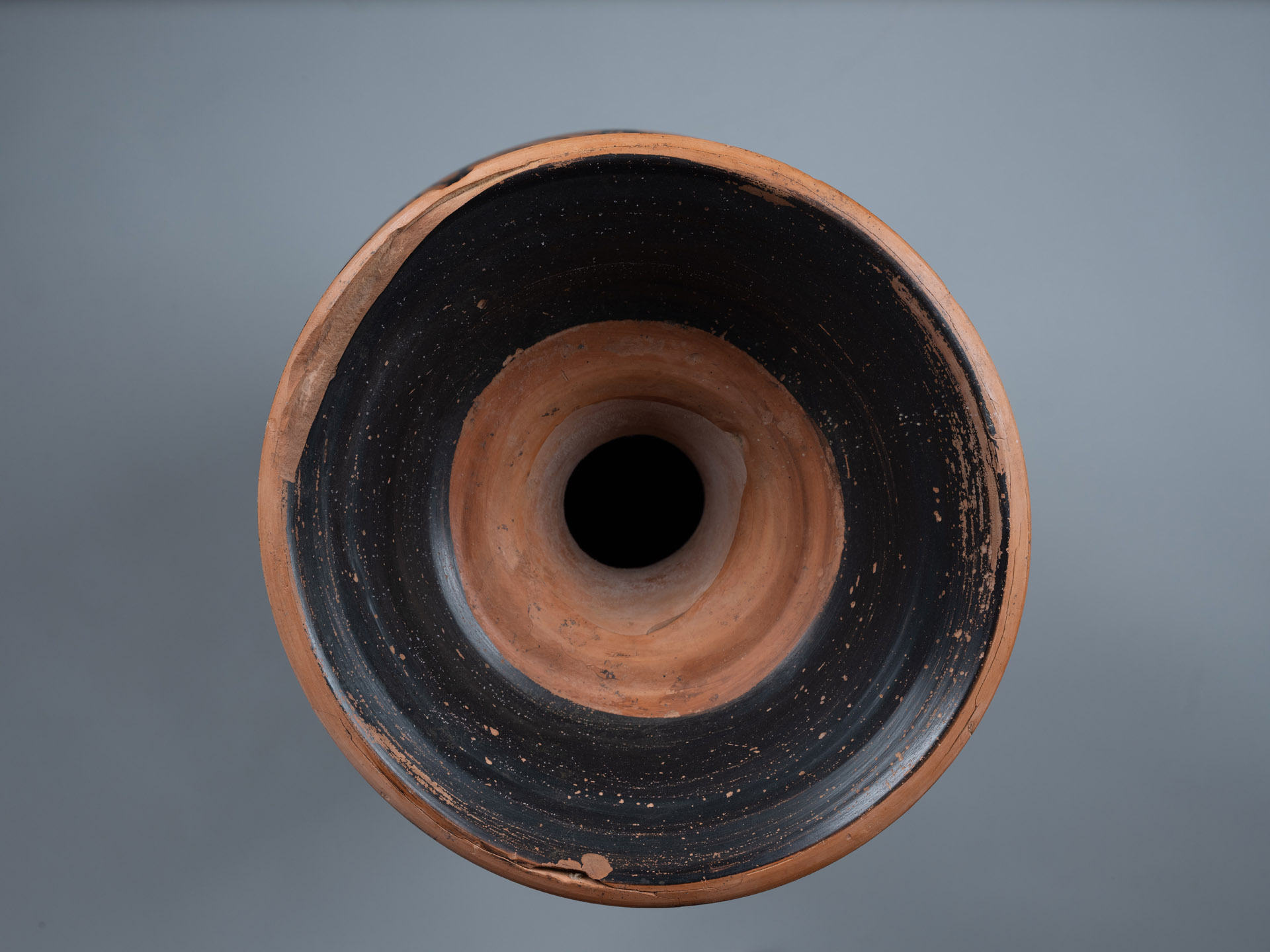
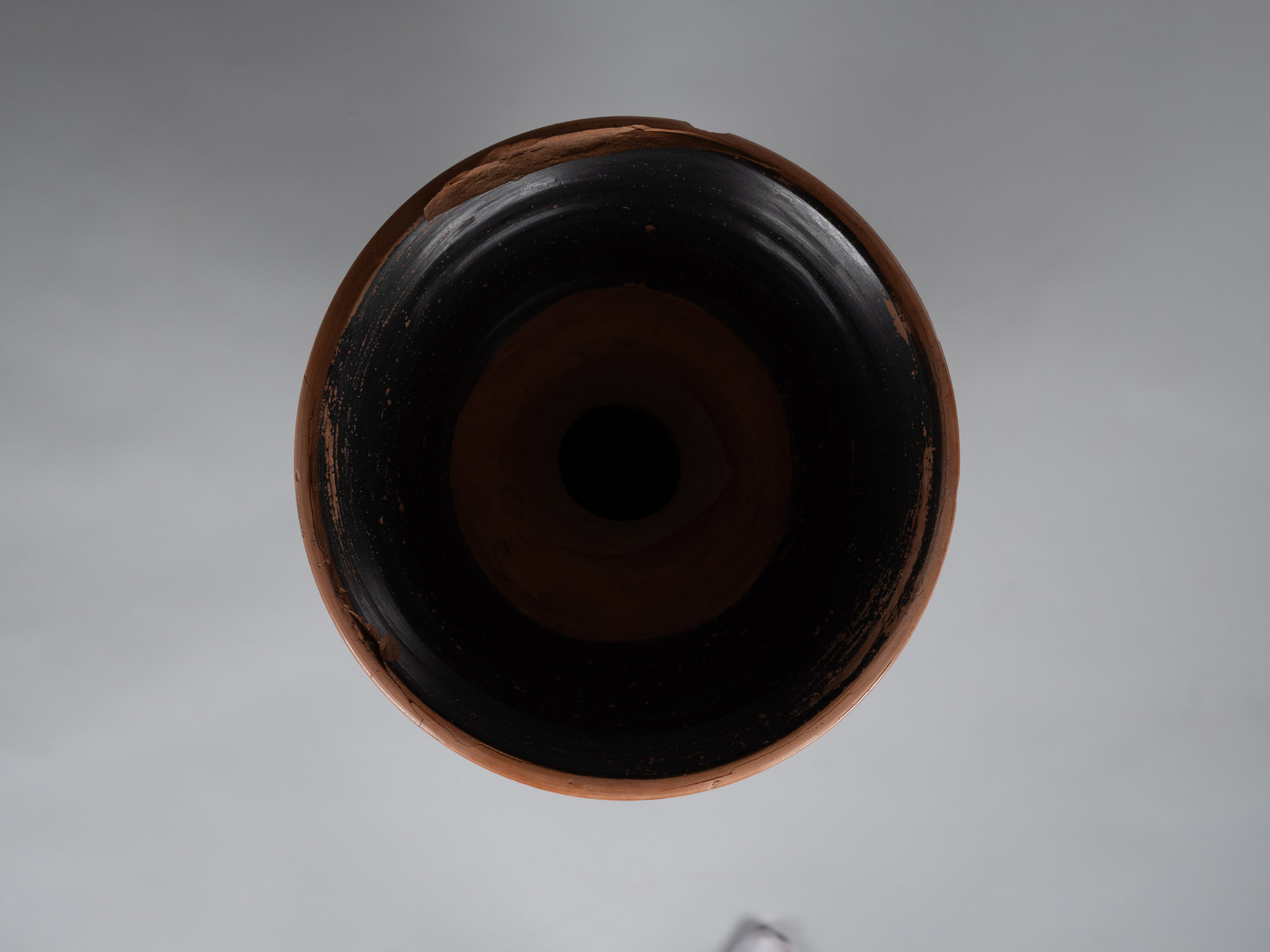
Amphora decorated in the red-figure technique with added white and yellow overpainting. The vessel features a flaring, undecorated rim and a tall neck, adorned in its upper part with palmettes and in the
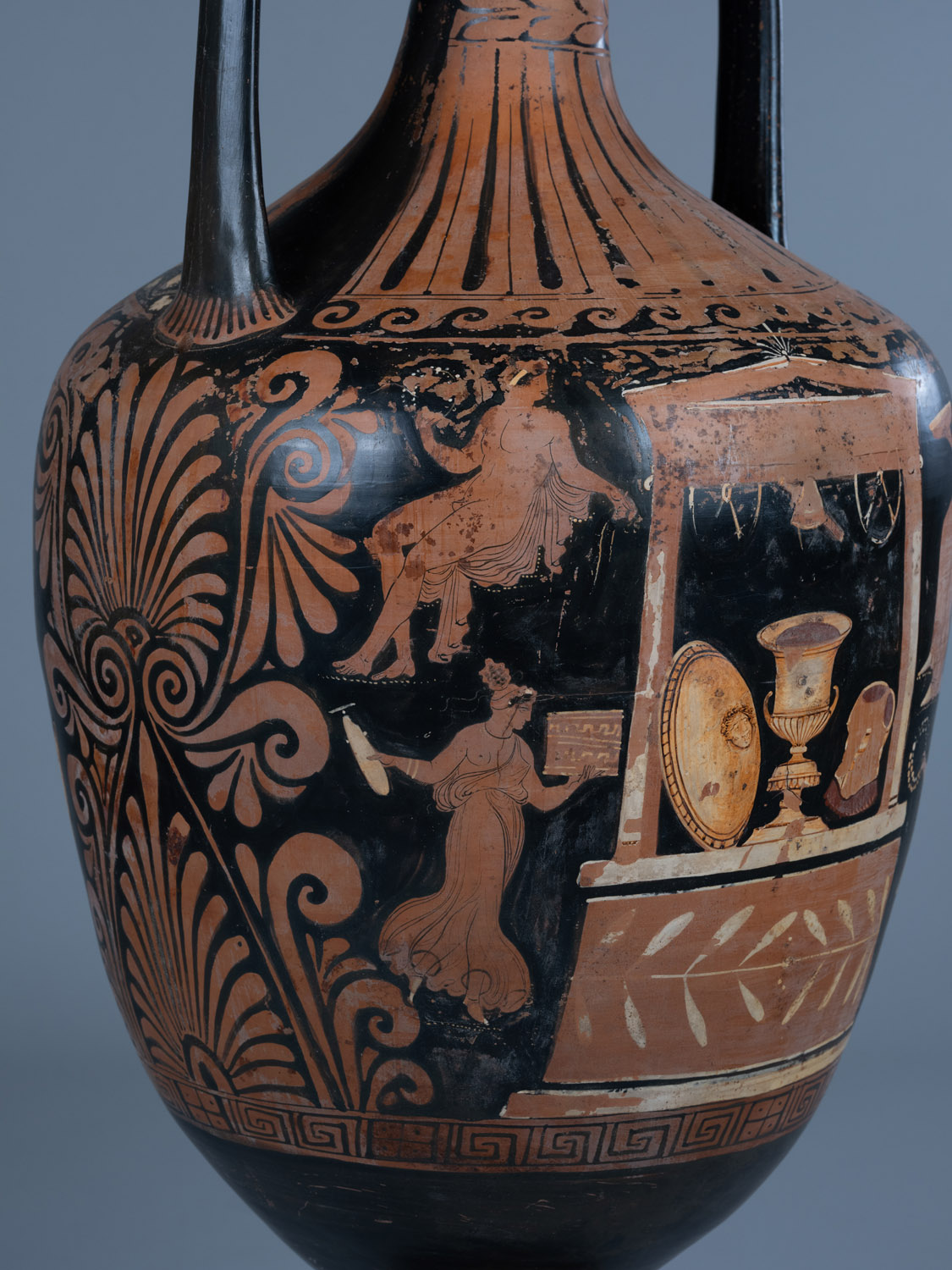
... read more >Amphora decorated in the red-figure technique with added white and yellow overpainting. The vessel features a flaring, undecorated rim and a tall neck, adorned in its upper part with palmettes and in the lower section with a tongue pattern. The lateral handles are flat and elongated (strap handles). The ovoid body is richly decorated with figural scenes, framed above by a wave pattern and below by a band of meanders and squares with a central dot; beneath the handles appear scrolling palmettes.
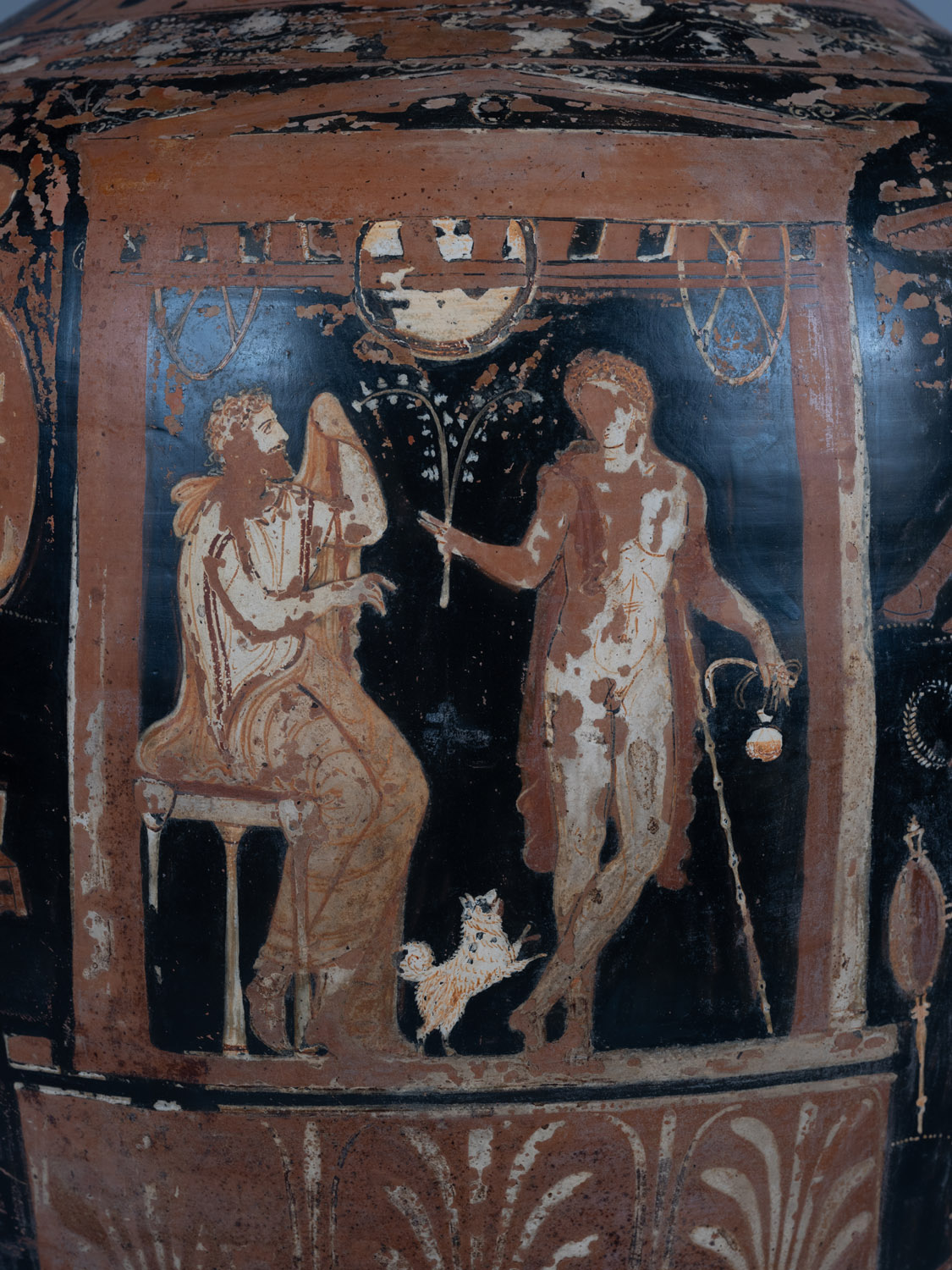
One side of the amphora depicts a small shrine (heroon), from which a shield and several wheels are suspended. Inside the building is a male figure wrapped in a long garment (chiton), seated in three-quarter view on a stool. Facing him stands a youth leaning on a reed, with crossed legs and wearing only a cloak (chlamys) draped over his chest and right shoulder. Between the two figures, a small white dog is shown leaping toward the boy. On either side of the shrine are four additional figures, male and female, arranged on two levels.
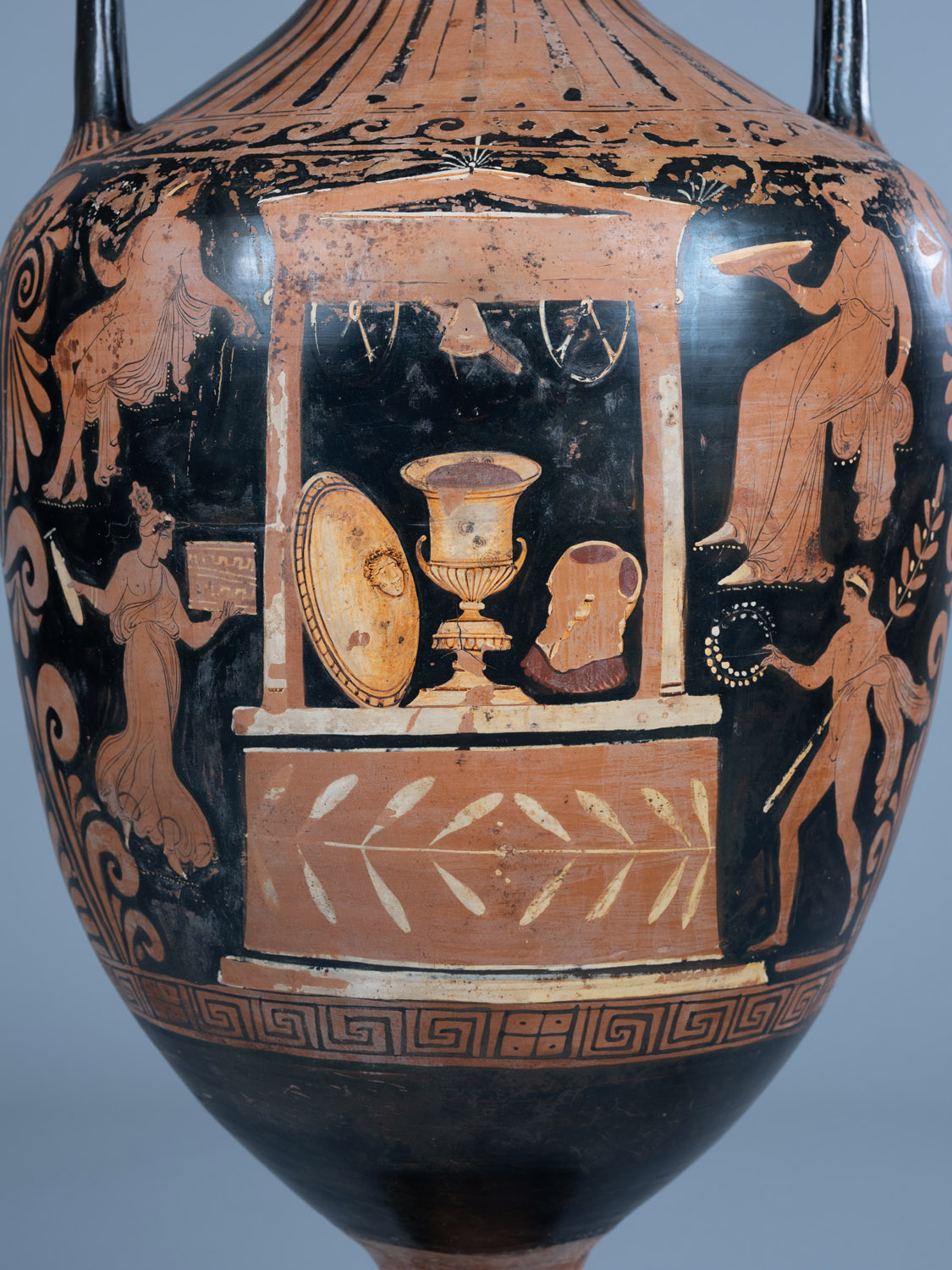
The scene on the opposite side of the amphora also represents a shrine (heroon), decorated with vegetal branches. Hanging from the roof are a helmet, a sword, two wheels, and festoons. Inside the shrine, a krater is depicted at the center, while leaning against the columns are a helmet adorned with a Gorgon head and an anatomical cuirass. Four figures, male and female, appear on either side of the scene, again arranged on two levels.
The amphora is a refined product of southern Italian craftsmanship, made in Apulia (modern northern Puglia) and widely distributed between the 4th and 3rd centuries BC in the cities of Magna Graecia and in indigenous settlements in contact with them. It was discovered as part of the grave goods of a chamber tomb uncovered in the 1970s at the locality of Salto, near Cariati.
Two aspects of the vessel clearly indicate its funerary function and symbolic connection with the deceased: the decoration, which evokes the heroic and warrior sphere—armor, shield, and weapons—and the representation of the afterlife, symbolized by the empty shrine; moreover, a hole drilled through the base shows that the amphora was not intended to contain liquids, but served an exclusively ritual purpose. The remaining grave goods reinforce the same symbolic framework: an anatomical cuirass and a bronze helmet, weapons (spears and sword), belts, metal vessels, and votive objects—all elements referring to the ideal of the aristocratic warrior, a figure of prestige and power.
The type of burial itself confirms the high status of the deceased. The chamber tomb consists of an underground space of variable size, accessed via an entrance corridor (dromos), and represents a funerary type widely used in the Greek world between the 5th and 3rd centuries BC, reserved for individuals of elevated social rank. Overall, the burial of the “warrior” of Cariati bears witness to a period of intense cultural interaction between Greeks and the Brettii, an Italic population of Calabria. While the architecture and pottery reveal strong Hellenic influence, the monumentality and military symbolism express the identity and autonomy of a local elite conscious of its political and cultural role.
read less <INSIGHTS >
Explore the areas of Crotone and Sibari
History awaits you inside the Archaeological Sites of Crotone and Sibari. Start your visit.
planDiscover current events
Concerts, tastings and dedicated exhibitions to relive the history of Magna Graecia.
discover more
Experience the Parks and Museums
History awaits you inside the Archaeological Sites of Crotone and Sibari. Start your visit.
plan

Whether you are with family, at school or experience the world in a unique way, here you will find paths designed for you.