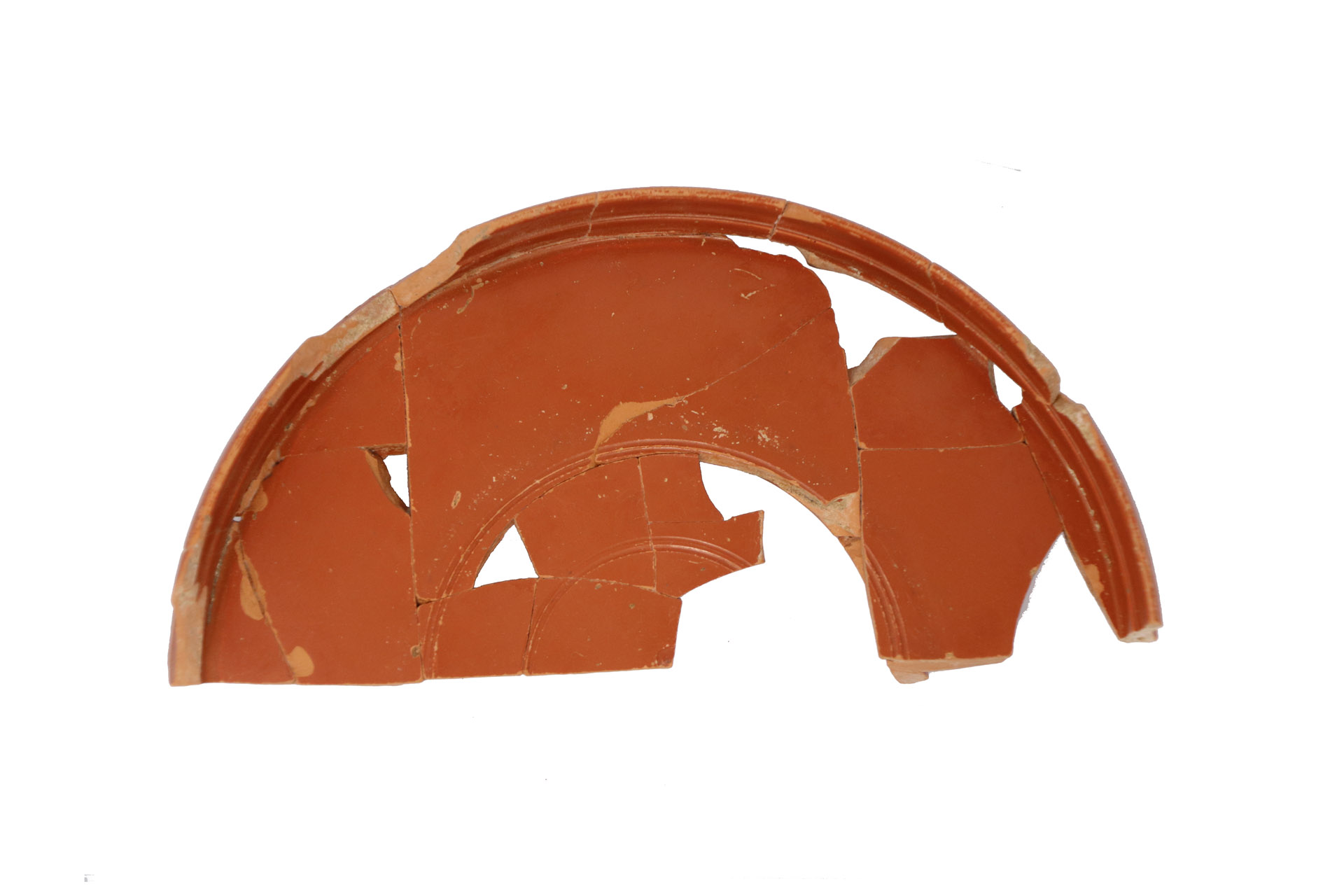
Arezzo Sigillata Ceramic Plate
Where
Museo Archeologico Nazionale di Capo Colonna
Via Michele Di Donato 1
(Già Via Hera Lacinia)
88900 – Crotone (KR)
Description
Fragments of an Arretine terra sigillata plate, of which approximately half is preserved. The rim is slightly flaring, with a rounded profile and concentric grooves, also present on the interior, marking
... read more >Fragments of an Arretine terra sigillata plate, of which approximately half is preserved. The rim is slightly flaring, with a rounded profile and concentric grooves, also present on the interior, marking the transition between the bowl and the base.
The plate represents evidence of the earliest production of Italian sigillata pottery, known as Arretine sigillata, named after the city of Arretium (modern Arezzo), the main center of origin and diffusion of this ceramic class. Here, especially from around 30 BC onward, as many as 90 workshops were active in producing this refined tableware, which was exported throughout the Mediterranean.
Arretine sigillata is distinguished by its highly purified clay fabric and its bright red glossy slip, obtained through the application of a fine, iron-rich clay coating before firing in an oxidizing atmosphere. Tableware sets, both plain and mold-decorated, imitated metal and ceramic models of the Hellenistic and Republican periods and were widely distributed across the Roman world, particularly during the Augustan and Tiberian ages, aided by the establishment of workshops in Italy and in the western provinces (Gaul and Spain).
read less <INSIGHTS >
Explore the areas of Crotone and Sibari
History awaits you inside the Archaeological Sites of Crotone and Sibari. Start your visit.
planDiscover current events
Concerts, tastings and dedicated exhibitions to relive the history of Magna Graecia.
discover more
Experience the Parks and Museums
History awaits you inside the Archaeological Sites of Crotone and Sibari. Start your visit.
plan

Whether you are with family, at school or experience the world in a unique way, here you will find paths designed for you.