Arretine Sigillata Ceramic Cup
Where
Museo Archeologico Nazionale di Capo Colonna
Via Michele Di Donato 1
(Già Via Hera Lacinia)
88900 – Crotone (KR)
Description
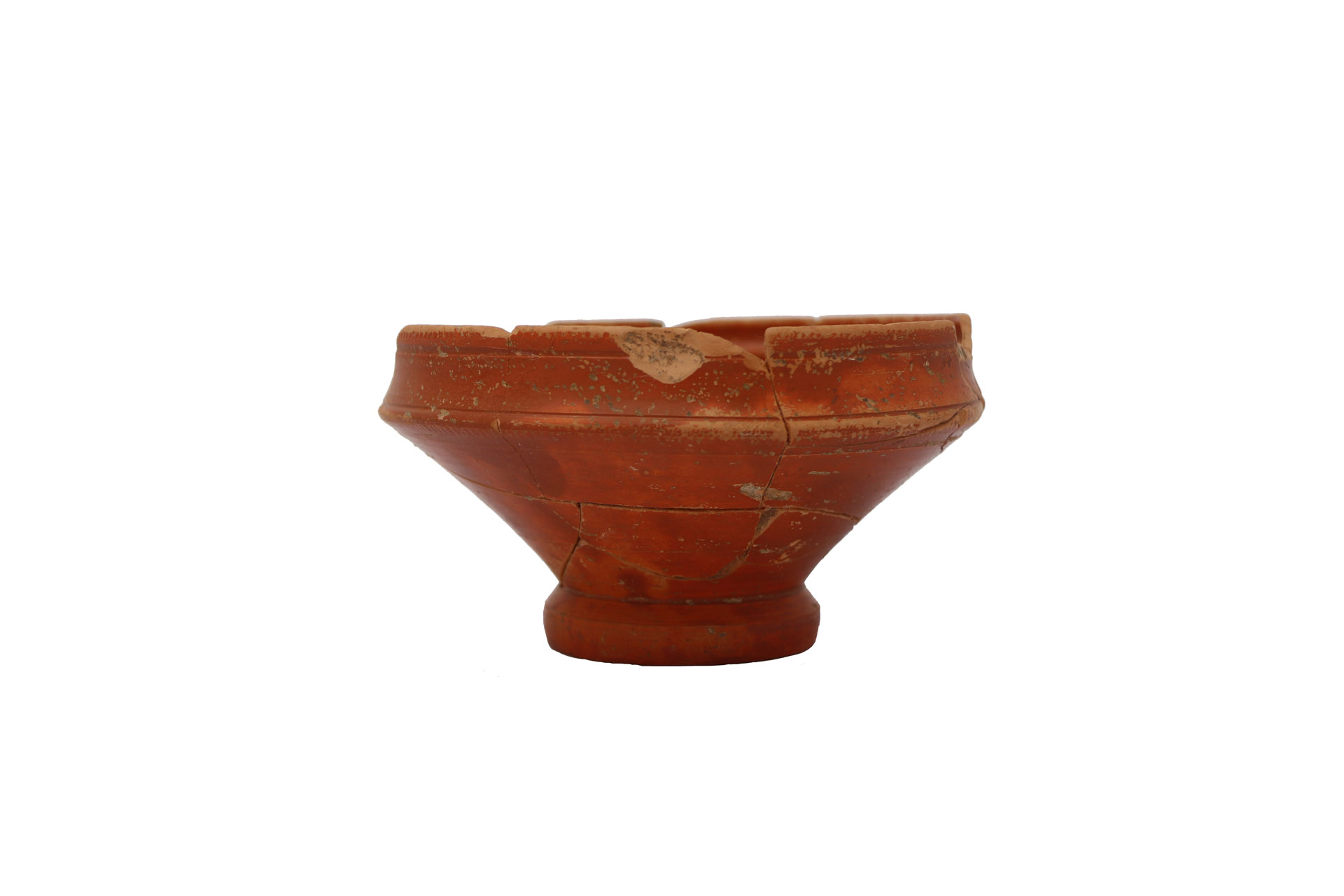
An Arretine terra sigillata cup, characterized by a small angular break (carination), a slightly flaring rim, a truncated-conical body, and a ring foot.
This cup is an important testament to the circulation
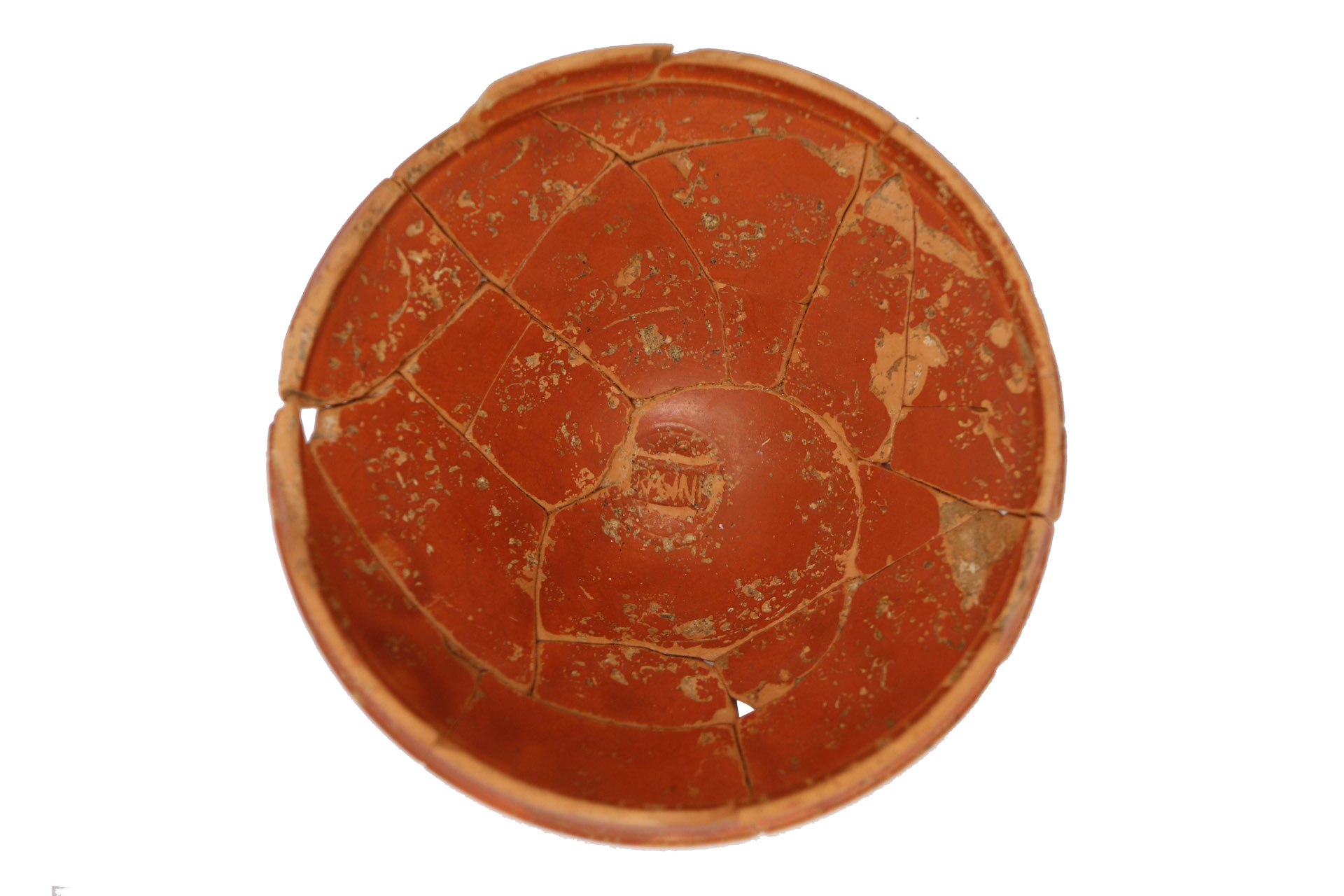
... read more >An Arretine terra sigillata cup, characterized by a small angular break (carination), a slightly flaring rim, a truncated-conical body, and a ring foot.
This cup is an important testament to the circulation of Arretine sigillata pottery on the Capo Colonna Promontory, confirming the site’s connections with the commercial networks of Roman Italy. It belongs to the category of fine tableware, distinguished by a well-refined clay fabric and a bright red glossy slip. This type of pottery takes its name from the city of Arretium (modern Arezzo), the main center of origin and dissemination of this ceramic class, where as many as 90 workshops were active from around 30 BC onward, producing vessels exported throughout the Mediterranean.
Of particular interest in this case is the presence of a workshop stamp on the base of the vessel bearing the name of the producer: Rasinius, a member of one of the most active families of potters between the late 1st century BC and the early 1st century AD. The impressed signature guaranteed the origin of the product and certified its quality, in accordance with a common practice in Arretine workshops.
read less <INSIGHTS >
Explore the areas of Crotone and Sibari
History awaits you inside the Archaeological Sites of Crotone and Sibari. Start your visit.
planDiscover current events
Concerts, tastings and dedicated exhibitions to relive the history of Magna Graecia.
discover more
Experience the Parks and Museums
History awaits you inside the Archaeological Sites of Crotone and Sibari. Start your visit.
plan

Whether you are with family, at school or experience the world in a unique way, here you will find paths designed for you.