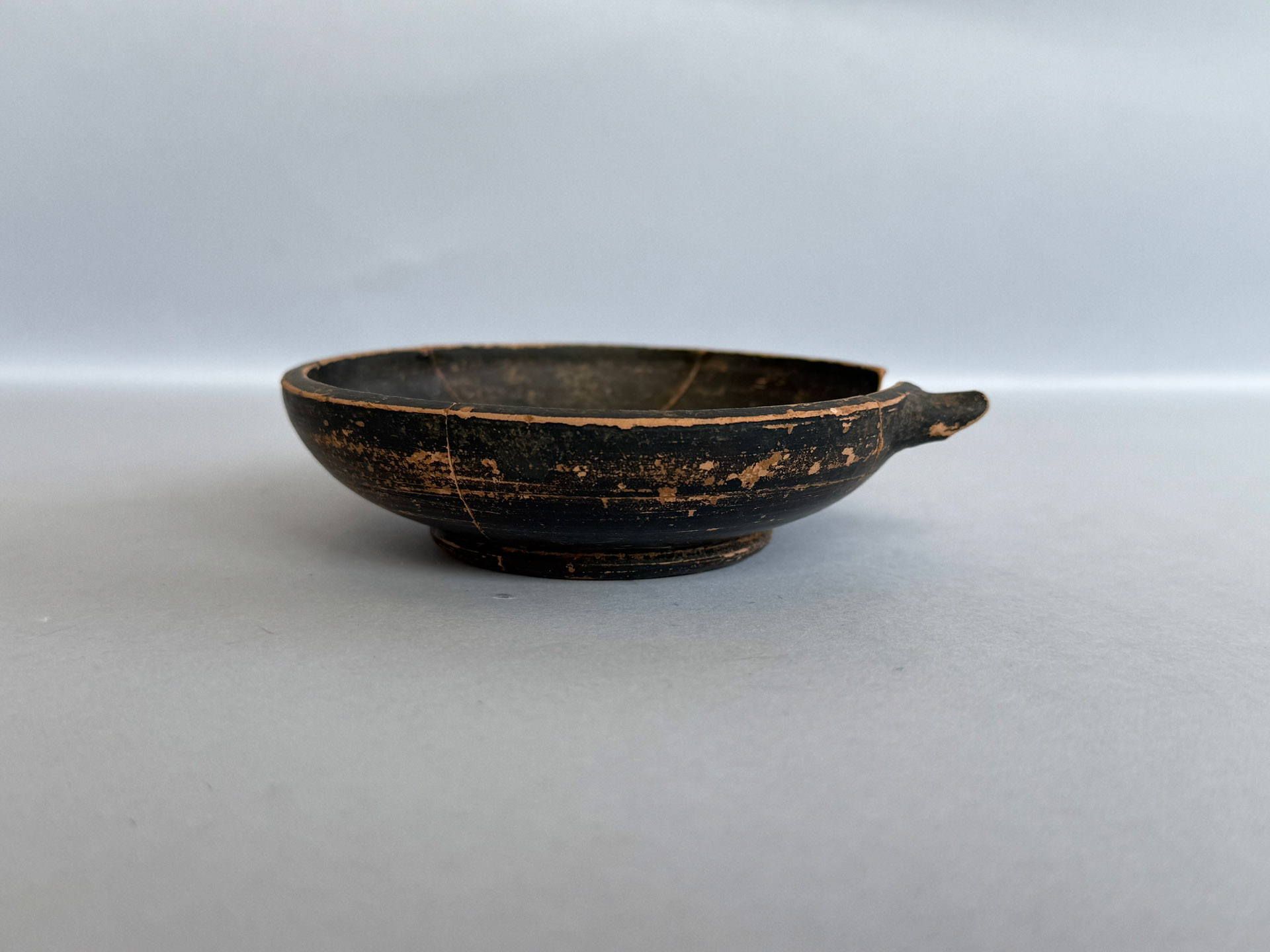
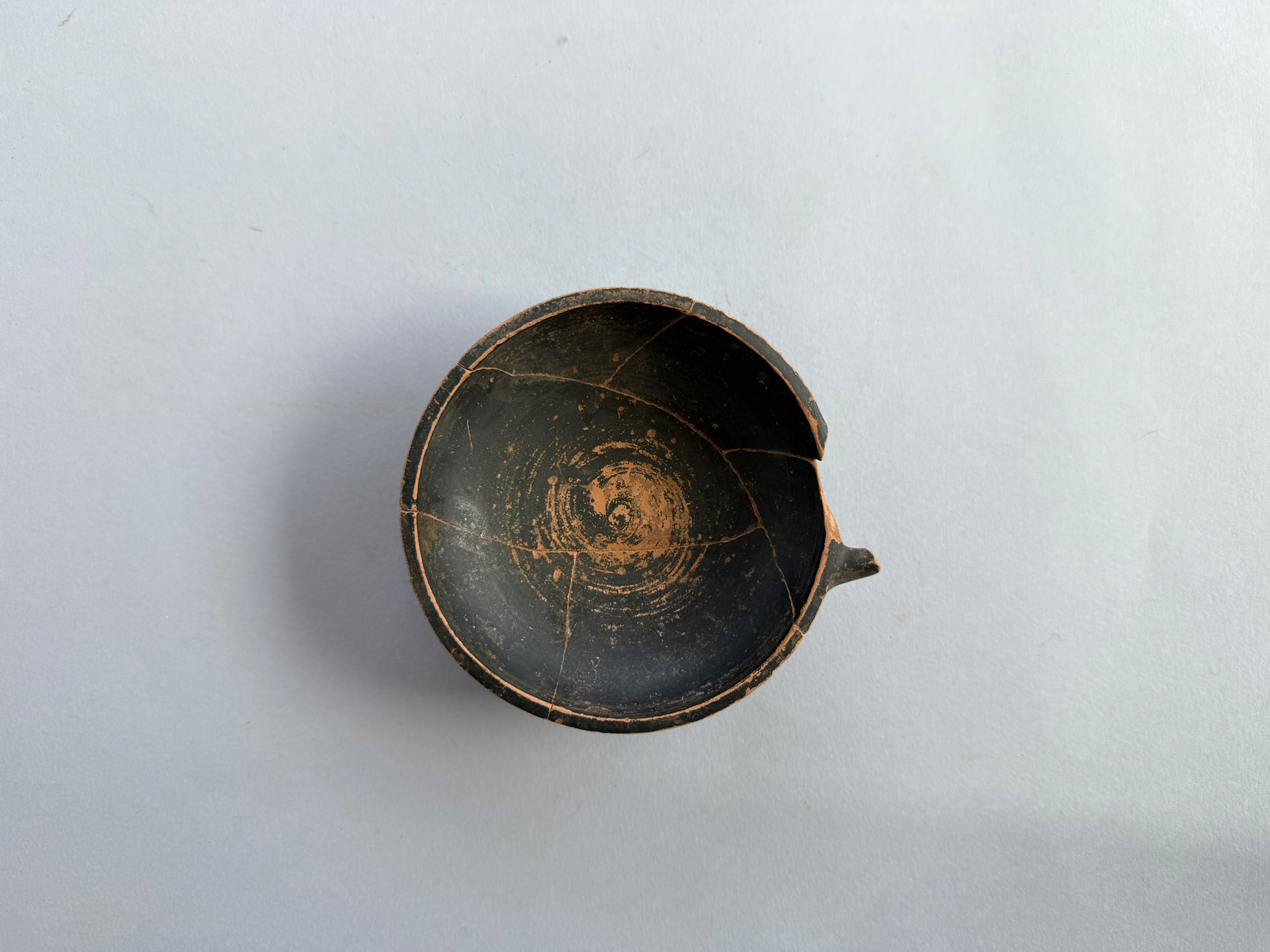
Black-Glazed Ceramic Cup
Where
Museo Archeologico Nazionale di Amendolara
Piazza Giovanni XXIII
87071 – Amendolara (CS)
Description
The cup features a flat rim, a shallow bowl with a convex profile, and a small lateral handle, now fragmentary. The surface is covered with a glossy black glaze.
Black-glazed cups, such as this example
... read more >The cup features a flat rim, a shallow bowl with a convex profile, and a small lateral handle, now fragmentary. The surface is covered with a glossy black glaze.
Black-glazed cups, such as this example, represent one of the most widespread ceramic forms in the Mediterranean between the late 6th and the early 5th century BC. They belong to a category of tableware used for the consumption of beverages, typically during banquets. Black-glazed pottery is characterized by a dark slip applied to the vessel after shaping; during firing in the kiln, this coating acquired a shiny, lustrous appearance thanks to specific chemical reactions triggered by high temperatures. This type of ceramic was highly valued in the Greek world because it evoked the elegance of vessels made of precious metal, while being far less costly to produce. Its discovery at the settlement of San Nicola attests to the circulation and adoption of ceramic models typical of the Greek and Magna Graecia world, indicating the integration of the local community into the commercial and cultural networks of the Sibaritide.
read less <INSIGHTS >
Explore the areas of Crotone and Sibari
History awaits you inside the Archaeological Sites of Crotone and Sibari. Start your visit.
planDiscover current events
Concerts, tastings and dedicated exhibitions to relive the history of Magna Graecia.
discover more
Experience the Parks and Museums
History awaits you inside the Archaeological Sites of Crotone and Sibari. Start your visit.
plan

Whether you are with family, at school or experience the world in a unique way, here you will find paths designed for you.