Bronze Horse Muzzle
Description
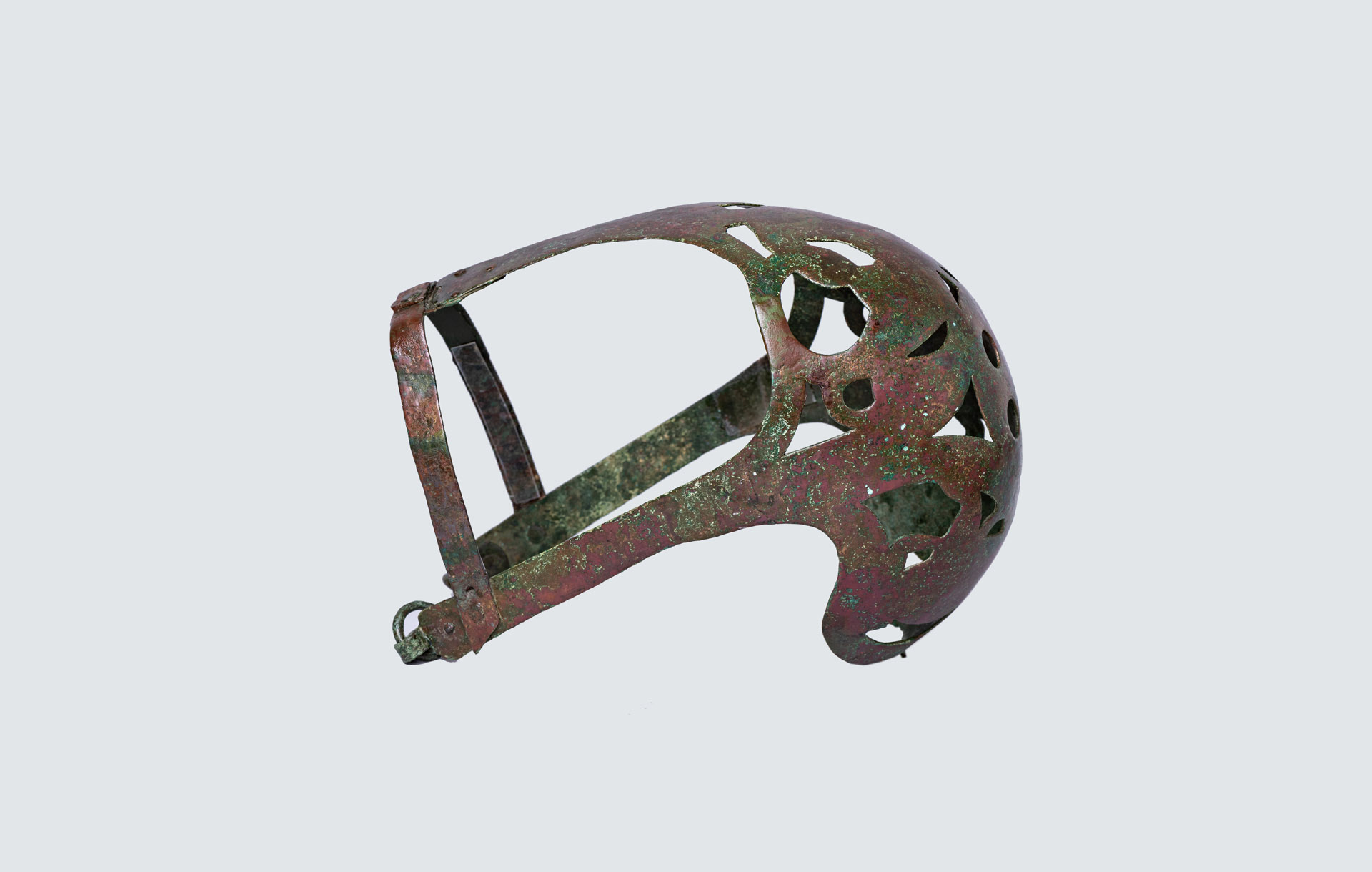
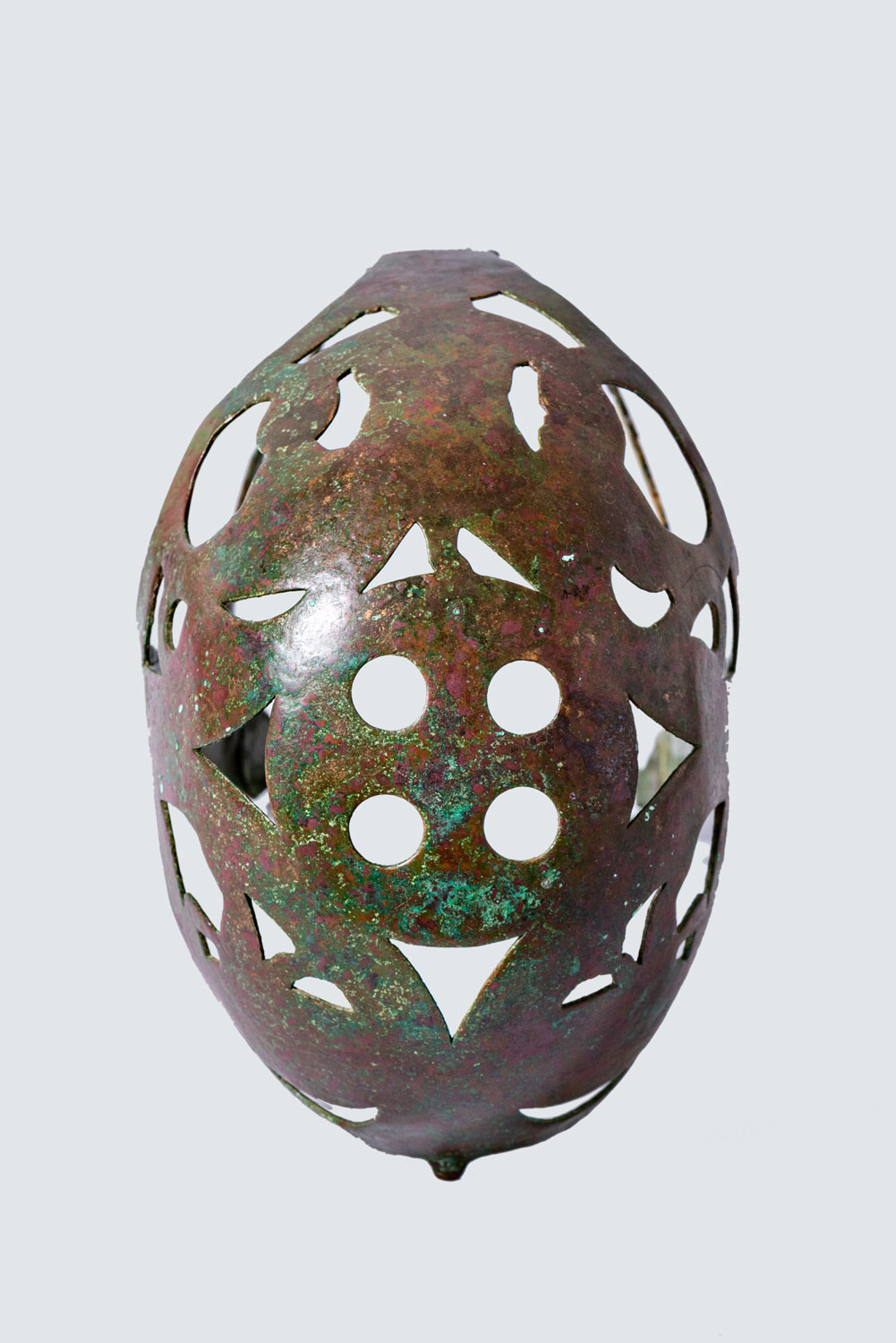
Cast in bronze, the muzzle is made up of a network of metal straps which, when fitted around the horse’s muzzle, form two figurative scenes. In the upper scene, the young Heracles is depicted strangling
... read more >Cast in bronze, the muzzle is made up of a network of metal straps which, when fitted around the horse’s muzzle, form two figurative scenes. In the upper scene, the young Heracles is depicted strangling the serpents; in the lower scene, a duel between two warriors equipped with helmet, shield, and sword is shown at the moment just before the clash. On the shield of the figure on the right, the Greek letter lambda (Λ) is engraved.
The muzzle comes from the extra-urban sanctuary of Vigna Nuova, located on the outskirts of modern Crotone. It was probably a votive offering dedicated to Hera, the tutelary goddess of this place of worship, by a member of the cavalry of Kroton. In the sanctuary, the goddess was venerated both as Liberator (Eleutherias) and as “Lady of Horses” (Hippia), making the gift of a horse muzzle particularly meaningful.
The first episode depicted, that of Heracles and the serpents, is directly connected to Hera. Jealous of Zeus’s infidelity, the goddess sent two serpents into the cradle of Heracles and his brother Iphicles in order to kill them. But Heracles, endowed with prodigious strength from birth, seized the snakes and killed them with his bare hands.
In the second scene, the combat episode, the presence of the Greek letter lambda (Λ) helps clarify its meaning: it is in fact the initial of the name Lakedaimon. This detail suggests that the scene may represent the duel between Paris and Menelaus, the first armed confrontation narrated in the Iliad, a key episode marking the beginning of the Trojan War.
read less <INSIGHTS >
Explore the areas of Crotone and Sibari
History awaits you inside the Archaeological Sites of Crotone and Sibari. Start your visit.
planDiscover current events
Concerts, tastings and dedicated exhibitions to relive the history of Magna Graecia.
discover more
Experience the Parks and Museums
History awaits you inside the Archaeological Sites of Crotone and Sibari. Start your visit.
plan

Whether you are with family, at school or experience the world in a unique way, here you will find paths designed for you.