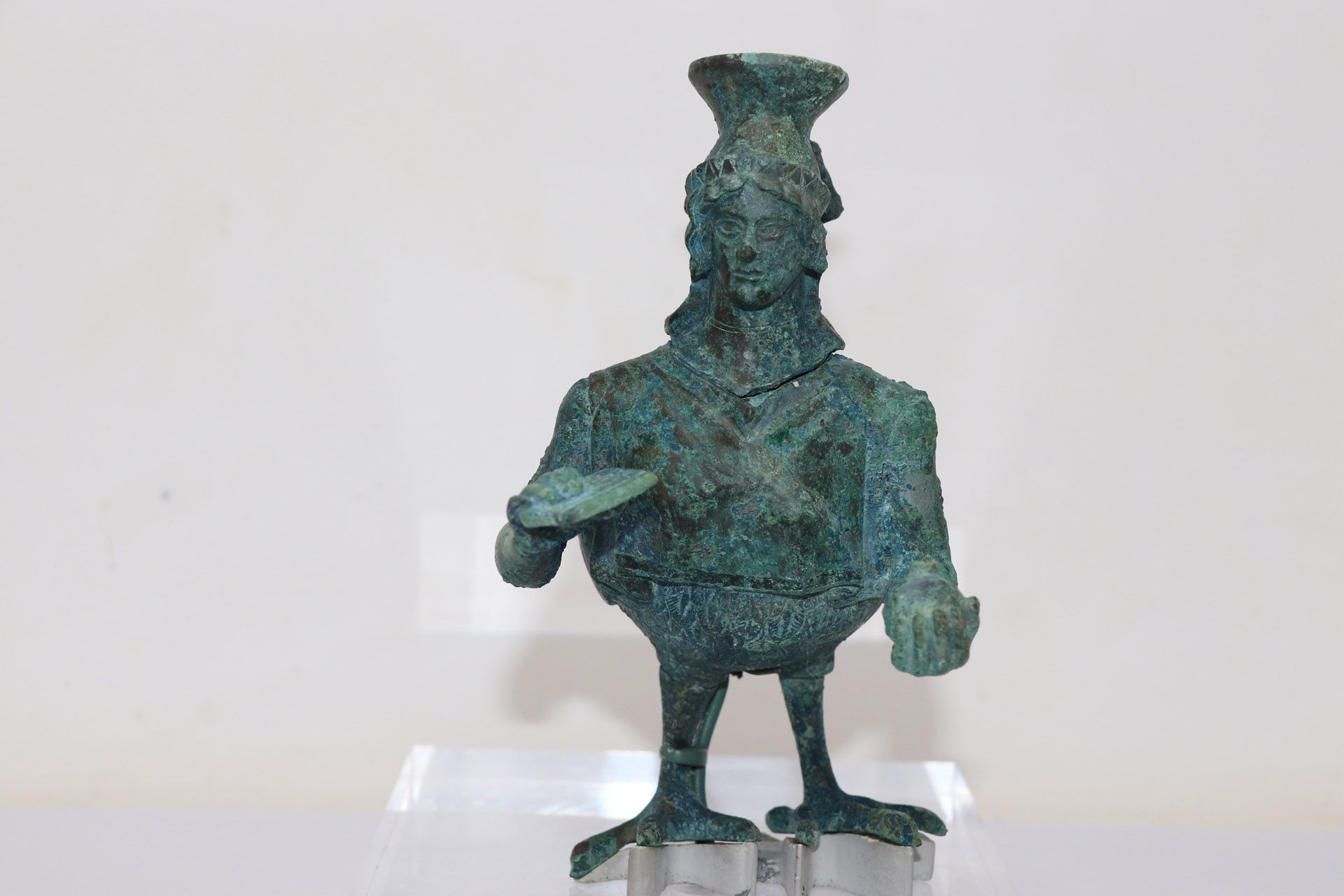
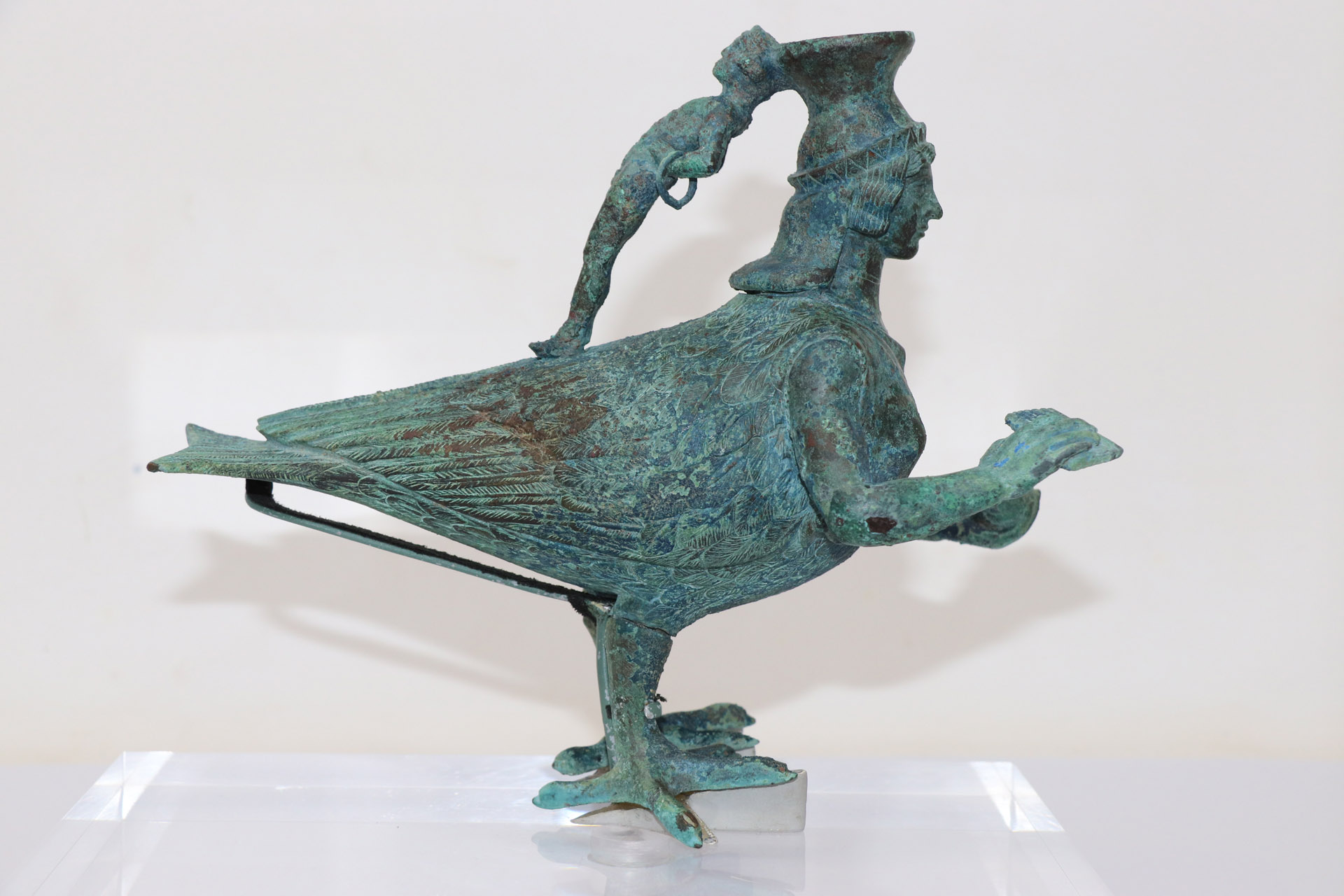
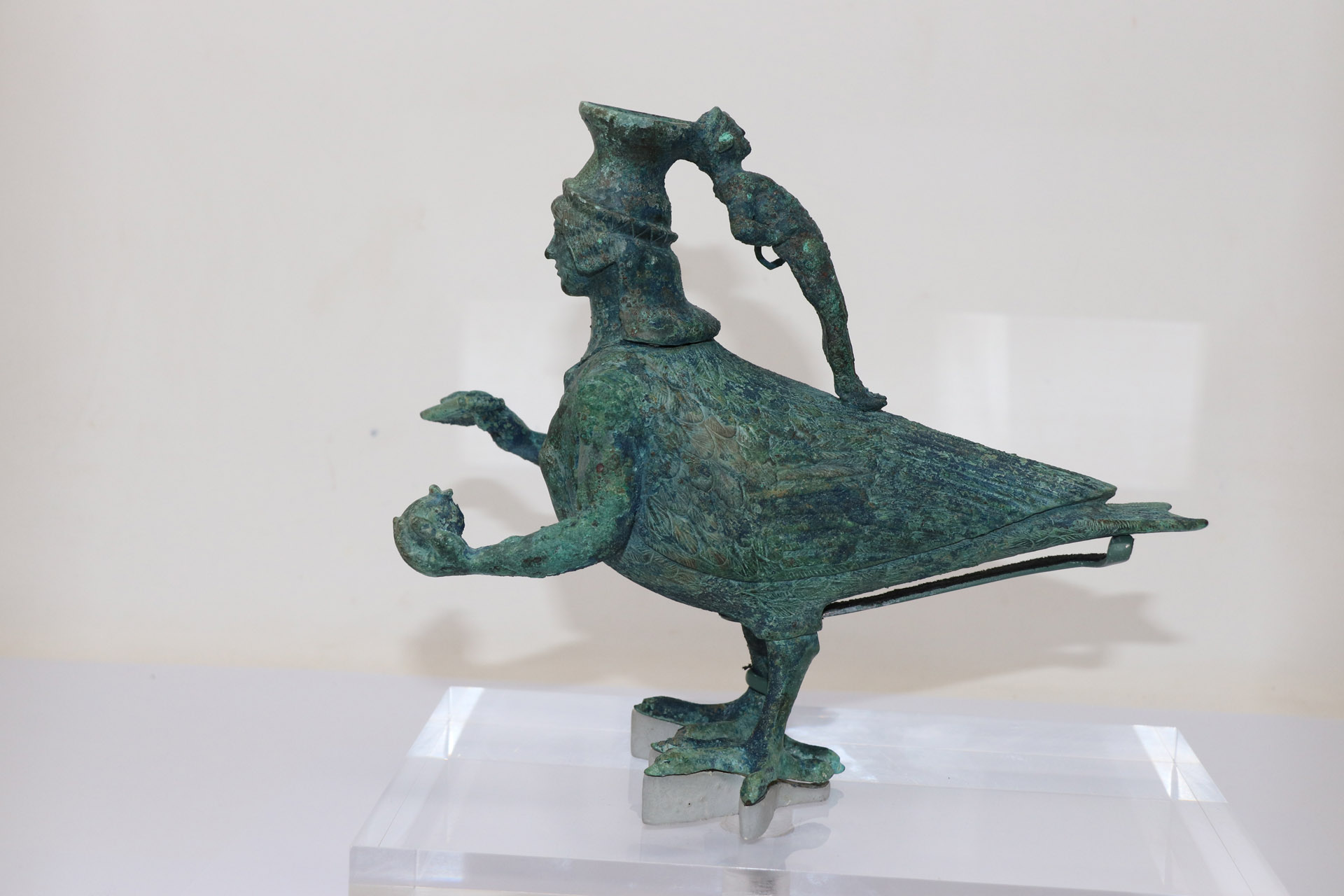
Bronze Plastic Vessel for Unguents with Siren
Description
This bronze plastic vessel for unguents (askos), cast using the lost-wax technique, is shaped in the form of a siren. She is shown frontally, wearing a headdress (polos) carefully modeled to conceal the
... read more >This bronze plastic vessel for unguents (askos), cast using the lost-wax technique, is shaped in the form of a siren. She is shown frontally, wearing a headdress (polos) carefully modeled to conceal the spout of the vessel. She is dressed in a draped tunic (peplos) and adorned with a diadem decorated with a sequence of small triangles. Her arms extend forward, holding symbolic objects: in her right hand a pan flute (syrinx), and in her left a pomegranate.
The handle of the askos, slightly curved, is itself modeled as a human figure: a nude youth depicted with hands on hips and arms open. A ring is attached to his left arm, probably intended to hold the chain that once connected the lid—now lost—to the body of the vessel.
This precious object comes from illicit excavations carried out in the late 1980s in the Murge area of Strongoli (KR) and subsequently entered the illegal antiquities market. After a long and complex investigation by the Carabinieri Command for the Protection of Cultural Heritage, the piece was finally returned in 2009 to the Museo Archeologico Nazionale di Crotone.
In Greek tradition and imagination, sirens were hybrid creatures—half woman and half bird—closely associated with the passage between life and death. Their song not only enchanted those who heard it, but was also believed to soothe the sorrow of the living and guide the souls of the dead into the afterlife. In the realm of the dead, the objects carried by this siren—the flute and the pomegranate—take on deep symbolic meaning: the flute evokes her enchanting musical power, while the pomegranate alludes to the underworld and the funerary sphere, suggesting that the vessel was intended for a burial context.
read less <INSIGHTS >
Explore the areas of Crotone and Sibari
History awaits you inside the Archaeological Sites of Crotone and Sibari. Start your visit.
planDiscover current events
Concerts, tastings and dedicated exhibitions to relive the history of Magna Graecia.
discover more
Experience the Parks and Museums
History awaits you inside the Archaeological Sites of Crotone and Sibari. Start your visit.
plan

Whether you are with family, at school or experience the world in a unique way, here you will find paths designed for you.