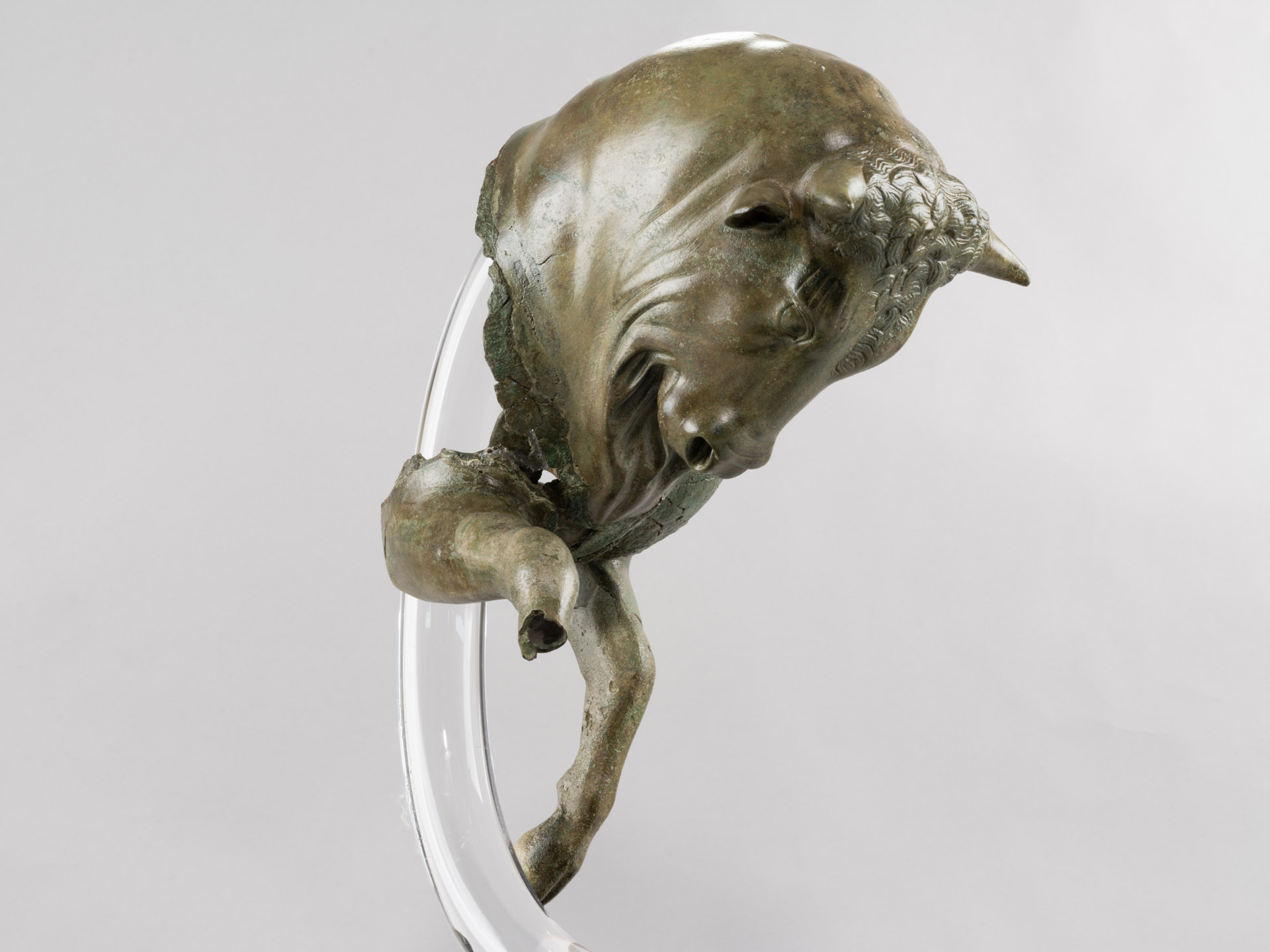
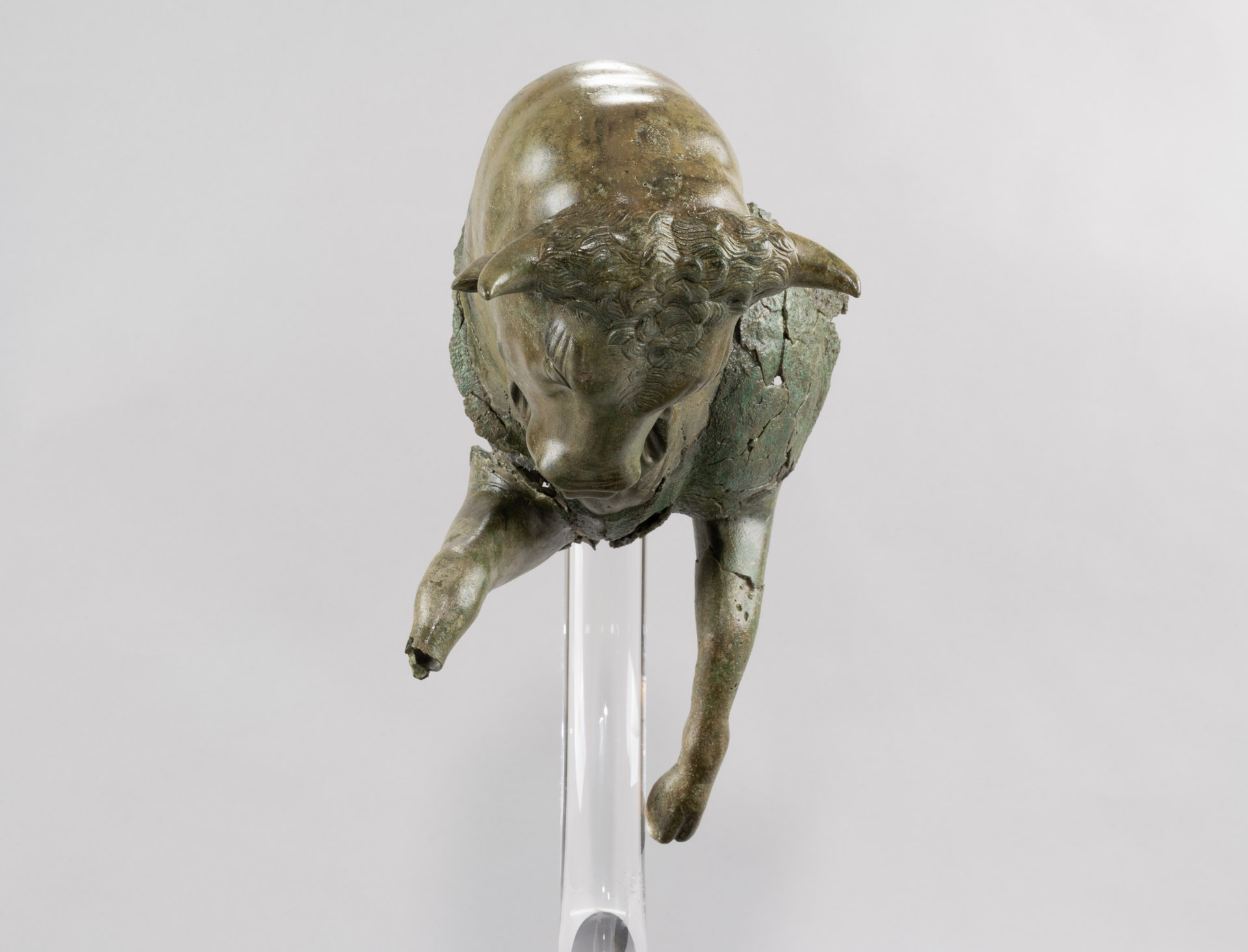
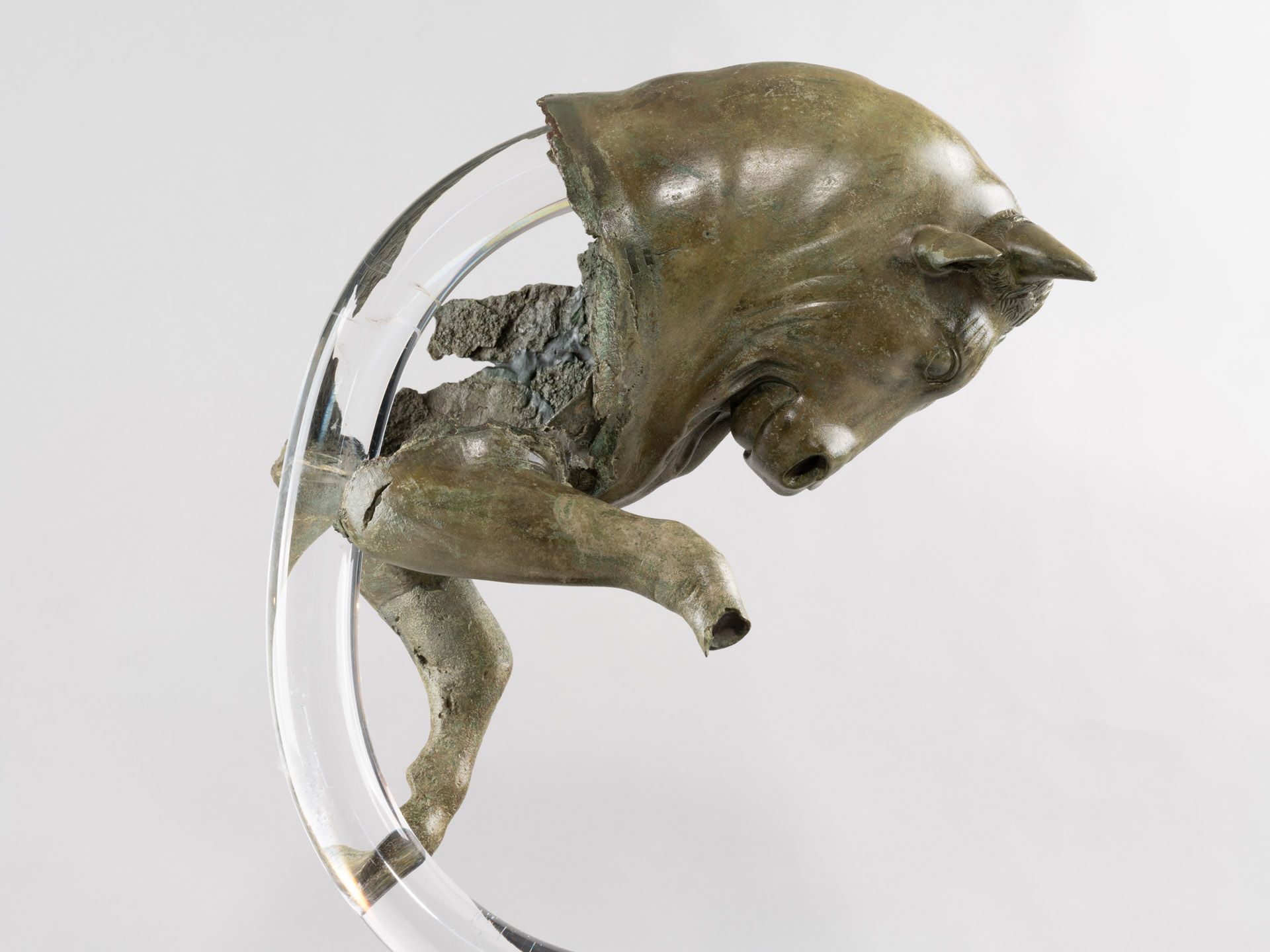
Bronze Statue Depicting a Bull (the so-called “Charging Bull”)
Where
Museo Archeologico Nazionale della Sibaritide
Località Casabianca – Frazione Sibari
87011 – Cassano All’Ionio (CS)
Description
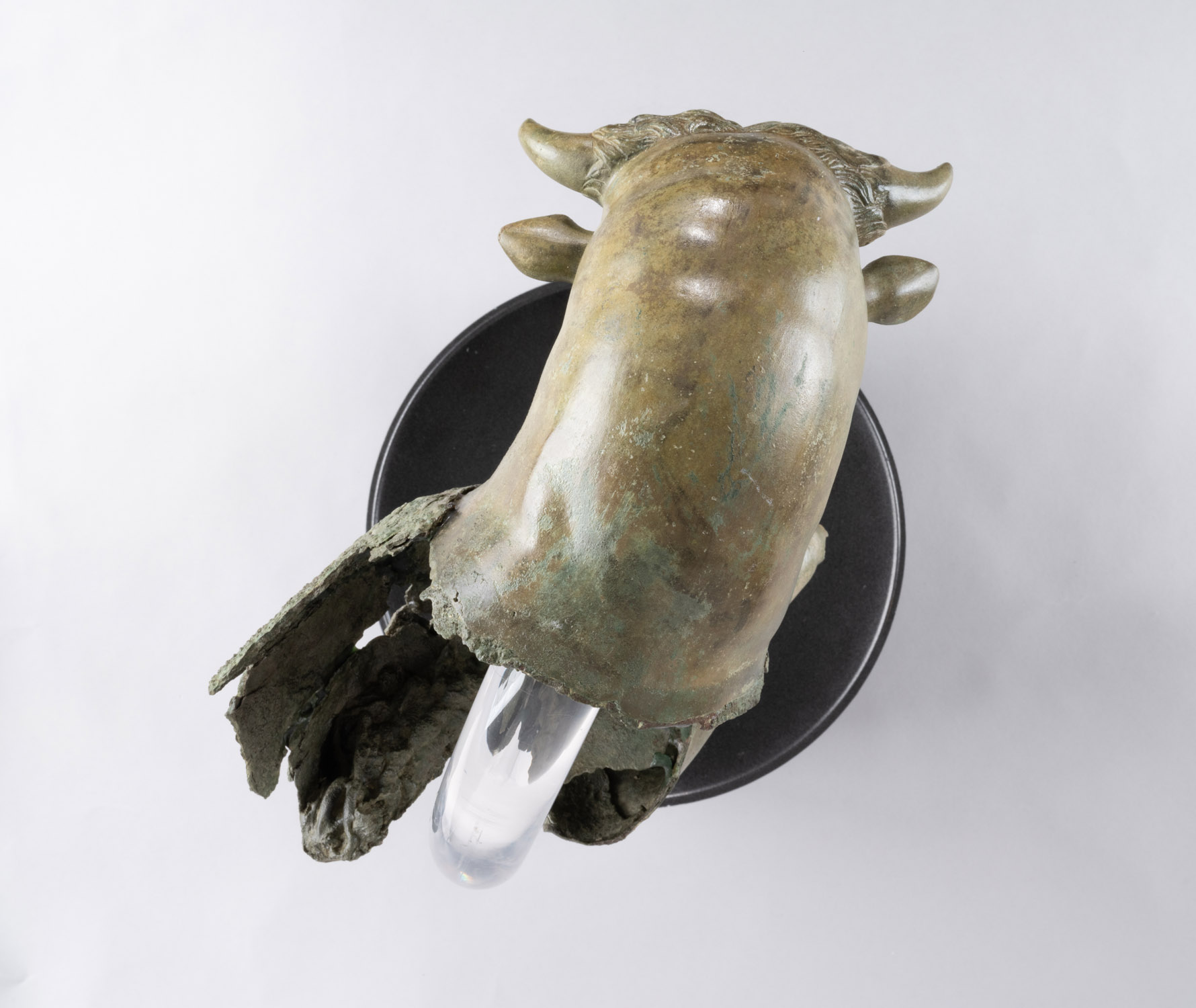
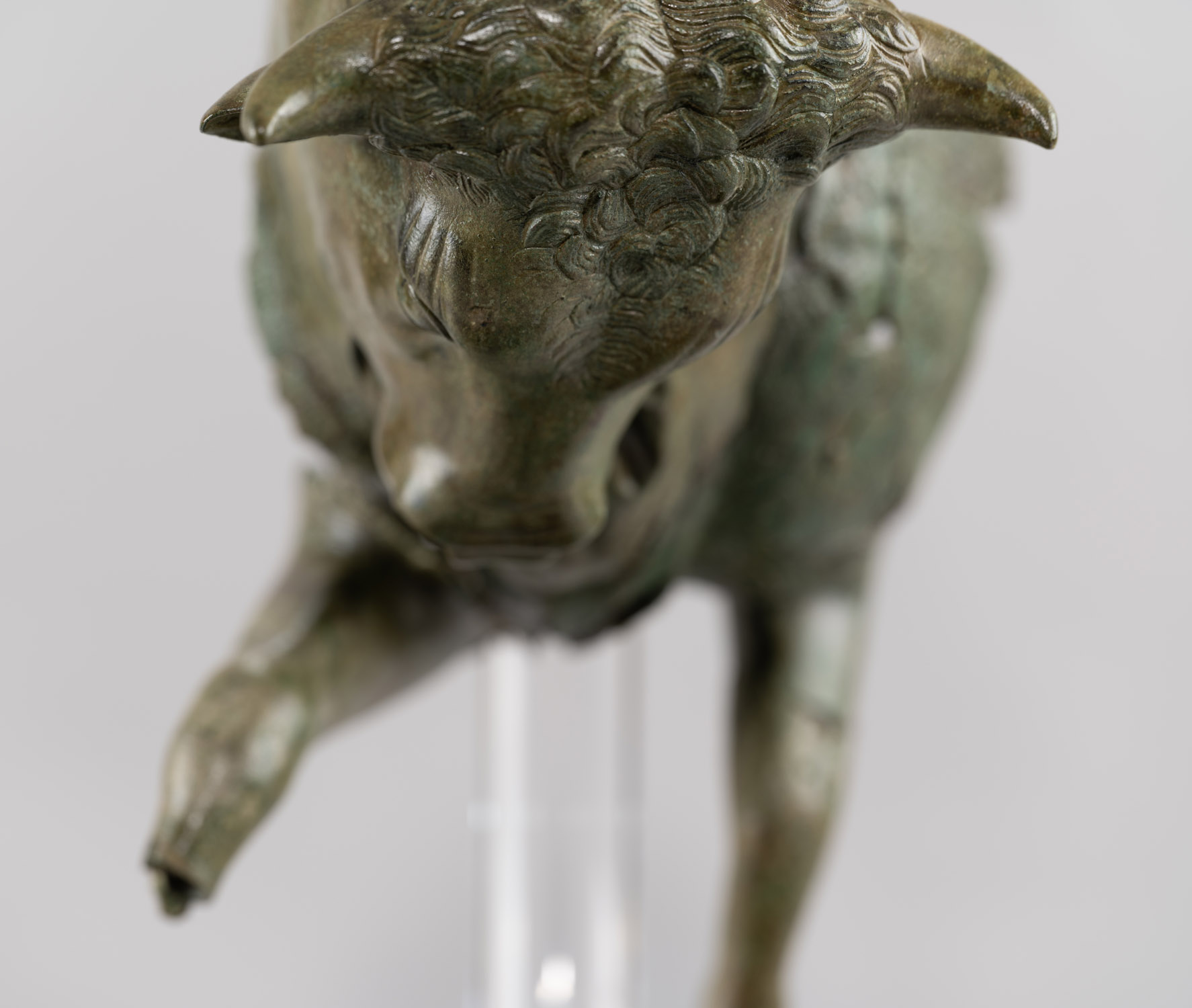
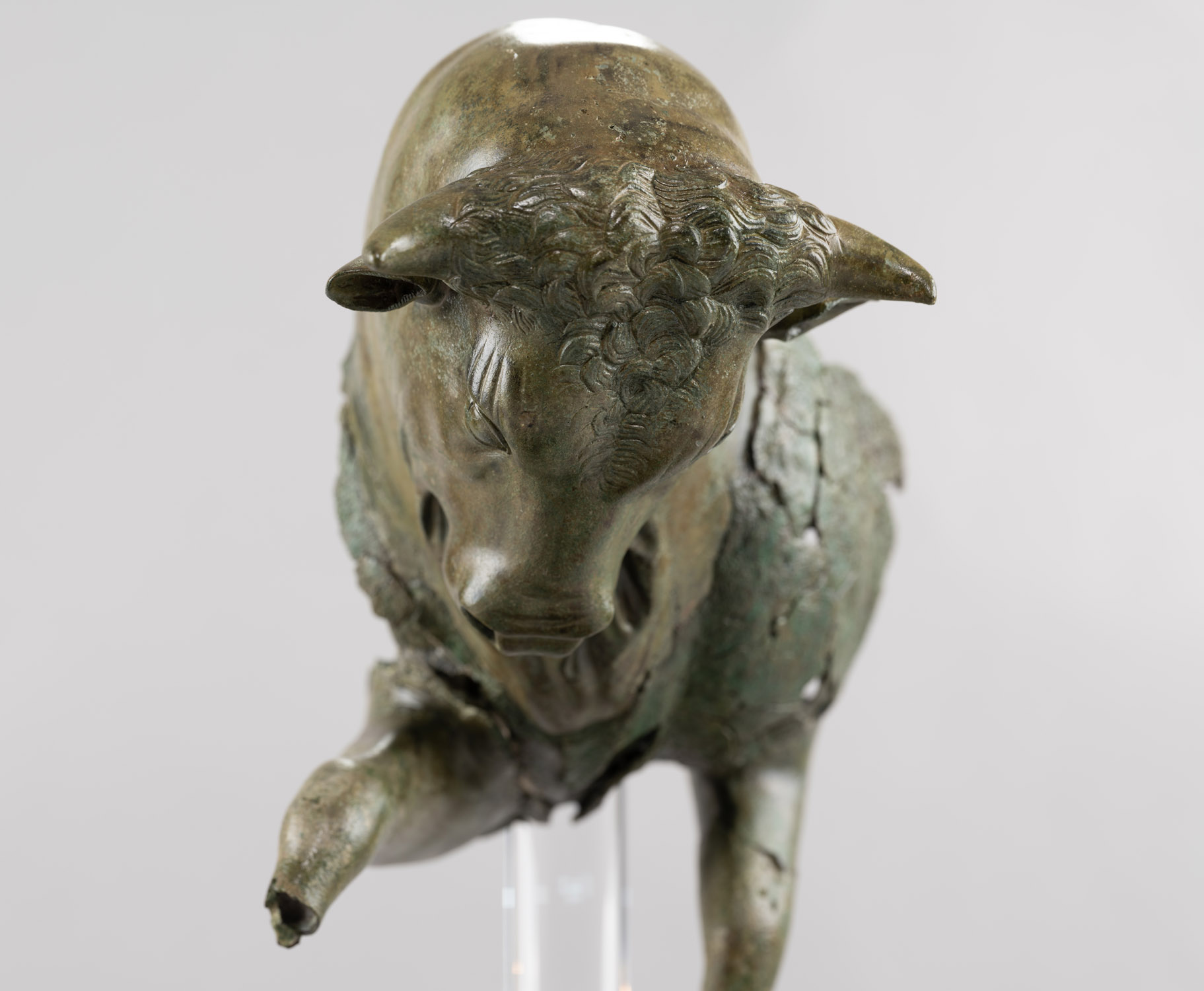
The bronze statue depicts a bull in the act of charging (cozzante). The head, inclined forward and downward, is topped by small, pointed horns projecting above the round, clearly defined ears. Between
... read more >The bronze statue depicts a bull in the act of charging (cozzante). The head, inclined forward and downward, is topped by small, pointed horns projecting above the round, clearly defined ears. Between the horns and the forehead are raised, rounded tufts of hair. The face, with a smooth surface, features large, elongated eyes with well-defined eyelids and a muzzle marked by wide nostrils. On the neck, a series of folds emphasizes the powerful musculature, clearly distinguished from the rest of the body, which is rendered in a dynamic pose, with the front legs positioned at different heights.
The work was produced using the lost-wax casting technique and displays remarkable refinement: the rendering of movement, muscular tension, and the animal’s expressive force give the statue a striking sense of vitality. On the lower part of the body, however, the surface appears less carefully finished than elsewhere. This is due to the insertion of roughly worked bronze fragments during an ancient restoration carried out in antiquity.
The statue is one of the masterpieces of Magna Graecia bronze sculpture and carries strong symbolic significance. The “charging bull,” shown in the moment of attack, was the emblem of the city of Thurii and also appears on coins minted by the city-state between the 5th and 4th centuries BC.
The sculpture was found in a public building of the Roman colony of Copiae, within a sanctuary built in the Roman period and dedicated to Eastern deities. It was during this later phase of its use in a religious context that the restoration of the lower part of the body was carried out. According to some scholars, in this setting the statue no longer functioned merely as a decorative object but took on a completely different symbolic meaning: its image was probably associated with the god Apis, an Egyptian deity worshipped in the sanctuary and traditionally represented in the form of a bull.
read less <INSIGHTS >
Explore the areas of Crotone and Sibari
History awaits you inside the Archaeological Sites of Crotone and Sibari. Start your visit.
planDiscover current events
Concerts, tastings and dedicated exhibitions to relive the history of Magna Graecia.
discover more
Experience the Parks and Museums
History awaits you inside the Archaeological Sites of Crotone and Sibari. Start your visit.
plan

Whether you are with family, at school or experience the world in a unique way, here you will find paths designed for you.