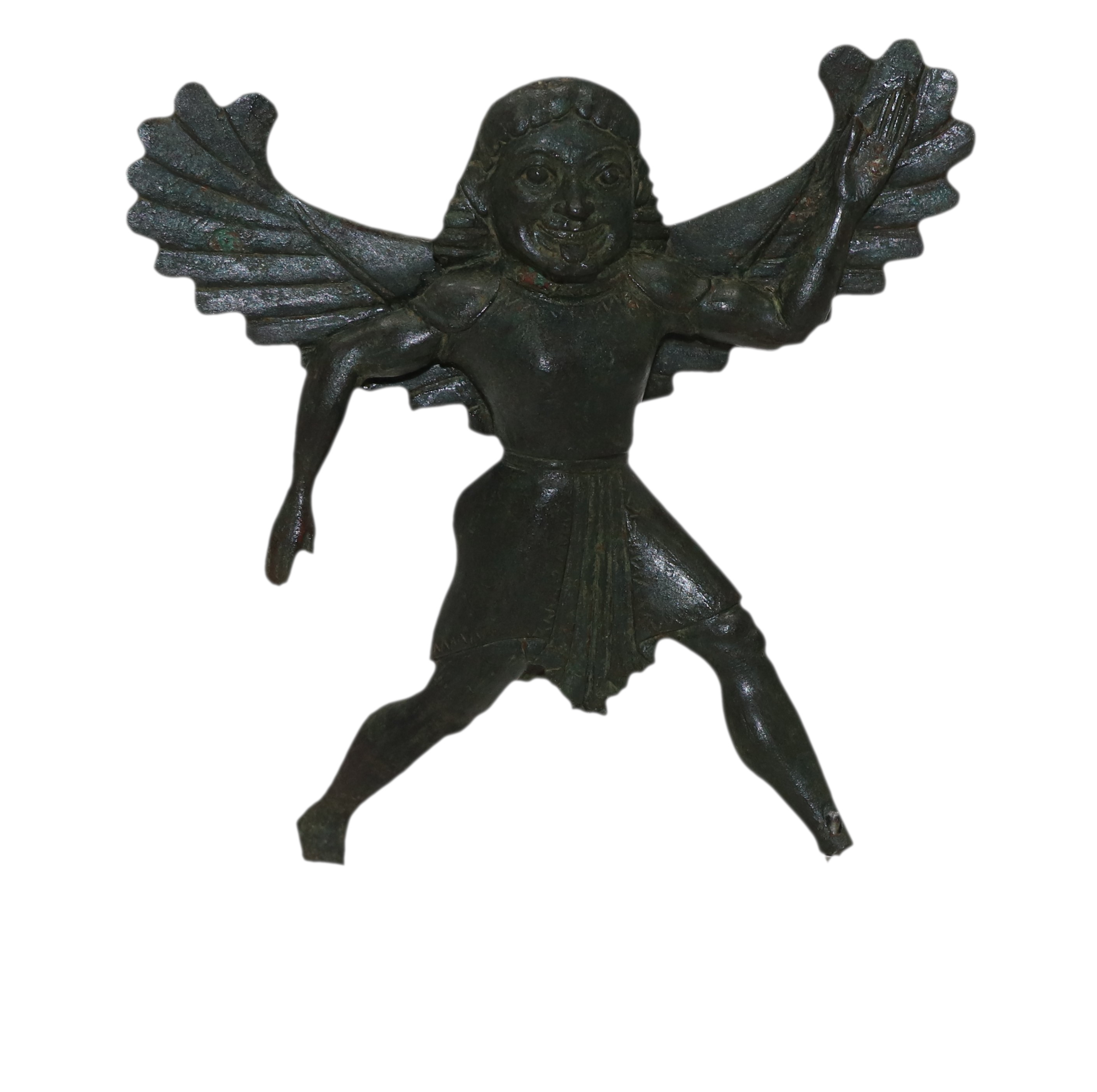
Bronze Statuette of a Gorgon
Where
Museo Archeologico Nazionale di Capo Colonna
Via Michele Di Donato 1
(Già Via Hera Lacinia)
88900 – Crotone (KR)
Description
The bronze statuette depicts a winged Gorgon running to the left, according to a traditional iconographic scheme for this subject. The left forearm is raised and rests on the wing, with the hand open and
... read more >The bronze statuette depicts a winged Gorgon running to the left, according to a traditional iconographic scheme for this subject. The left forearm is raised and rests on the wing, with the hand open and the fingers elongated, while the right arm touches the wing only at the upper part, allowing the forearm to hang downward. The sense of movement is heightened by the twist of the body and by the careful rendering of the musculature, especially that of the right thigh.
The face, broad and strongly characterized, features large protruding eyes and an open mouth with the tongue thrust out. The hair, wavy and parted at the center, falls onto the shoulders in regular locks. The figure wears a short tunic, cinched at the waist by a belt, leaving the legs uncovered; the skirt, animated by fan-shaped folds and decorated along the lower edge, conveys with great refinement the dynamism of the run. The wings, finally, are rendered with particular care, through a delicate treatment of the plumage in both incision and relief.
The Gorgon, an apotropaic figure par excellence—designed to ward off evil and protect people and places—is one of the most recurrent motifs in Greek art of the Archaic period. Especially in sacred contexts, her image was closely connected with the protective function of the sanctuary and its visitors: the frontal gaze, accentuated features, and powerful expression were intended to inspire fear and repel negative forces, acting as symbolic “guardians” of the sacred space. Although the subject is widely attested across different media—from architectural terracottas to figured pottery—the example from Capo Colonna has no known direct parallels, highlighting its remarkable formal and stylistic originality. The quality of the modeling and the careful finishing of the bronze surface, still well preserved today, make this artifact one of the most significant examples of Archaic bronze work found in the area and a high-level testimony to the artistic culture of Magna Graecia.
read less <INSIGHTS >
Explore the areas of Crotone and Sibari
History awaits you inside the Archaeological Sites of Crotone and Sibari. Start your visit.
planDiscover current events
Concerts, tastings and dedicated exhibitions to relive the history of Magna Graecia.
discover more
Experience the Parks and Museums
History awaits you inside the Archaeological Sites of Crotone and Sibari. Start your visit.
plan

Whether you are with family, at school or experience the world in a unique way, here you will find paths designed for you.