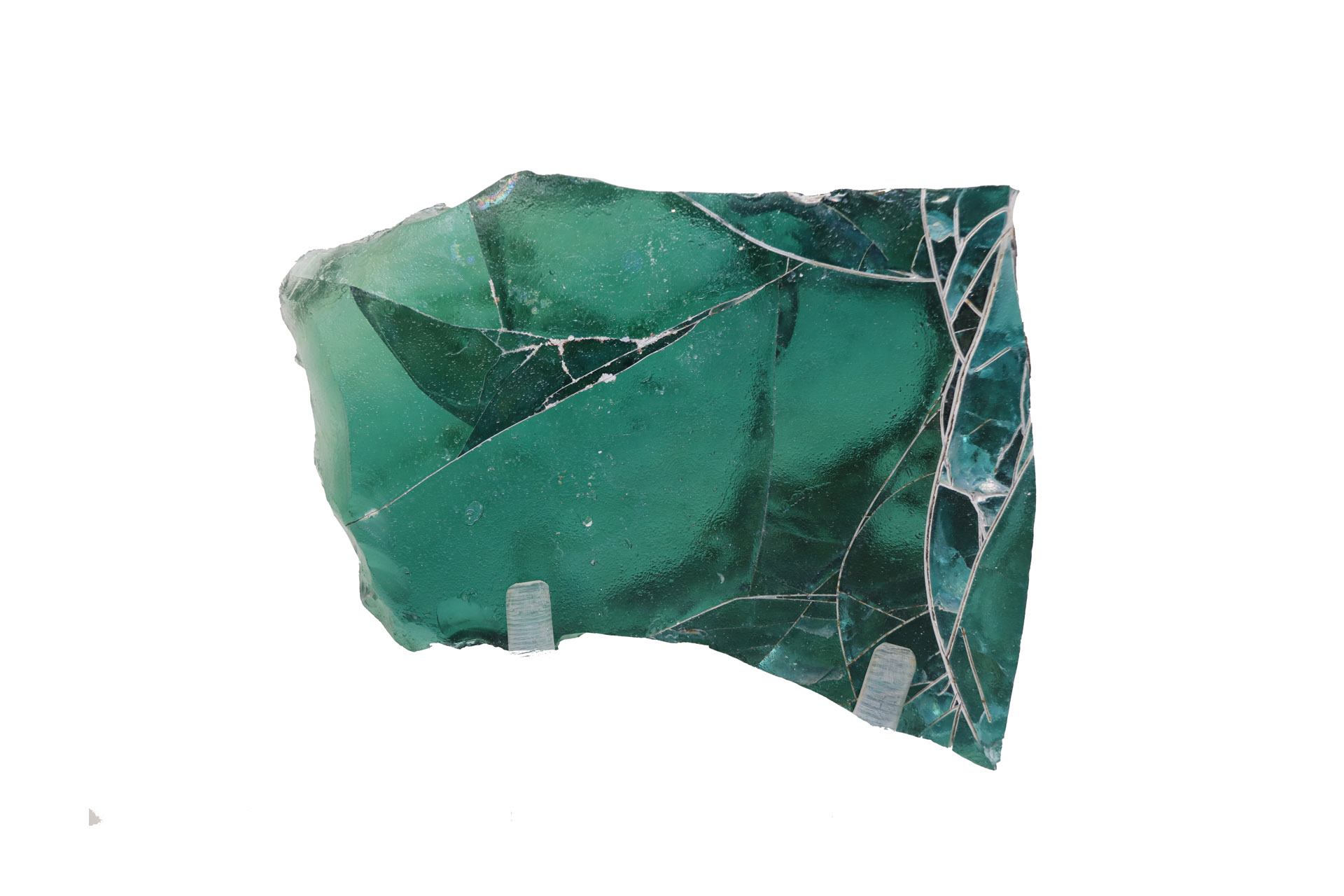
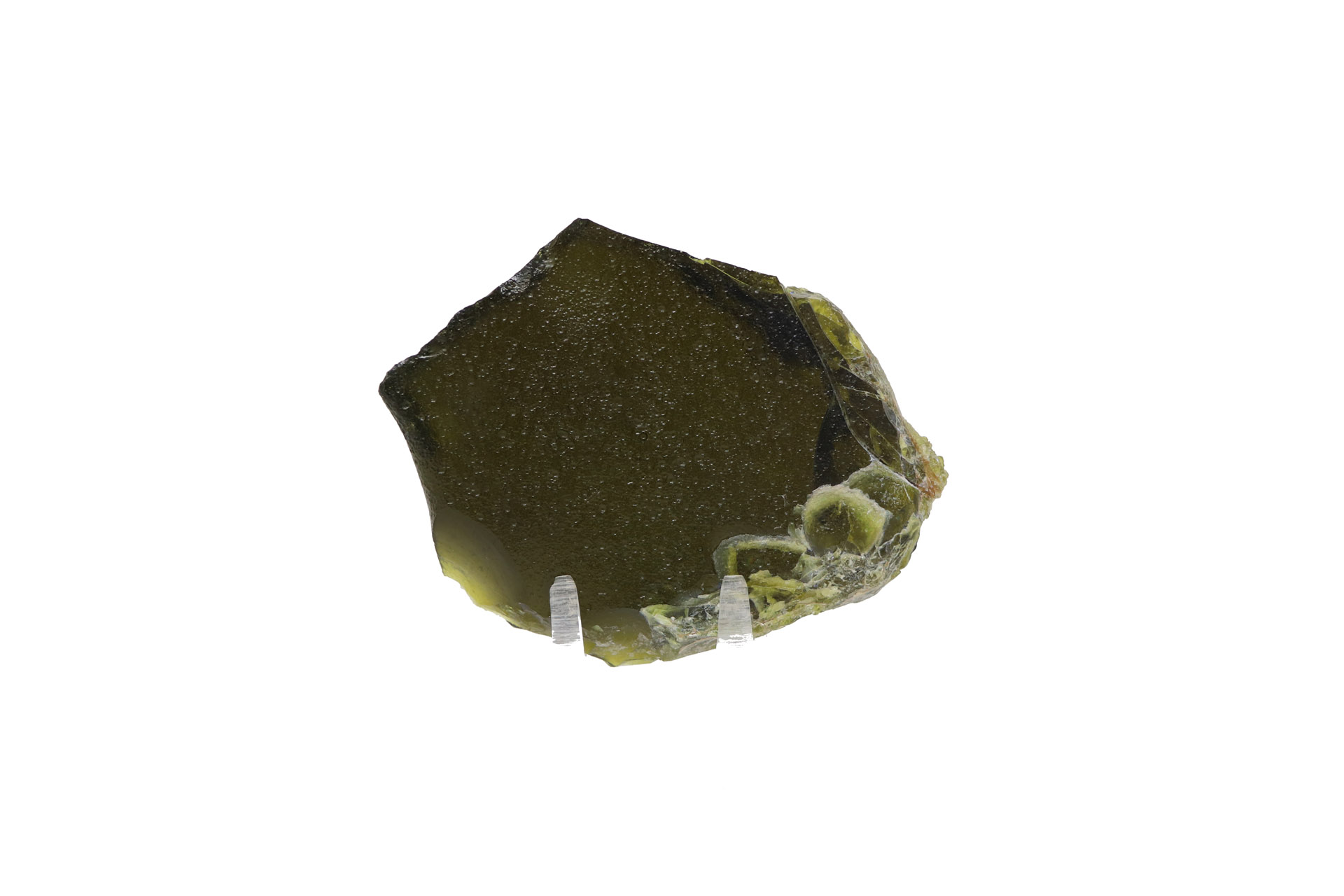
Fragments of Raw Glass Slabs
Where
Museo Archeologico Nazionale di Capo Colonna
Via Michele Di Donato 1
(Già Via Hera Lacinia)
88900 – Crotone (KR)
Description
Fragments of raw glass slabs, transported as raw material for further working.
Among the materials attributed to the Punta Scifo shipwreck, fragments of raw glass slabs have been identified in two different
... read more >Fragments of raw glass slabs, transported as raw material for further working.
Among the materials attributed to the Punta Scifo shipwreck, fragments of raw glass slabs have been identified in two different colour tones: olive green (also known as “dirty green”) and emerald green. The slabs, with a thickness ranging between 3 and 6 cm, were probably transported as blocks intended to be remelted and worked at their destination, in accordance with a well-documented practice in the ancient glass trade.
Raw glass was in fact a valuable commodity, produced mainly in the large primary workshops of the Levantine Mediterranean—Syria, Palestine, Egypt, and Cyprus—and then distributed throughout the Mediterranean basin, reaching even distant regions such as India and Ethiopia. At the places of arrival, the material was reworked in secondary workshops to produce vessels and other finished objects. In the case of Wreck A of Punta Scifo, alongside the raw glass, already finished glass objects were also found; these may have formed part of the commercial cargo or belonged to the personal effects of the crew.
read less <INSIGHTS >
Explore the areas of Crotone and Sibari
History awaits you inside the Archaeological Sites of Crotone and Sibari. Start your visit.
planDiscover current events
Concerts, tastings and dedicated exhibitions to relive the history of Magna Graecia.
discover more
Experience the Parks and Museums
History awaits you inside the Archaeological Sites of Crotone and Sibari. Start your visit.
plan

Whether you are with family, at school or experience the world in a unique way, here you will find paths designed for you.