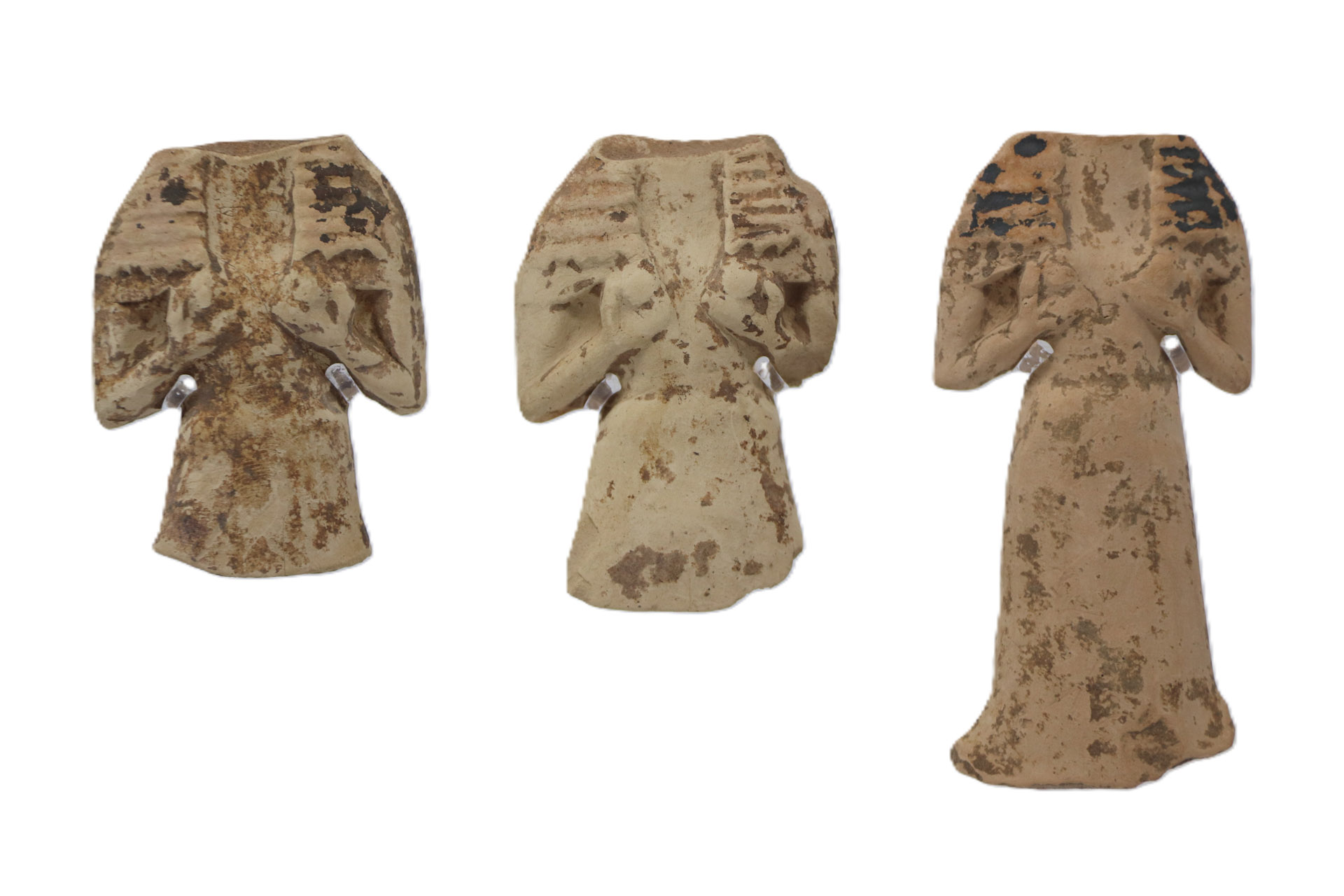
Fragments of “Sele-type Lamp” Figurines
Where
Museo Archeologico Nazionale di Capo Colonna
Via Michele Di Donato 1
(Già Via Hera Lacinia)
88900 – Crotone (KR)
Description
Fragments of female figurines modeled in clay, headless, depicted standing upright with a rigid posture and simplified volumes. They wear a barely visible tunic, covered at the shoulders by braided hair
... read more >Fragments of female figurines modeled in clay, headless, depicted standing upright with a rigid posture and simplified volumes. They wear a barely visible tunic, covered at the shoulders by braided hair falling to the level of the breasts, characterized by horizontal grooves that preserve traces of dark brown–black pigment. The hands are bent in a gesture touching the breasts.
These terracotta figurines were not simple decorative objects: they combined aesthetic value with a practical function, as they served to support the upper part of a ritual object—a lamp. The complete object is known as a “Sele-type lamp,” named after the place where numerous examples were found: the Heraion at the mouth of the Sele River, one of the most important sanctuaries dedicated to Hera, near Poseidonia (modern Paestum). These lamps formed part of the sacred furnishings of temples and cult spaces and accompanied the ceremonies and rituals performed there. The female figures are shown performing the gesture of grasping their breasts, an iconographic motif rich in symbolic meaning, generally associated with fertility and the protection of pregnant women. In this way, the image directly evoked the attributes of the deity worshipped in the sanctuary, reinforcing the bond between the object, the cult, and the sacred sphere.
read less <INSIGHTS >
Explore the areas of Crotone and Sibari
History awaits you inside the Archaeological Sites of Crotone and Sibari. Start your visit.
planDiscover current events
Concerts, tastings and dedicated exhibitions to relive the history of Magna Graecia.
discover more
Experience the Parks and Museums
History awaits you inside the Archaeological Sites of Crotone and Sibari. Start your visit.
plan

Whether you are with family, at school or experience the world in a unique way, here you will find paths designed for you.