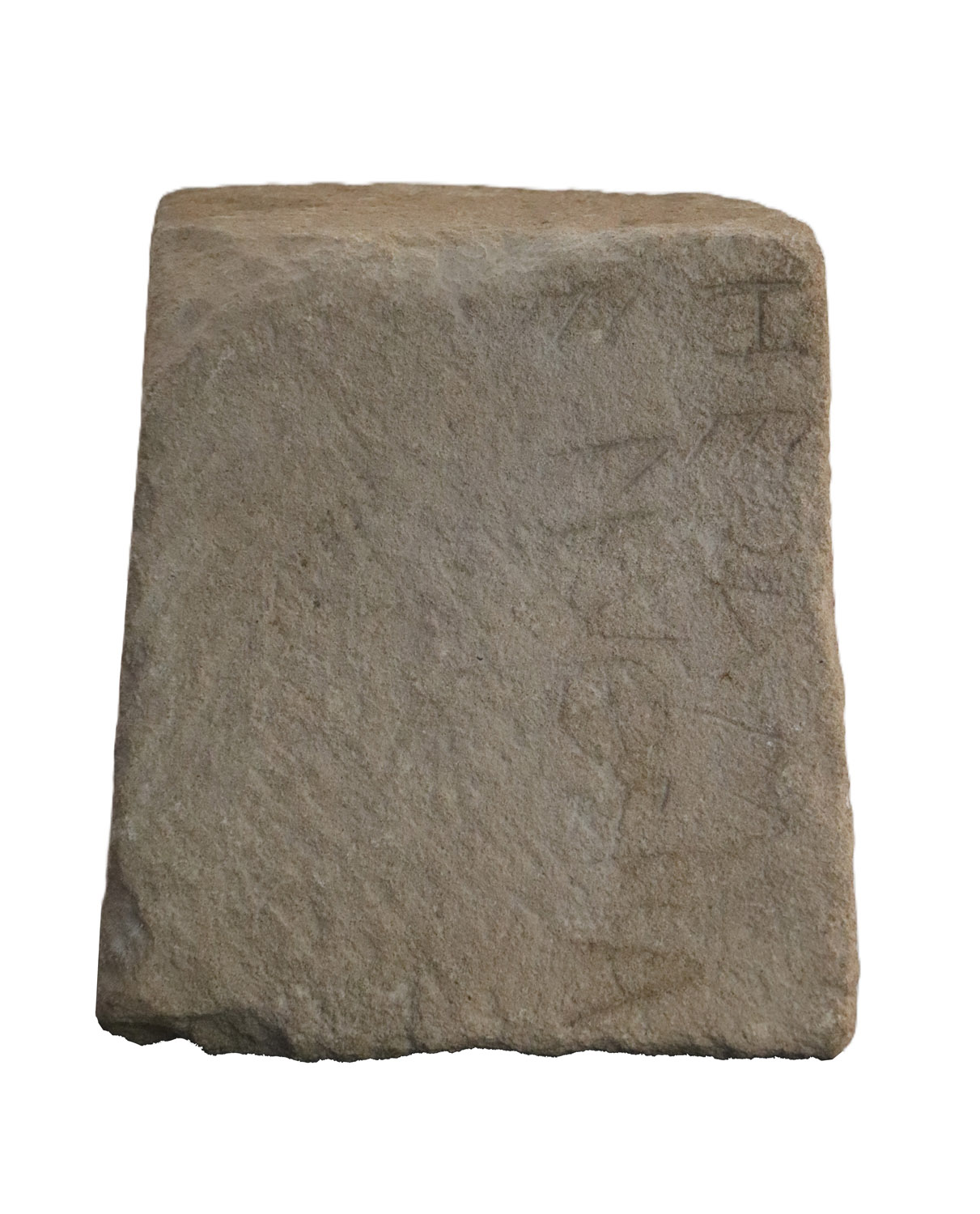
Limestone Cippus with Greek Inscription
Where
Museo Archeologico Nazionale di Capo Colonna
Via Michele Di Donato 1
(Già Via Hera Lacinia)
88900 – Crotone (KR)
Description
The cippus, made of local limestone, has a parallelepiped shape and a carefully finished surface. On one of its sides is an inscription in Greek, arranged over two lines, in which the deity Hera Eleutherìa
... read more >The cippus, made of local limestone, has a parallelepiped shape and a carefully finished surface. On one of its sides is an inscription in Greek, arranged over two lines, in which the deity Hera Eleutherìa is mentioned.
This cippus is one of the most important epigraphic testimonies for understanding a specific aspect of the cult practiced within the sacred area of the sanctuary at Capo Colonna. It was discovered accidentally in 1891 to the east of the Temple of Hera, in the open area below the single surviving column, together with other stones that had collapsed toward the sea. The inscription refers to Hera Eleutherìa, an epithet that associates the goddess with the theme of the liberation of slaves and the related ceremonies; in Greek, eleutherìa means “freedom.” This aspect of the cult is also documented in other sanctuaries of ancient Kroton, such as the one at Località Vigna Nuova.
The cippus belongs to the category of votive markers or boundary stones and was probably used either to delimit a specific cult area or as a base for an offering dedicated to the goddess.
read less <INSIGHTS >
Explore the areas of Crotone and Sibari
History awaits you inside the Archaeological Sites of Crotone and Sibari. Start your visit.
planDiscover current events
Concerts, tastings and dedicated exhibitions to relive the history of Magna Graecia.
discover more
Experience the Parks and Museums
History awaits you inside the Archaeological Sites of Crotone and Sibari. Start your visit.
plan

Whether you are with family, at school or experience the world in a unique way, here you will find paths designed for you.