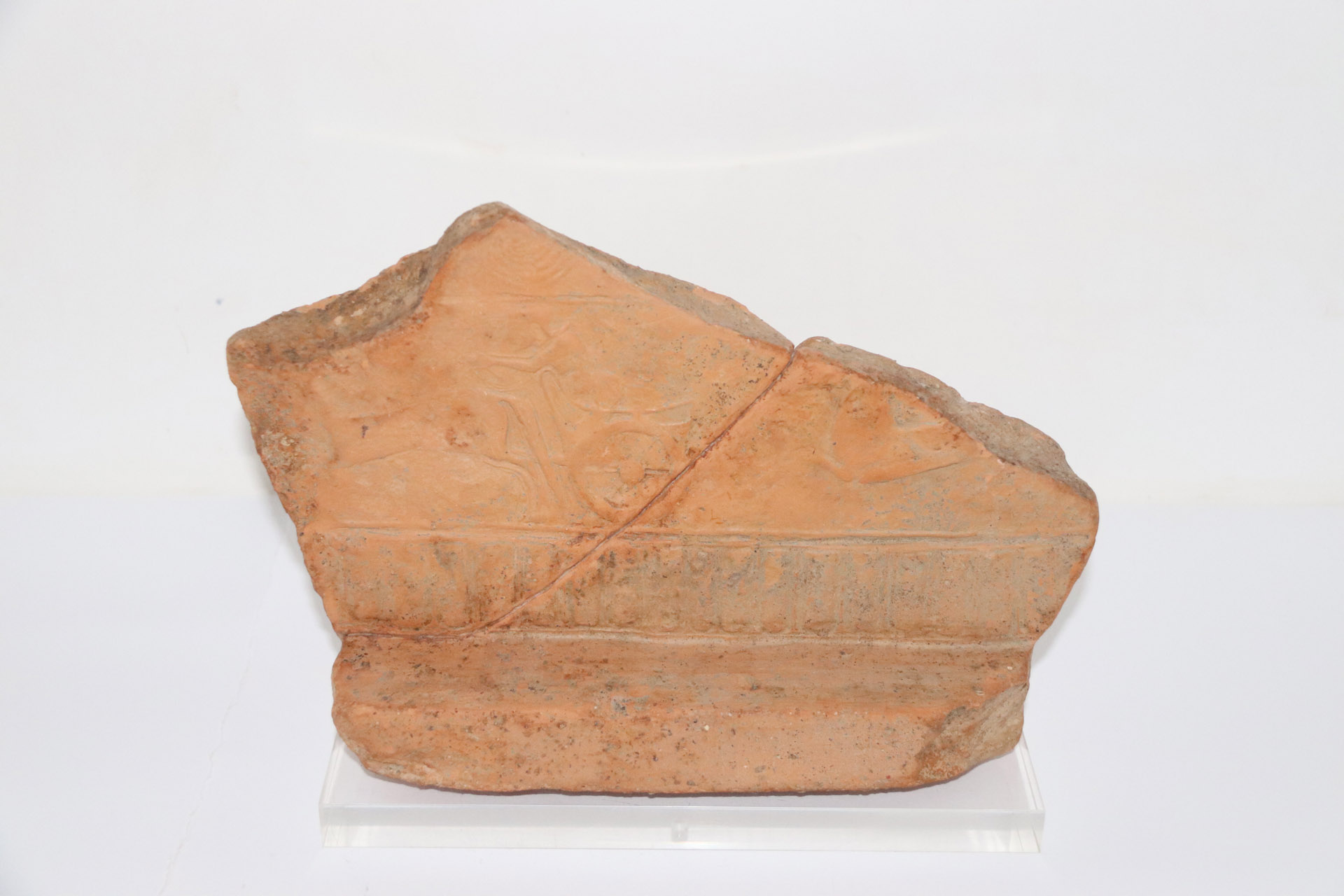
Relief-Decorated Altar Fragment
Description
Fragment of a small terracotta altar (arula), preserving part of the front face and the lower base. The decoration is executed in relief and, in the central zone, depicts a two-horse chariot (biga) racing
... read more >Fragment of a small terracotta altar (arula), preserving part of the front face and the lower base. The decoration is executed in relief and, in the central zone, depicts a two-horse chariot (biga) racing toward the left; below runs a narrow band with a tongue (linguette) motif.
In daily life, arulae were small domestic altars used to place offerings and perform rites dedicated to the household’s protective deities. This example represents one of the most significant testimonies of a characteristic production of Kroton between the late 7th and the mid-6th century BC, associated with the manufacture of small altars and relief-decorated vessels. The decoration is organized in superimposed bands of varying width and was produced by working the clay while still fresh with cylindrical matrices, rolled across the surface to reproduce the same motif continuously along the edge. The substantial number of arulae found at Crotone, together with production waste—such as defective or unfinished pieces—confirms the existence of a specialized local workshop dedicated to this type of artifact.
read less <INSIGHTS >
Explore the areas of Crotone and Sibari
History awaits you inside the Archaeological Sites of Crotone and Sibari. Start your visit.
planDiscover current events
Concerts, tastings and dedicated exhibitions to relive the history of Magna Graecia.
discover more
Experience the Parks and Museums
History awaits you inside the Archaeological Sites of Crotone and Sibari. Start your visit.
plan

Whether you are with family, at school or experience the world in a unique way, here you will find paths designed for you.