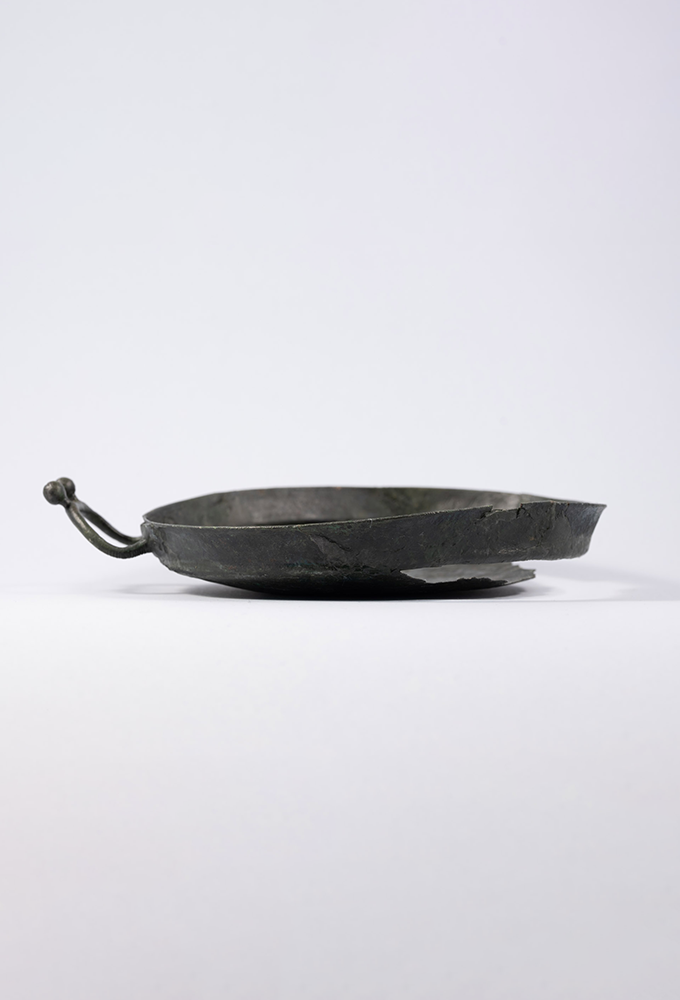
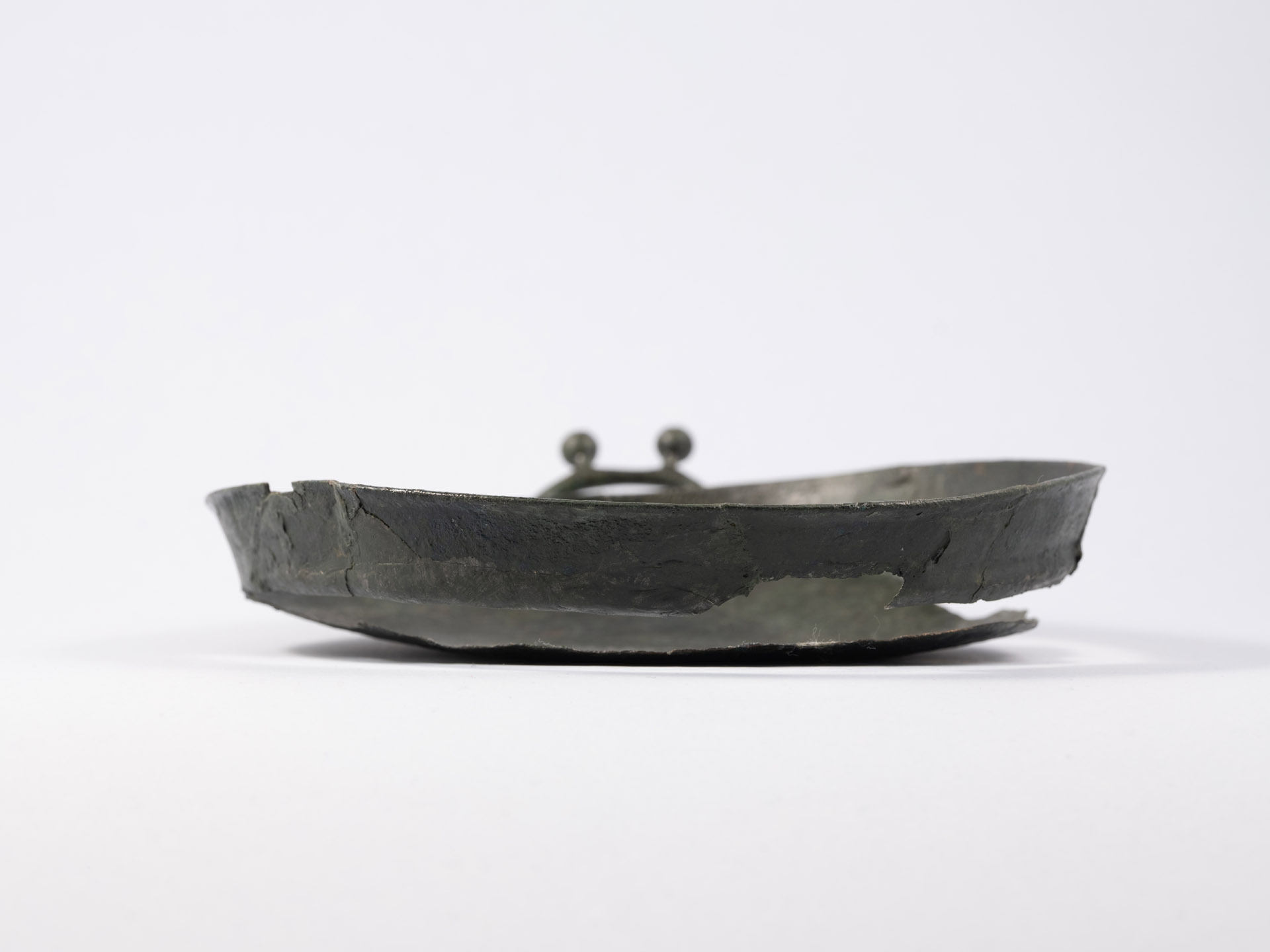
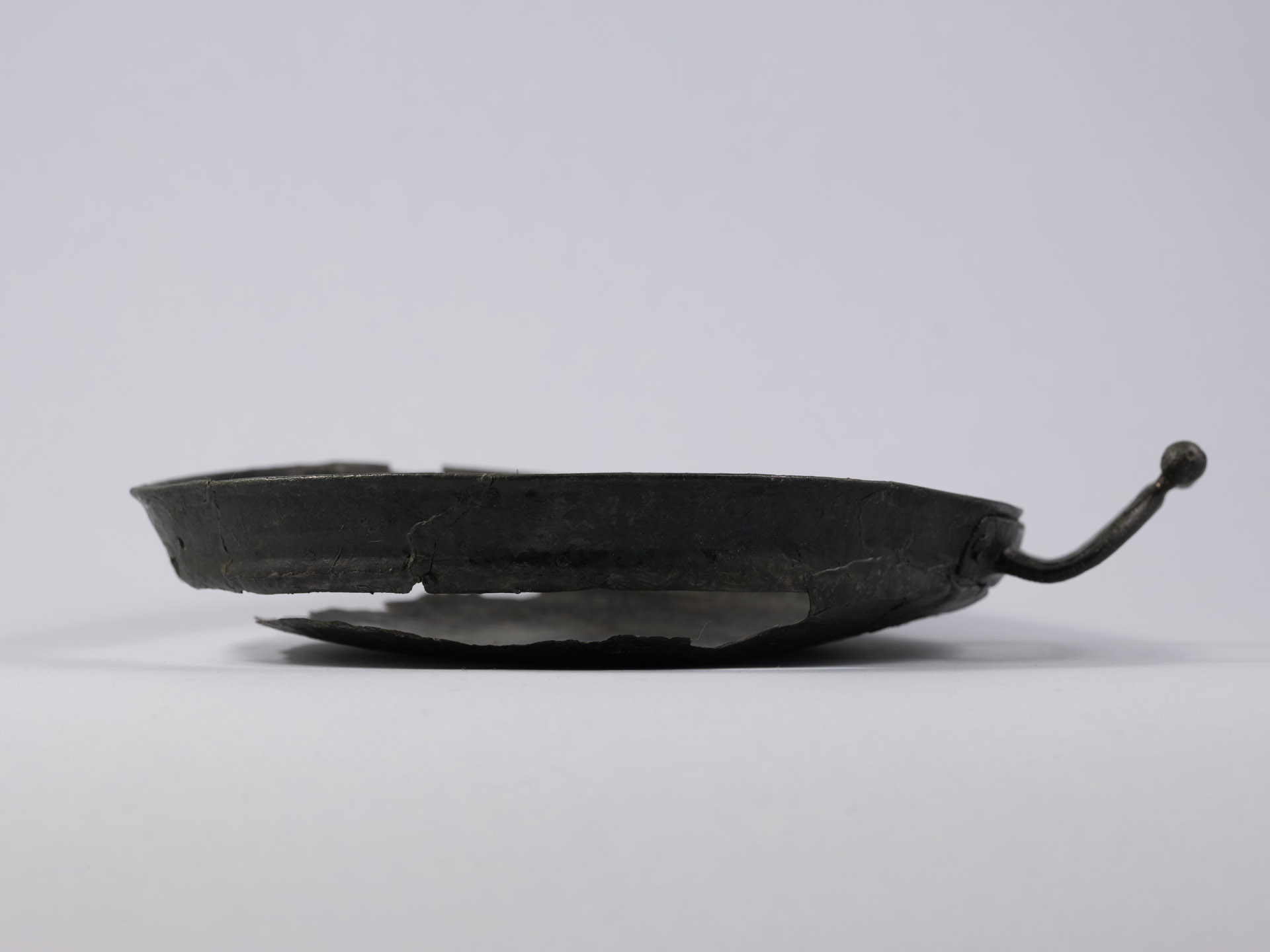
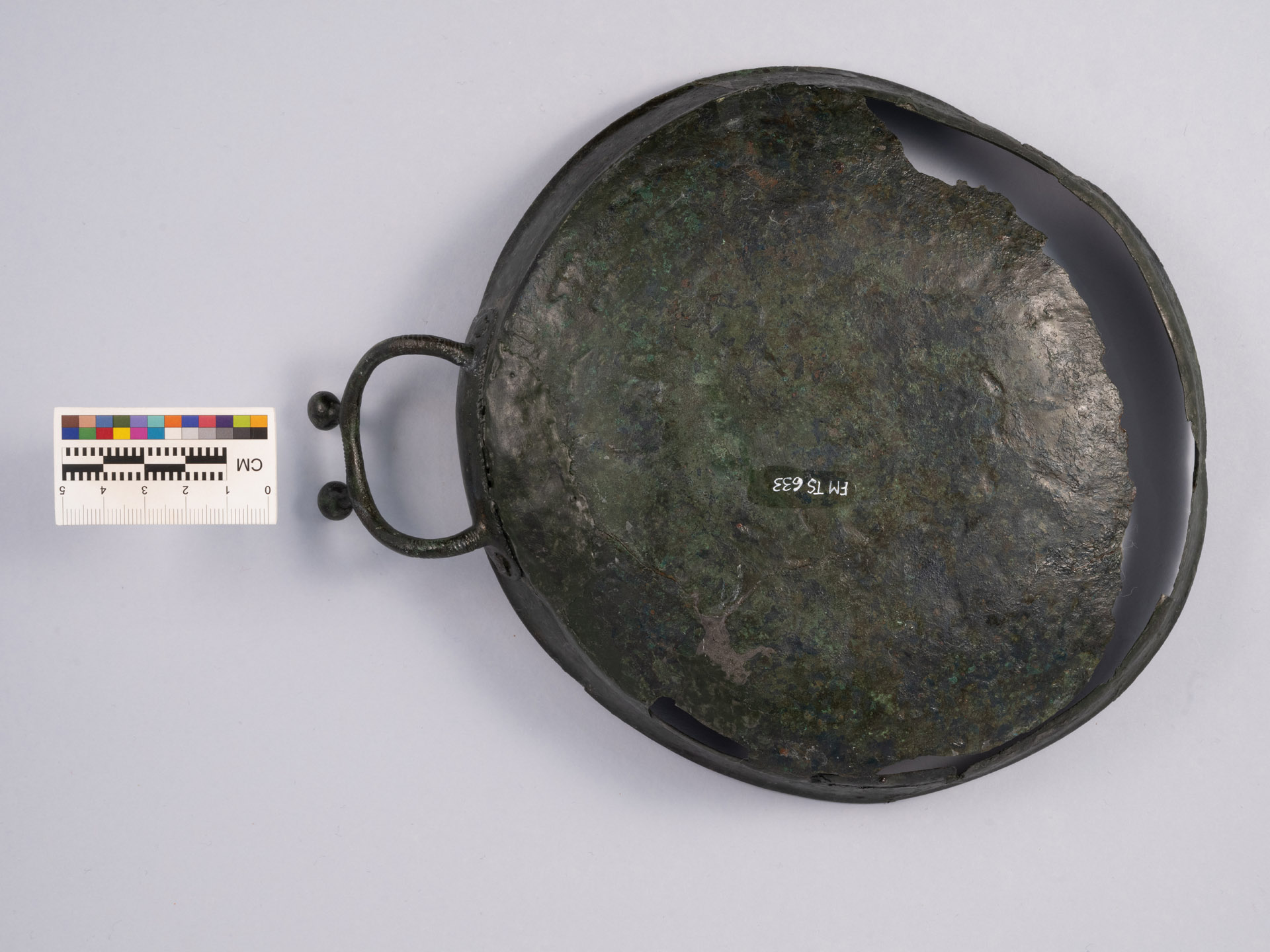
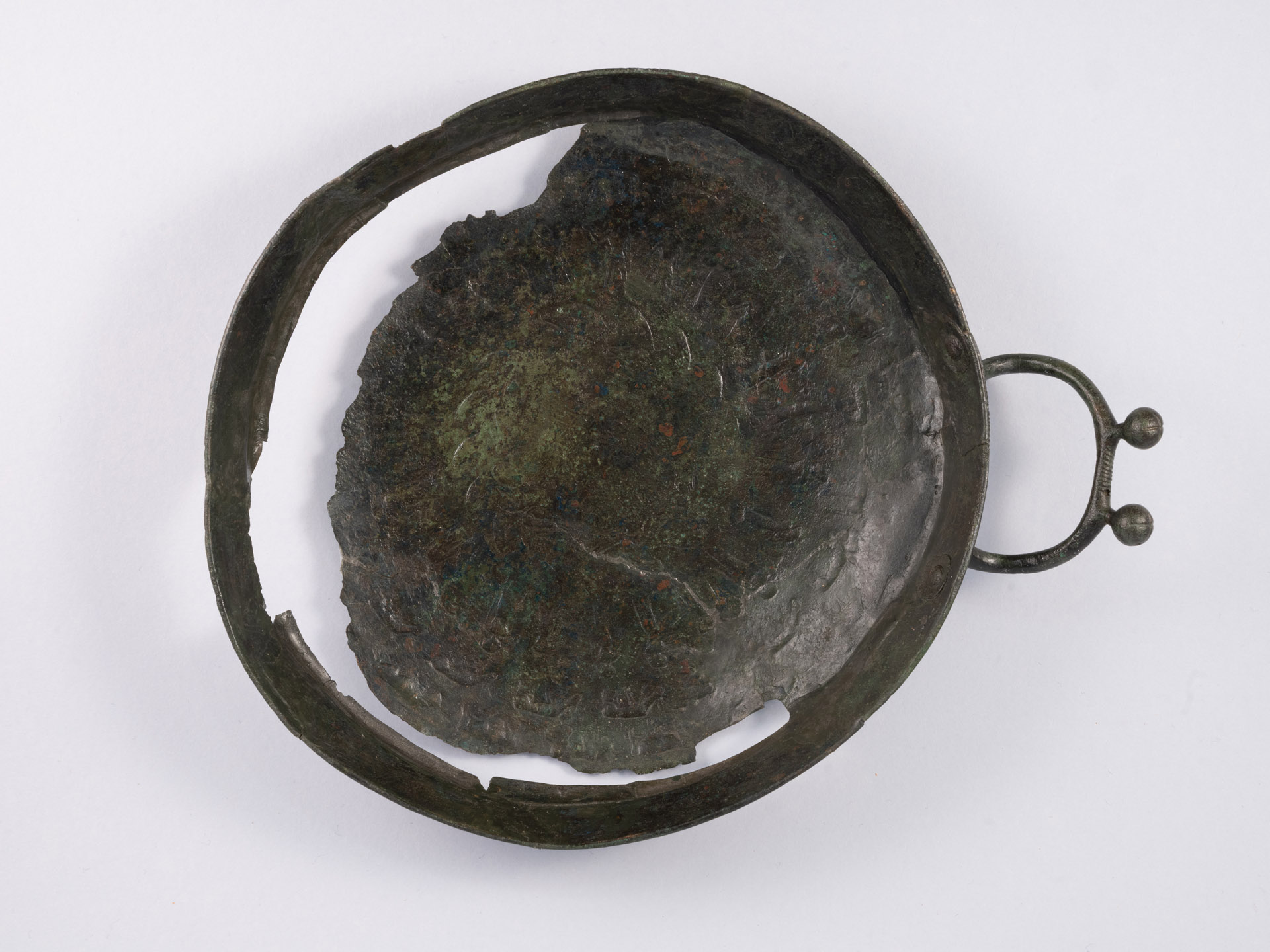
Repoussé Bronze Bowl (so-called Phoenician Bowl)
Where
Museo Archeologico Nazionale della Sibaritide
Località Casabianca – Frazione Sibari
87011 – Cassano All’Ionio (CS)
Description
This bronze bowl is decorated on the interior in repoussé, arranged in concentric bands featuring relief figures, including stars/rosettes, floral chains, animals, and a recessed circular element at the
... read more >This bronze bowl is decorated on the interior in repoussé, arranged in concentric bands featuring relief figures, including stars/rosettes, floral chains, animals, and a recessed circular element at the center.
The so-called Phoenician Bowl is an extremely valuable object and forms part of the grave goods of an aristocratic woman buried in the Tomba Strada of the Macchiabate Necropolis, near Francavilla Marittima. The burial consisted of an oval stone tumulus paved with pebbles. Inside the tomb, the deceased was accompanied by various metal ornaments, ceramic vessels, and amber beads from a necklace. The bowl was produced in and imported from the Syro-Phoenician region, corresponding to the coastal strip between present-day Syria and Lebanon. It therefore represents an exceptionally important testimony to the contacts established by local aristocratic elites with populations from the eastern Mediterranean.
Its size, the quality of the bronze, and the richness of its decoration suggest that the bowl was not used in everyday life, but rather constituted a prestigious object, possibly a funerary gift intended to emphasize the high social status of the deceased.
The surface of the bowl allows us to “read” a long and complex “biography” of the artifact. When it was deposited in the tomb around 750 BC, the bowl already bore traces of repairs carried out in antiquity. From the visible evidence, it can be inferred that the breakage of one handle was resolved by replacing it with a bronze handle belonging to another imported vessel, perhaps of Sardinian origin. At a later time, damage to the body of the bowl was repaired by inserting fragments taken from bronze belts, whose geometric decorative motifs—typical of local craftsmanship—are still visible. These interventions demonstrate the long life of the bowl well before its burial together with its owner, suggesting prolonged use over time, possibly as part of a family heirloom.
read less <INSIGHTS >
Explore the areas of Crotone and Sibari
History awaits you inside the Archaeological Sites of Crotone and Sibari. Start your visit.
planDiscover current events
Concerts, tastings and dedicated exhibitions to relive the history of Magna Graecia.
discover more
Experience the Parks and Museums
History awaits you inside the Archaeological Sites of Crotone and Sibari. Start your visit.
plan

Whether you are with family, at school or experience the world in a unique way, here you will find paths designed for you.