Scarab Amulet
Where
Museo Archeologico Nazionale di Amendolara
Piazza Giovanni XXIII
87071 – Amendolara (CS)
Description
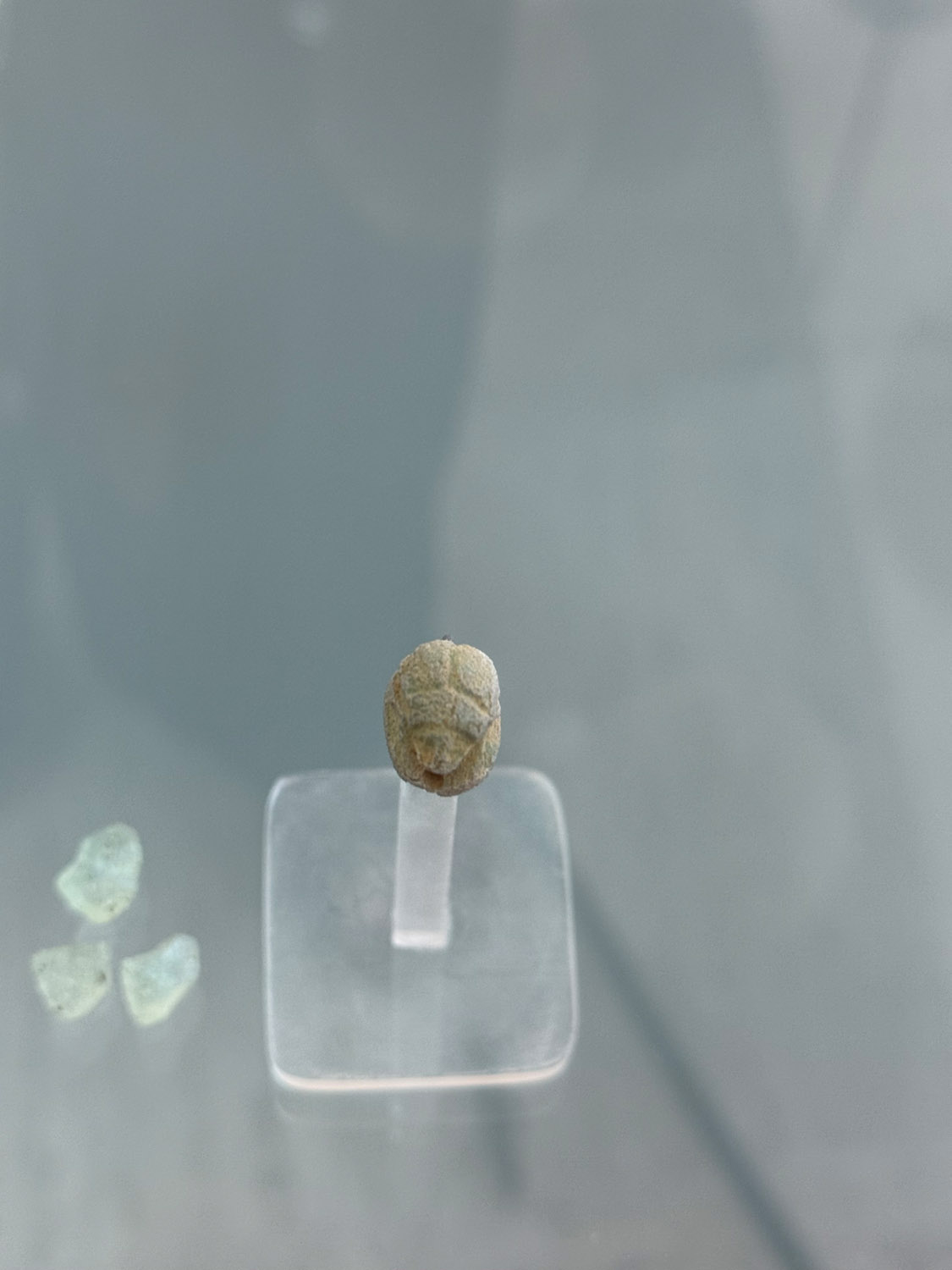
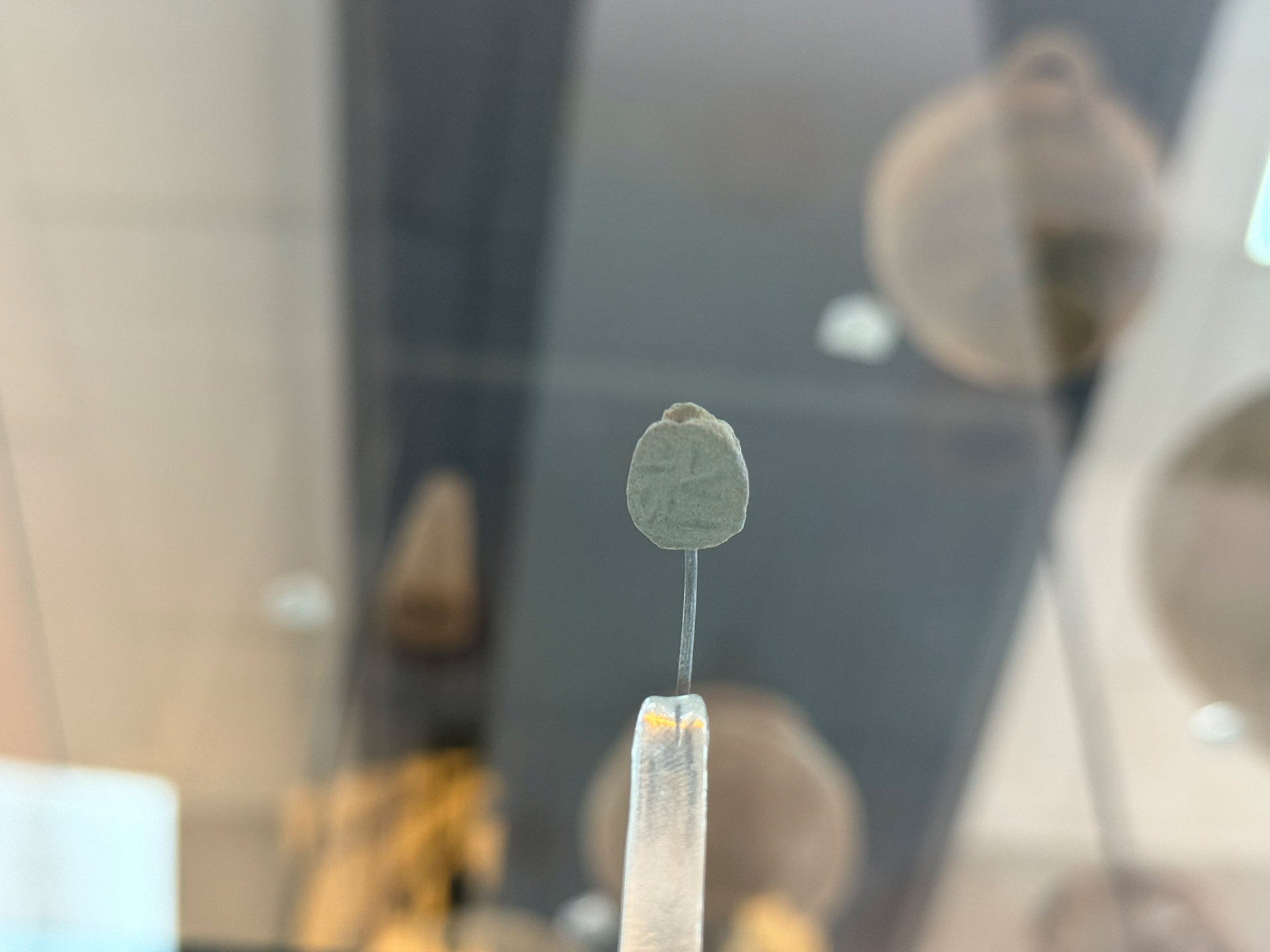
The scarab displays the typical arched shape of the back and features a stylized rendering of the head with eyes, the thorax, and the wings. On the flat underside there is a short inscription engraved
... read more >The scarab displays the typical arched shape of the back and features a stylized rendering of the head with eyes, the thorax, and the wings. On the flat underside there is a short inscription engraved horizontally, readable from right to left. Beside the inscription is a highly simplified depiction of a bull with its tail lowered.
Tomb 321 of the Paladino Ovest necropolis belonged to a young girl. Scarabs, imported from the Mediterranean and the Near East, occur in several burials of children, young girls, and young women dating to the 7th century BC in the necropolises of Amendolara (Paladino Ovest and Mangosa) and other sites in the Sibaritide. On this scarab in particular, the image of a bull is depicted—a motif typical of amulets from the Greek Peloponnese, where the animal held strong symbolic value, being associated with kingship and serving a protective function for the wearer or owner of the amulet. Scarabs therefore represented objects of great symbolic and material value: it is likely that women of the local aristocracy acquired these items overseas in order to ensure protection for themselves and their children, while at the same time displaying a symbol of high social prestige.
read less <INSIGHTS >
Explore the areas of Crotone and Sibari
History awaits you inside the Archaeological Sites of Crotone and Sibari. Start your visit.
planDiscover current events
Concerts, tastings and dedicated exhibitions to relive the history of Magna Graecia.
discover more
Experience the Parks and Museums
History awaits you inside the Archaeological Sites of Crotone and Sibari. Start your visit.
plan

Whether you are with family, at school or experience the world in a unique way, here you will find paths designed for you.