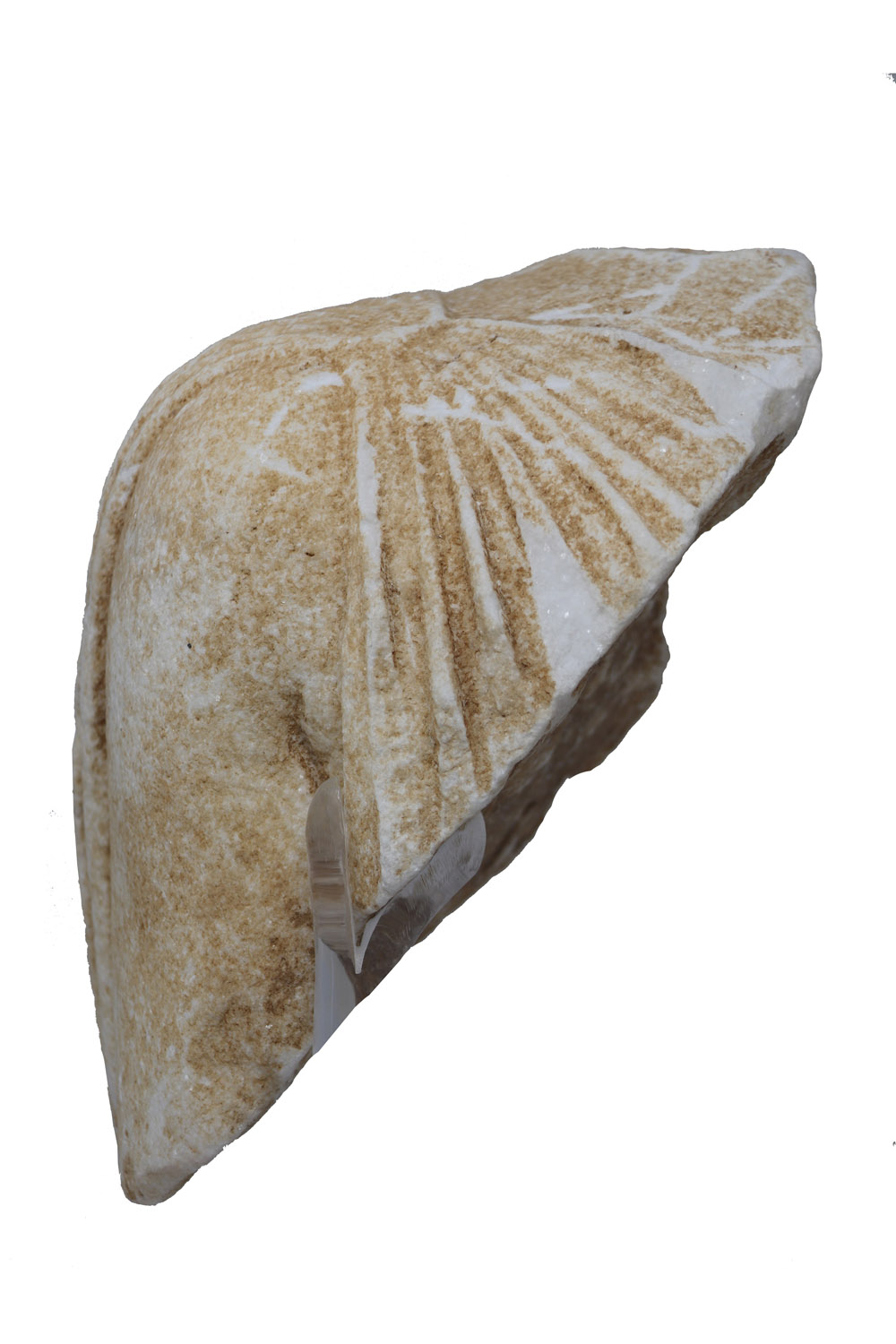
Torso of a Female Marble Statue
Where
Museo Archeologico Nazionale di Capo Colonna
Via Michele Di Donato 1
(Già Via Hera Lacinia)
88900 – Crotone (KR)
Description
Portion of a life-size female statue torso. The preserved elements include the shoulder and part of the arm, whose position suggests that the figure originally stood upright and static, with the right
... read more >Portion of a life-size female statue torso. The preserved elements include the shoulder and part of the arm, whose position suggests that the figure originally stood upright and static, with the right arm extended and held close to the body, and the head (now lost) slightly turned. The fine folds visible on the surface belong to the thin garment worn by the figure, probably a peplos.
Discovered on the eastern side of the great Temple A in the early 20th century, this fragment of a female statue is almost certainly a surviving element of the pedimental decoration—the triangular space above the temple façade, often adorned with sculptural groups. This interpretation is supported by the presence of a square hole on the back of the fragment, intended to receive a metal dowel used to secure the statue to the temple structure. The style of the sculpture finds close parallels in relief works from central and northern Greece, such as the famous stele with female figures from Pharsalos (now in the Louvre), as well as in the productions of the artistic school of the island of Paros. These comparisons indicate that the workshop responsible for the statue was deeply influenced by the most advanced Greek sculptural traditions of the 5th century BC. The marble used, imported from the Greek islands, further enhances the prestige of the work.
read less <INSIGHTS >
Explore the areas of Crotone and Sibari
History awaits you inside the Archaeological Sites of Crotone and Sibari. Start your visit.
planDiscover current events
Concerts, tastings and dedicated exhibitions to relive the history of Magna Graecia.
discover more
Experience the Parks and Museums
History awaits you inside the Archaeological Sites of Crotone and Sibari. Start your visit.
plan

Whether you are with family, at school or experience the world in a unique way, here you will find paths designed for you.